Newsletter
Resources
Courses
Books

Welcome to Emerging Futures -- Volume 249! On The Pillars of Disruptive Creativity - Pt I...
Good mornings becomings of summering,
This Sunday will be the summer solstice in the Northern Hemisphere and winter solstice in the Southern Hemisphere of our dear planet. While summer is beginning ever sooner for so many of us humans and non-humans – it is a wonderful moment to connect to our dynamic relation with the sun. Now, as the Earth spins on its axis that is tilted in relation to the sun it revolves around – the northern part will most directly face the sun this Sunday.
For many of us it is the longest day of the year (at the North Pole the longest “day” is six months long – meaning in the higher latitudes the concept of a day is only there for about a third of the year…). For us here in New Jersey, we will be up to feel the earth rotate to reveal the sun and hope to stay out till long after the sun sets – we hope that you are doing something special this day.
Talking about doing special things – this week and next, in the newsletter, we want to share a talk we gave a while back in the Emergent Futures Lab Worldmakers community of practice. It is a longer talk and discussion, and so we will split it up over the next two weeks.
One special part of presenting it in the newsletter is that all the slides become images that you can study at your own pace (rather than seeing them just flash past you in quick succession) – and there are lots of helpful diagrams in this presentation (it almost becomes a type of illustrated book).
The presentation introduced three concepts we feel strongly are critical to engaging with creative processes: Qualitative Change, Enactive Assemblages, and Feed-Forward Epicycles. And in thinking about what to present next in the newsletter, as we come to the end of our longer exploration of creativity and worldmaking, we felt that this would be a pragmatic way to connect worldmaking to techniques and practices.
This week we will present the first part of the talk, which goes into two forms of change and how they impact approaches to creativity – as well as a critical analysis of individualistic creativity. Then next week we will present the second two concepts (Enactive Assemblages and Feed-Forward Epicycles).
A quick note: What follows is a lightly edited version of the talk itself. As an introductory talk, it was meant to be both broad and not go into too much detail. Much of the detail and development came out in the discussion that followed after each pillar (and in further presentations and discussions). The full session – including the member questions and the discussion that followed – is available in its entirety on WorldMakers.
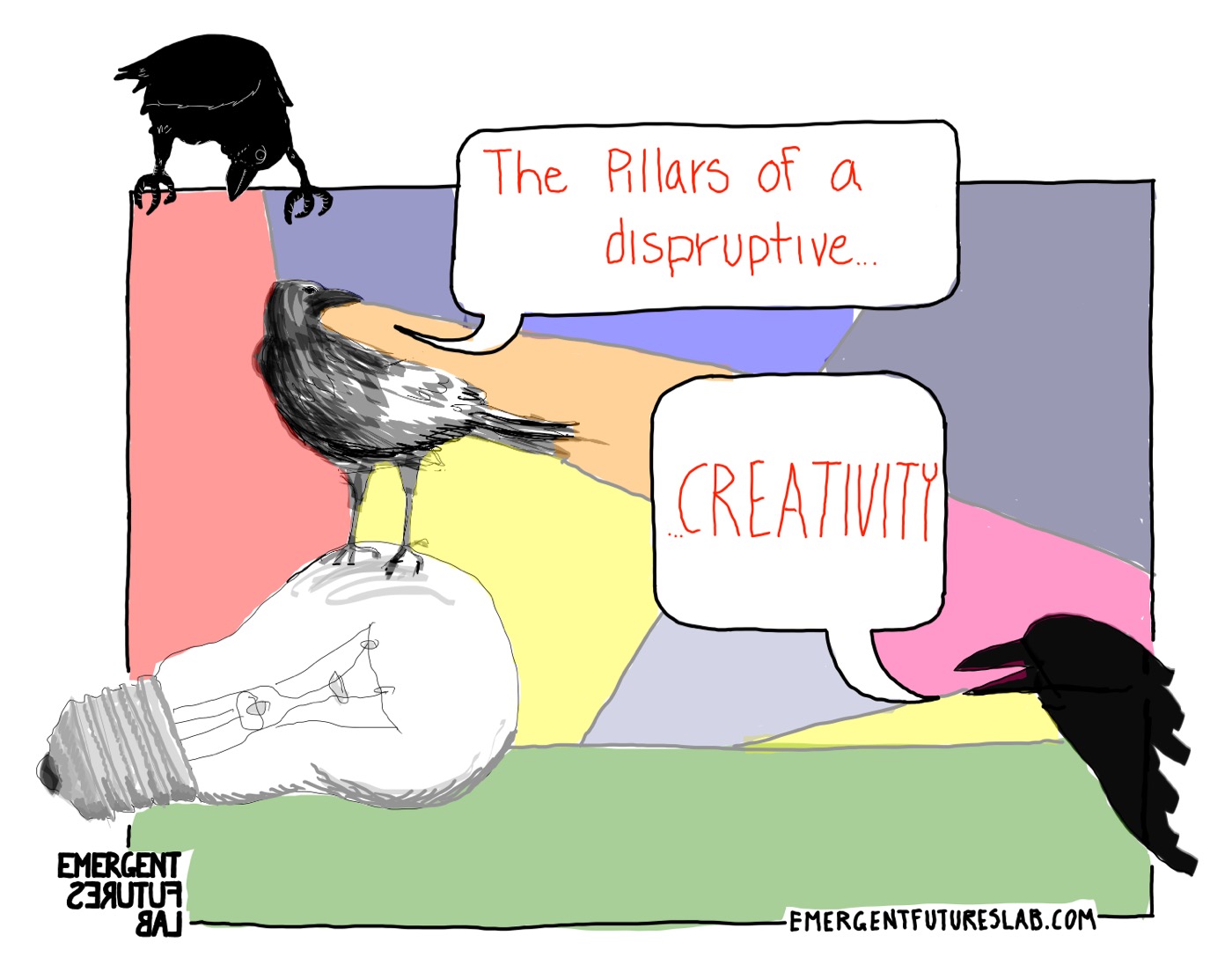
We've always organized our work around three questions:
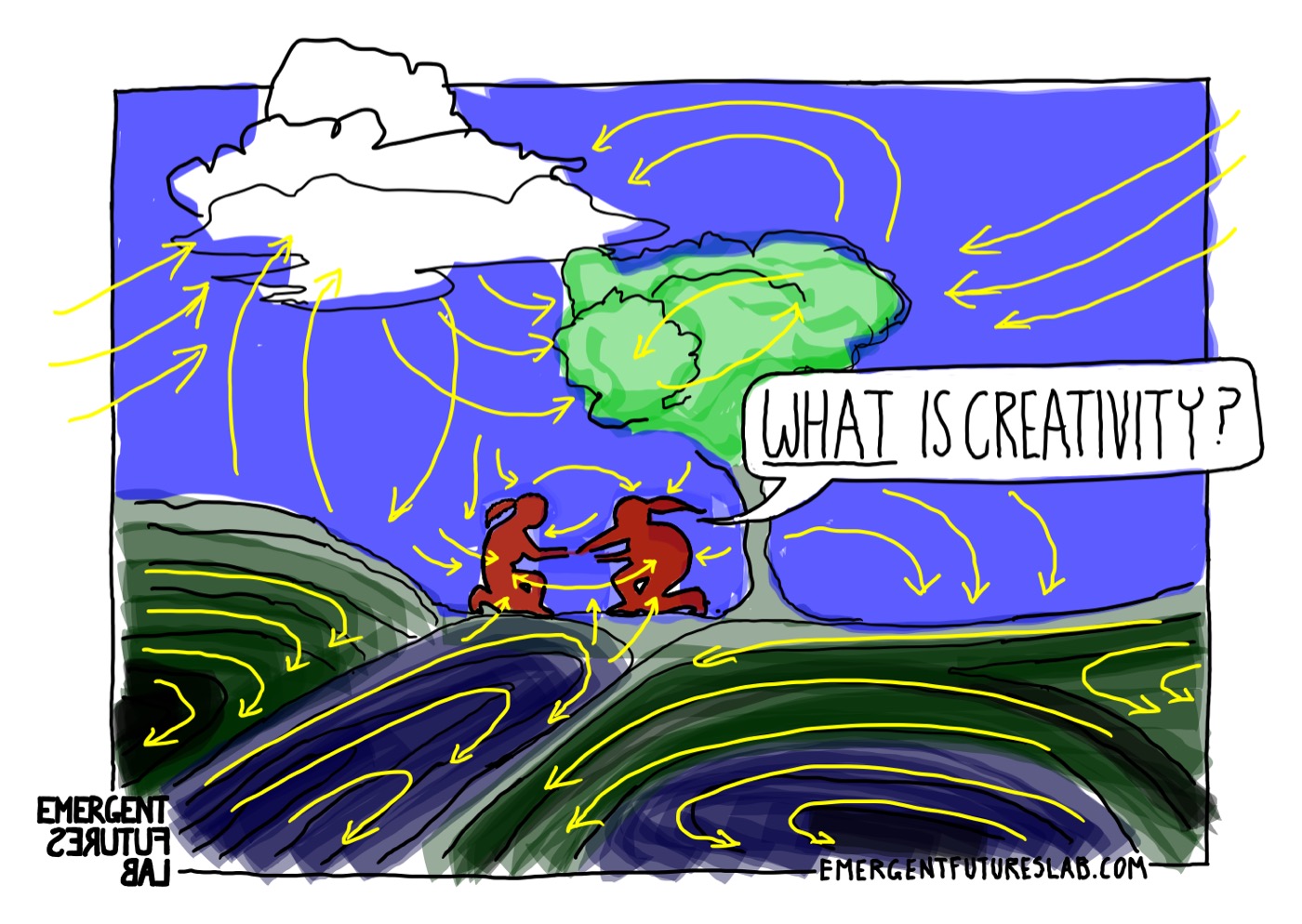
What is creativity?
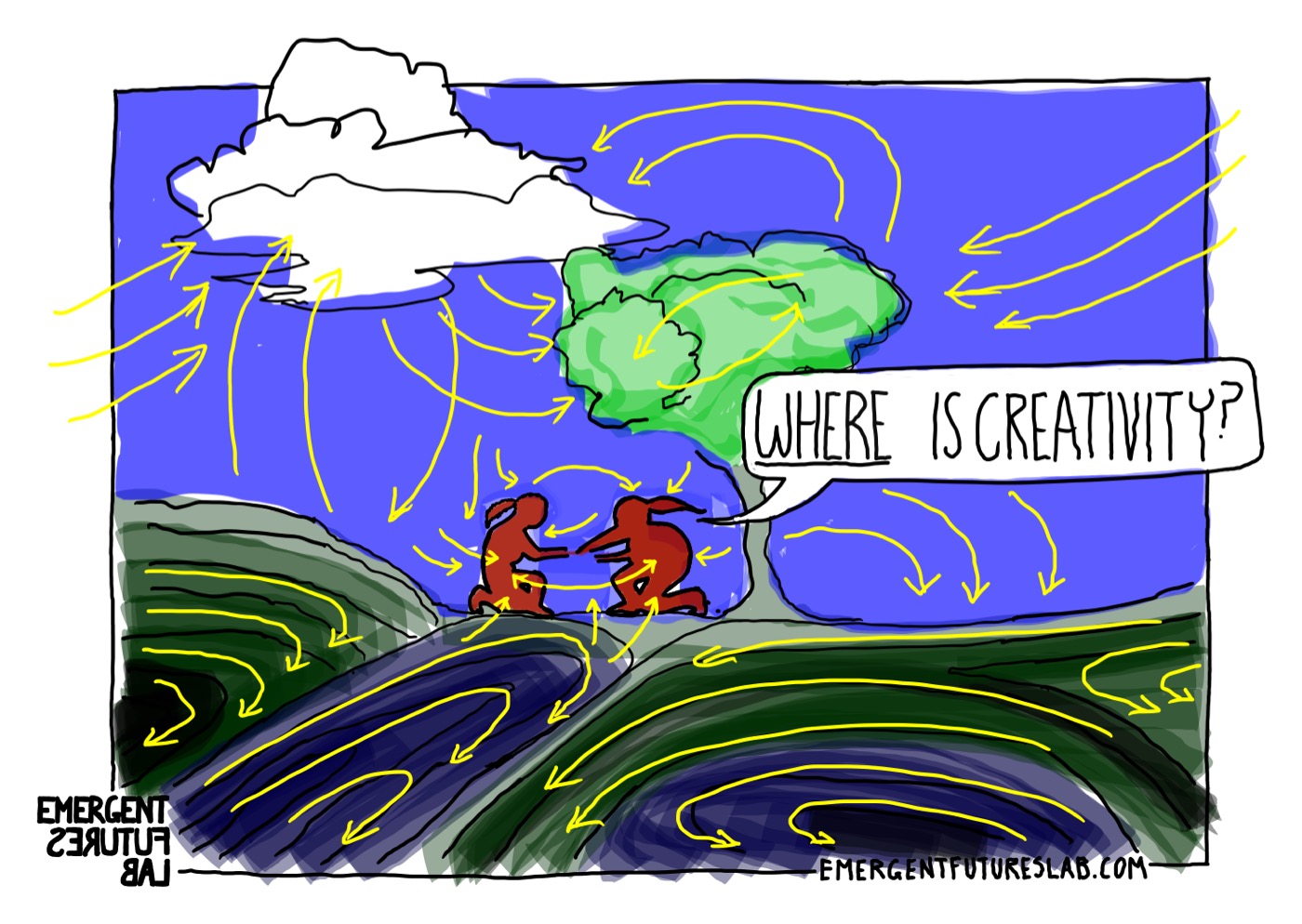
Where is creativity?
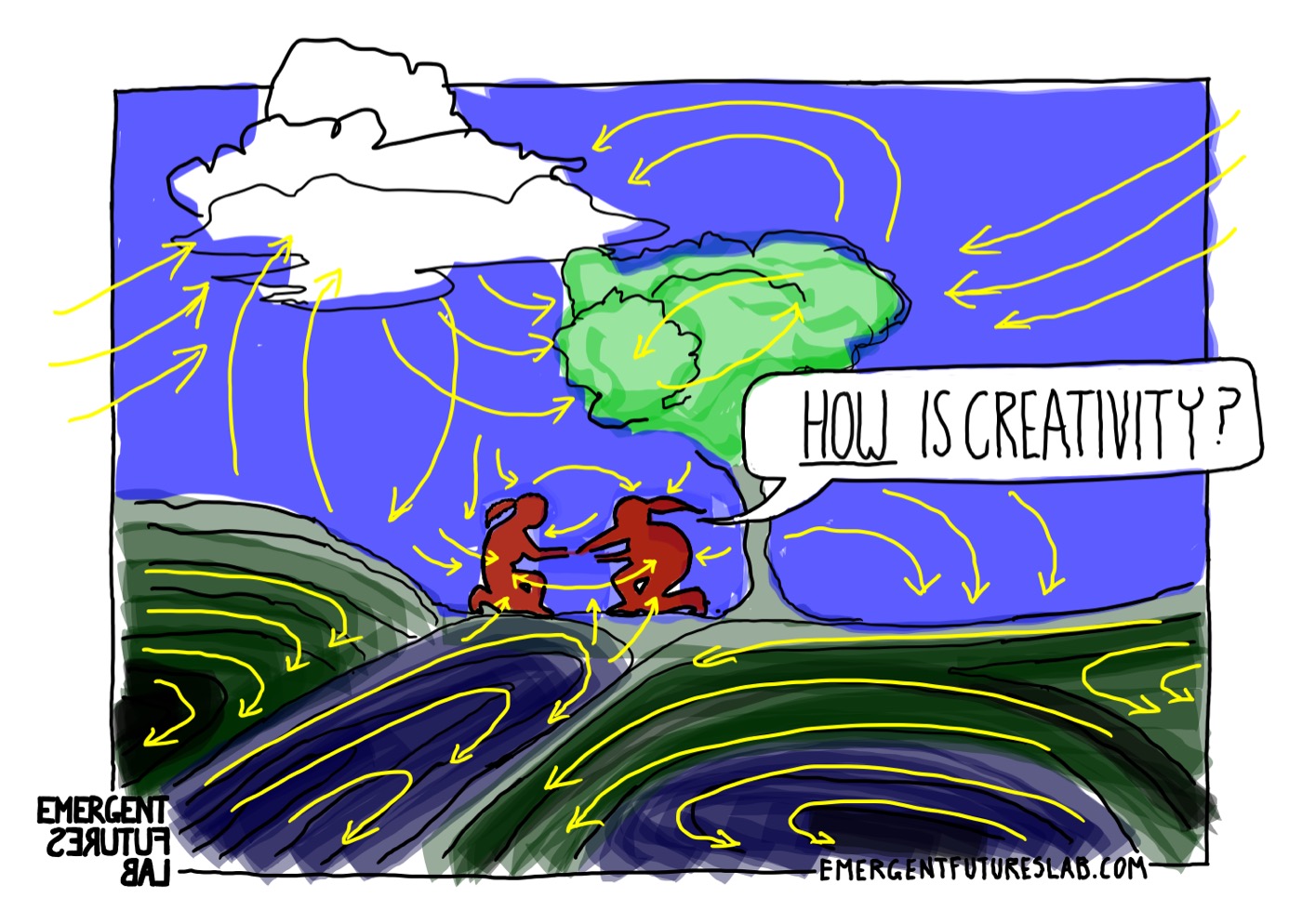
How is creativity?
They sound simple. They aren't. Most approaches to innovation answer them quickly and move on – which is precisely how they get trapped inside an old and deeply problematic set of assumptions and practices. Over the next two weeks, we want to slow down and take them seriously, because what you believe about creativity, and where you locate it, and how you try to generate it significantly shapes what might possibly emerge.
Today's talk experiments with the background of engaging with creative processes: three pillars, three underlying logics that participate in co-shaping much of our approach.
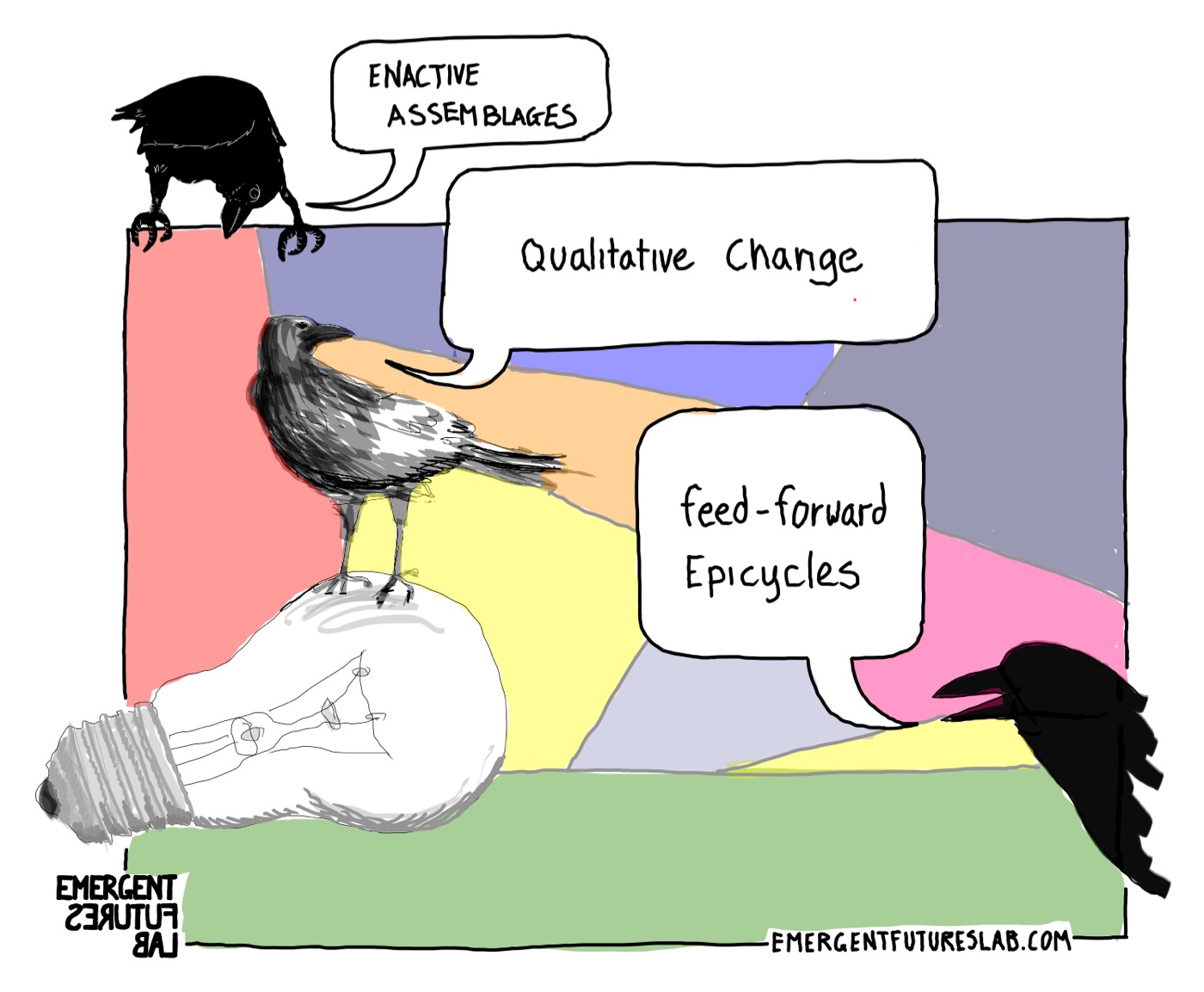
The three pillars are Qualitative Change, Enactive Assemblages, and Feed-Forward Epicycles. Each one challenges a core assumption embedded in the dominant frameworks – design thinking, ideation-first models, MVP thinking, the double diamond – the whole family. We need to understand those assumptions clearly before we can move past them.
Given that creativity profoundly involves change – let's start with change itself.
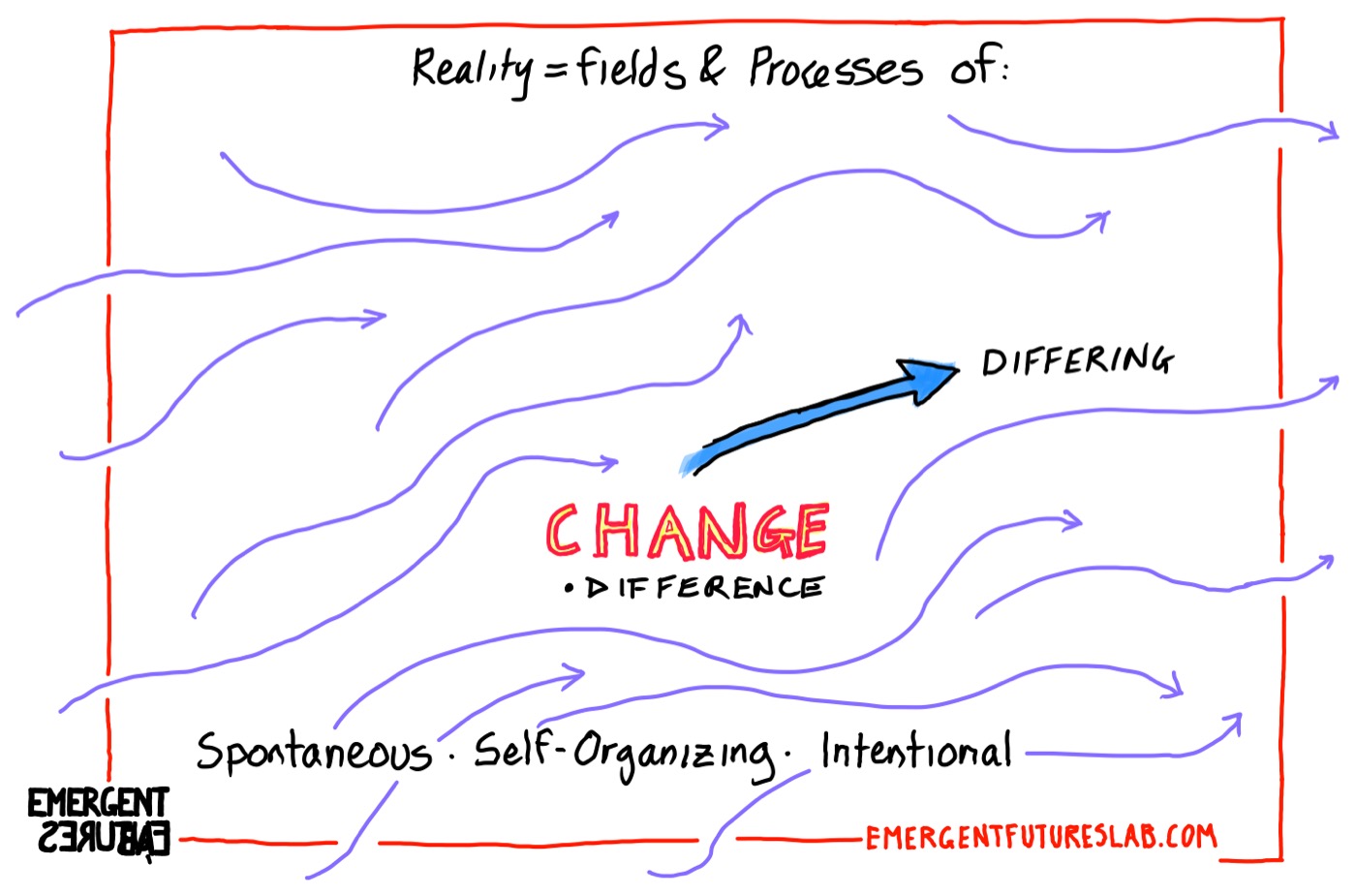
Reality consists of fields and processes of change – difference differing. Change is spontaneous, self-organizing, and intentional – happening all at once.
We tend to understand change quite narrowly and superficially: more, better, faster.
But change is not monolithic: all change is not the same. As Henri Bergson developed, from a philosophical perspective, there are two fundamentally different forms of change, and conflating them is one of the most costly errors in how we approach innovation.
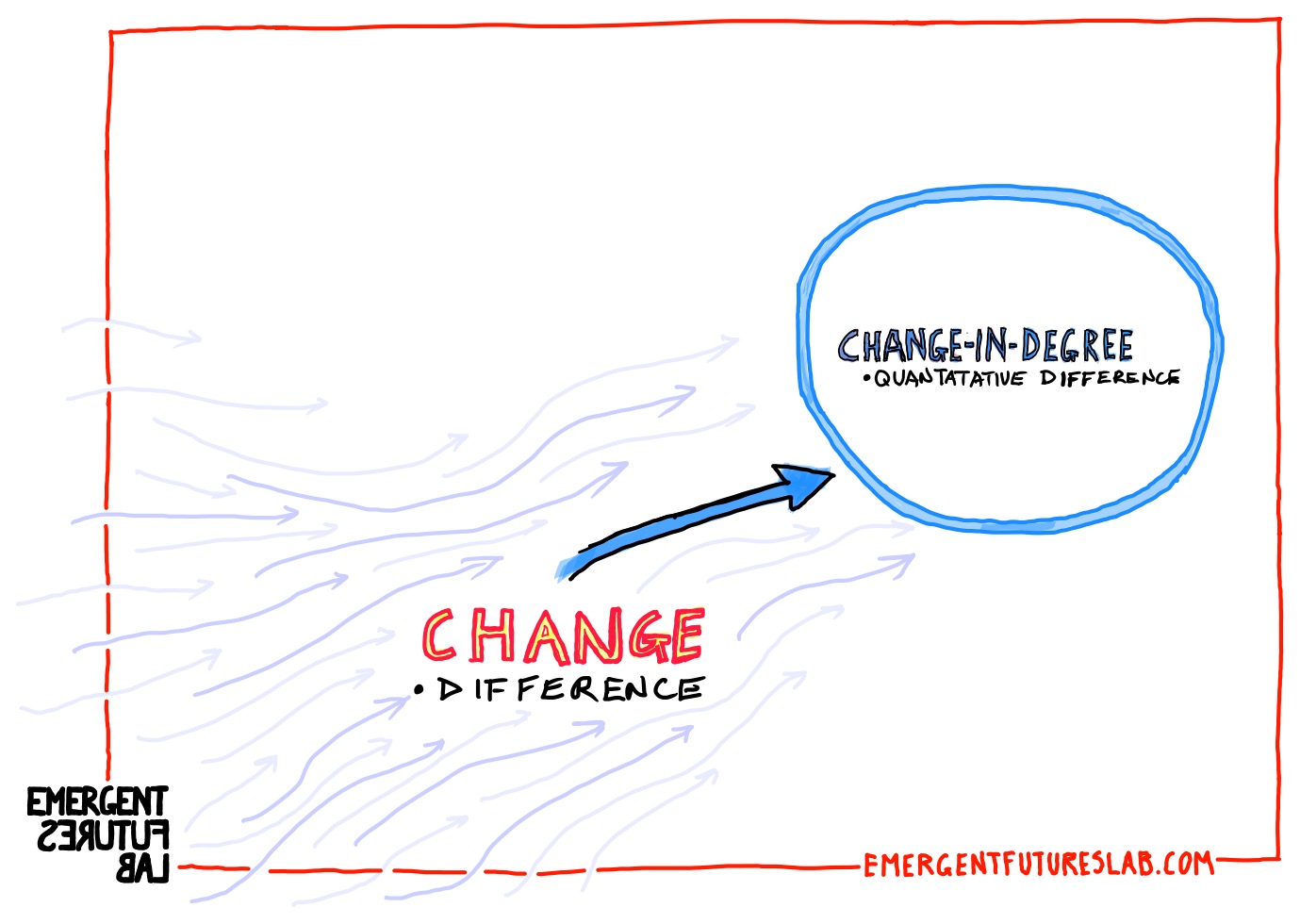
The first form of change is the one we are most familiar with: change-in-degree – a quantitative difference.
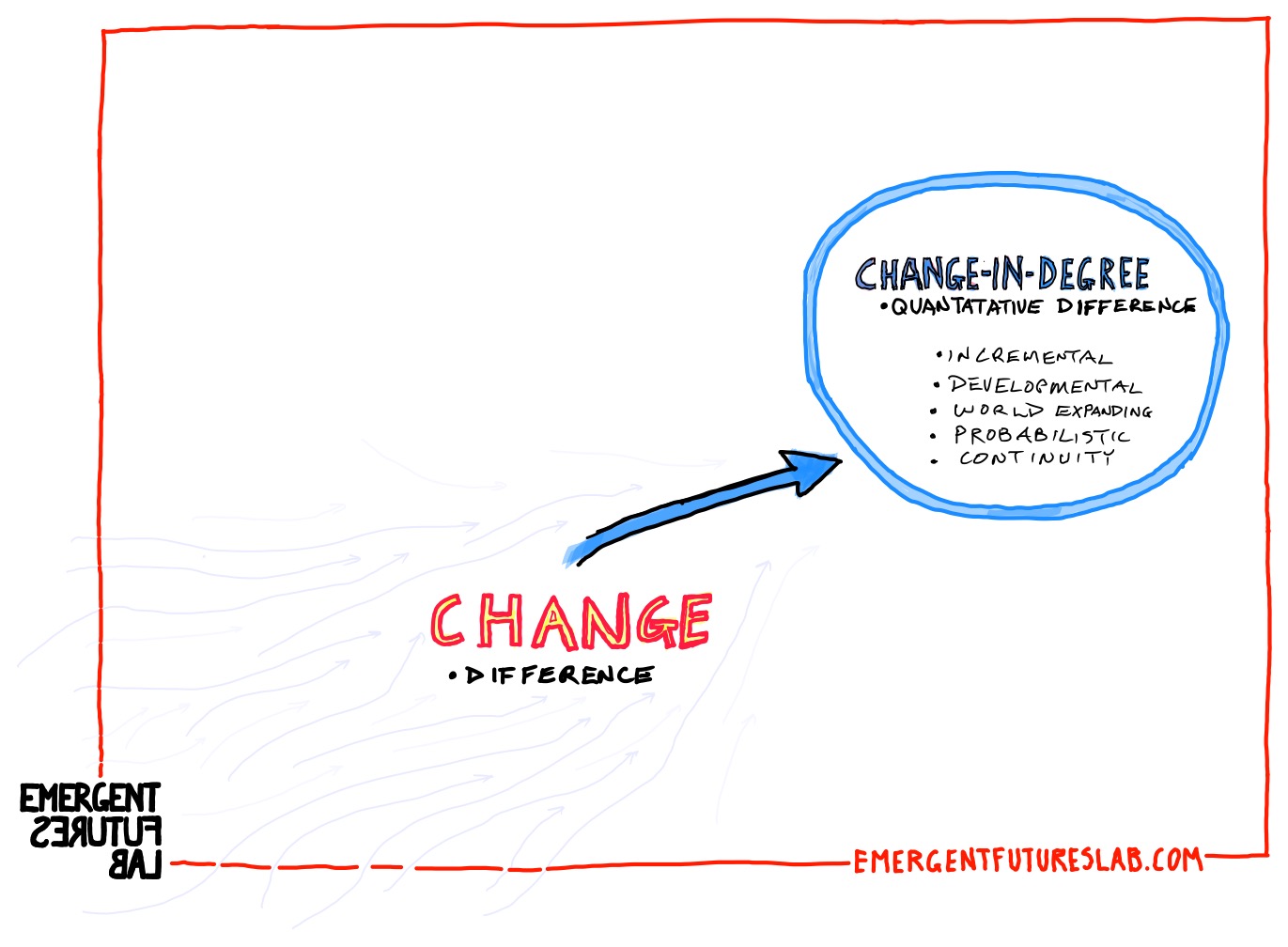
Change-in-degree is incremental and developmental. It expands what already exists rather than departing from it. Thus it is world-expanding in the sense that it builds on an existing world. It is probabilistic – the next step is knowable, predictable – and in continuity with what came before.
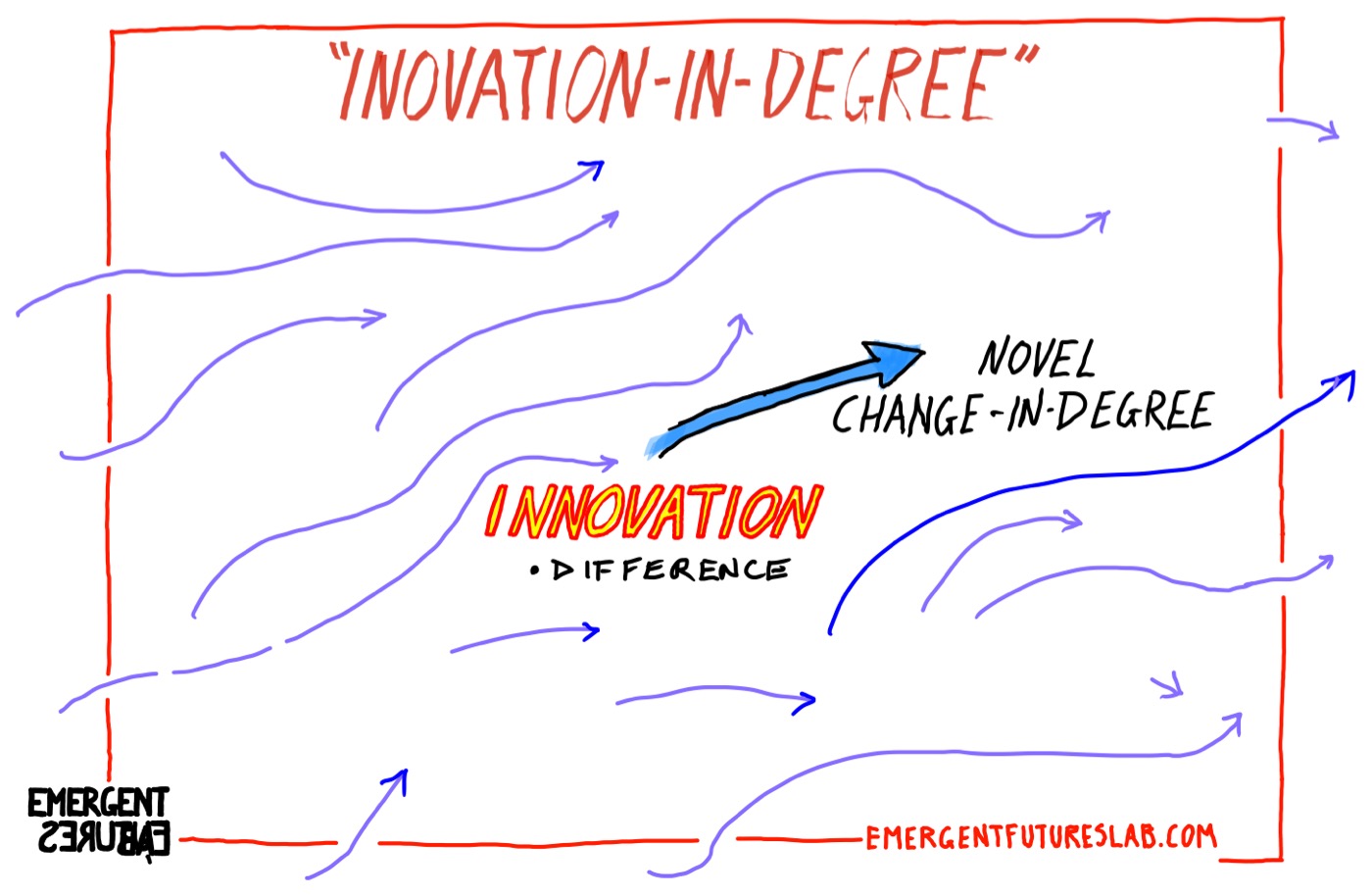
When we apply this to innovation, we get what we call innovation-in-degree, or novel change-in-degree.
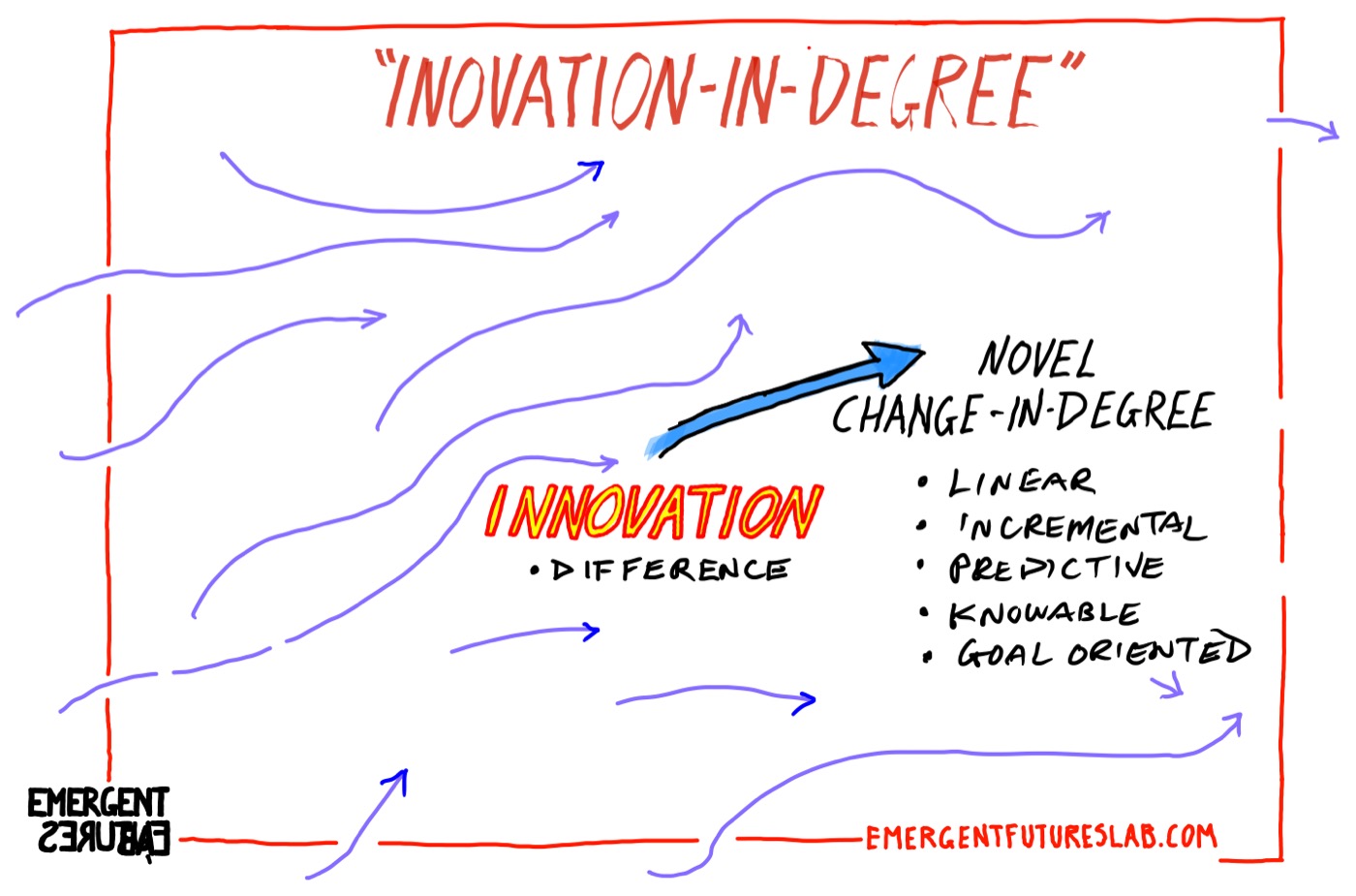
It's linear. Incremental. Predictive. Knowable. And Goal-oriented. You can describe where you're headed before you set off. Think of the iPhone – Each release is “more” than the last. And each one is, in a meaningful sense, recognizably the same thing as its predecessor.
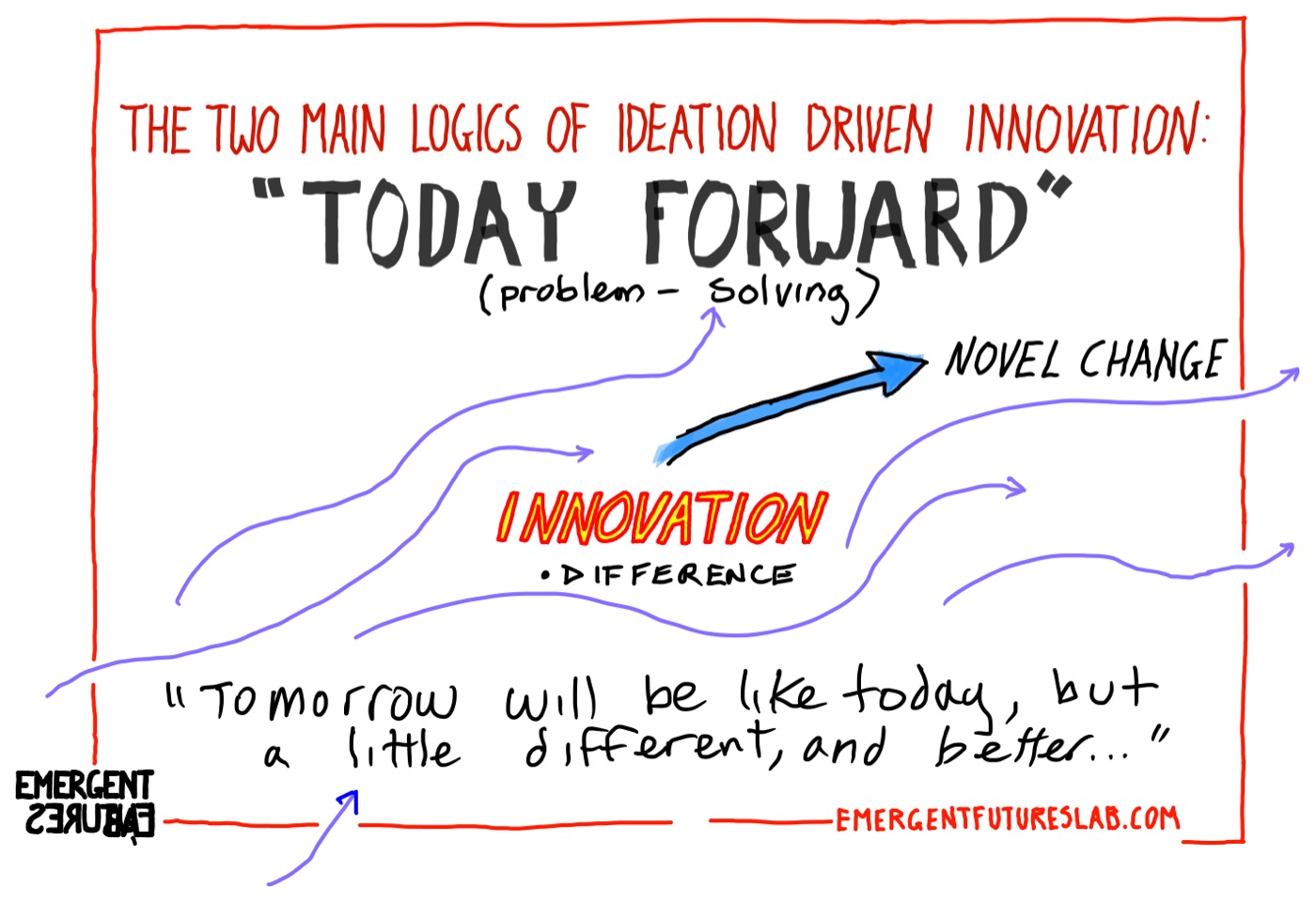
There are two main logics driving innovation-in-degree. The first is “Today-Forward” problem-solving:
"Tomorrow will be like today, but a little different, and better..." You start from where you are and, reflecting on the state of things, you make adjustments, you fix issues, you solve problems, you make incremental improvements. This is the common logic of defining creativity as “problem solving” that is seen everywhere from the arts to design to engineering to cooking an evening meal.
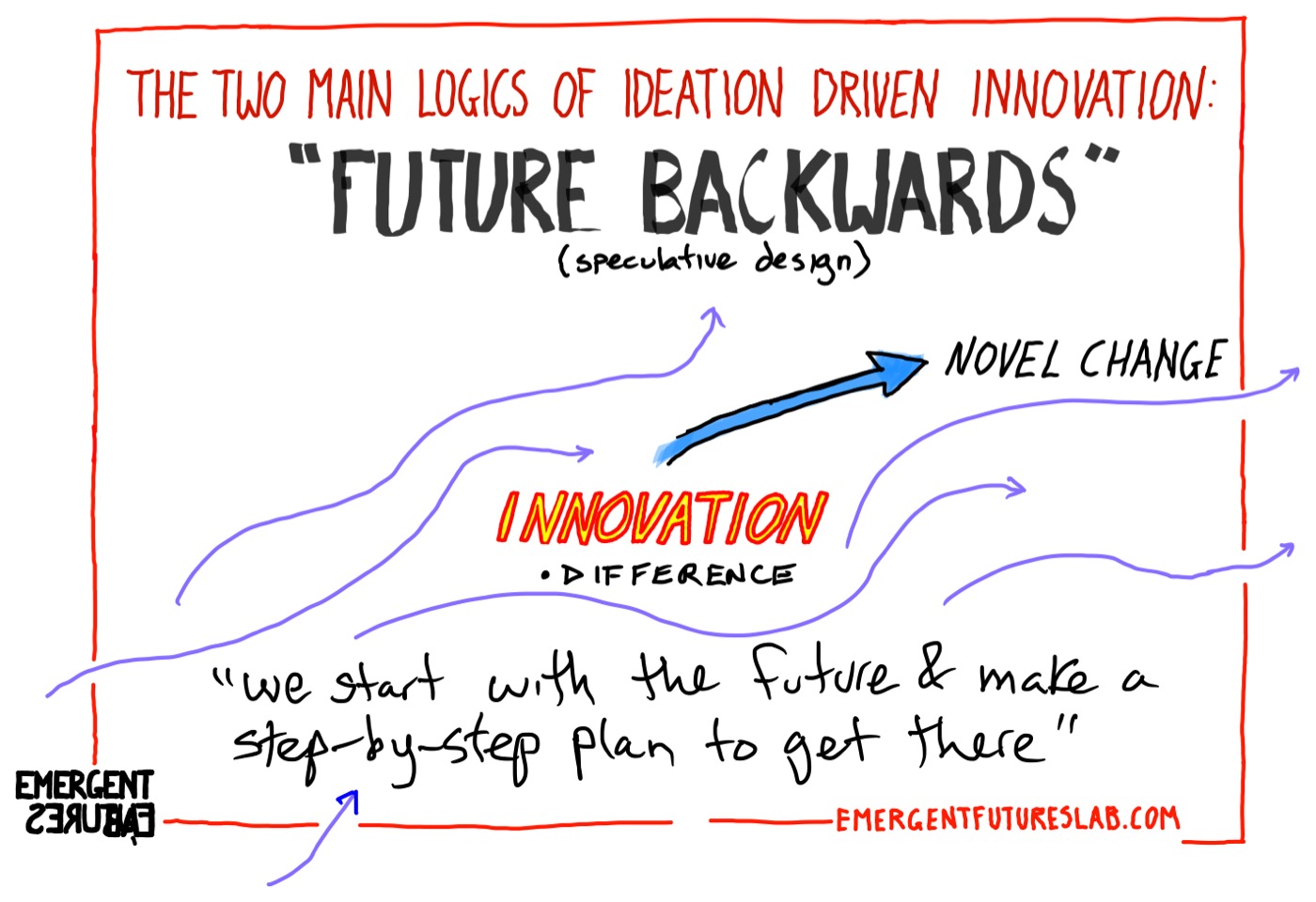
The second is “Future-Backwards” speculative design:
"We start with the future and make a step-by-step plan to get there."
While more speculative and future-oriented, it has the same underlying linear structure. The goal is known in advance, and a plan is constructed backward from it by which, in a step-by-step manner, that future goal can be reached. We see this used in long-term planning, trend analysis, and speculative design to name just a few.
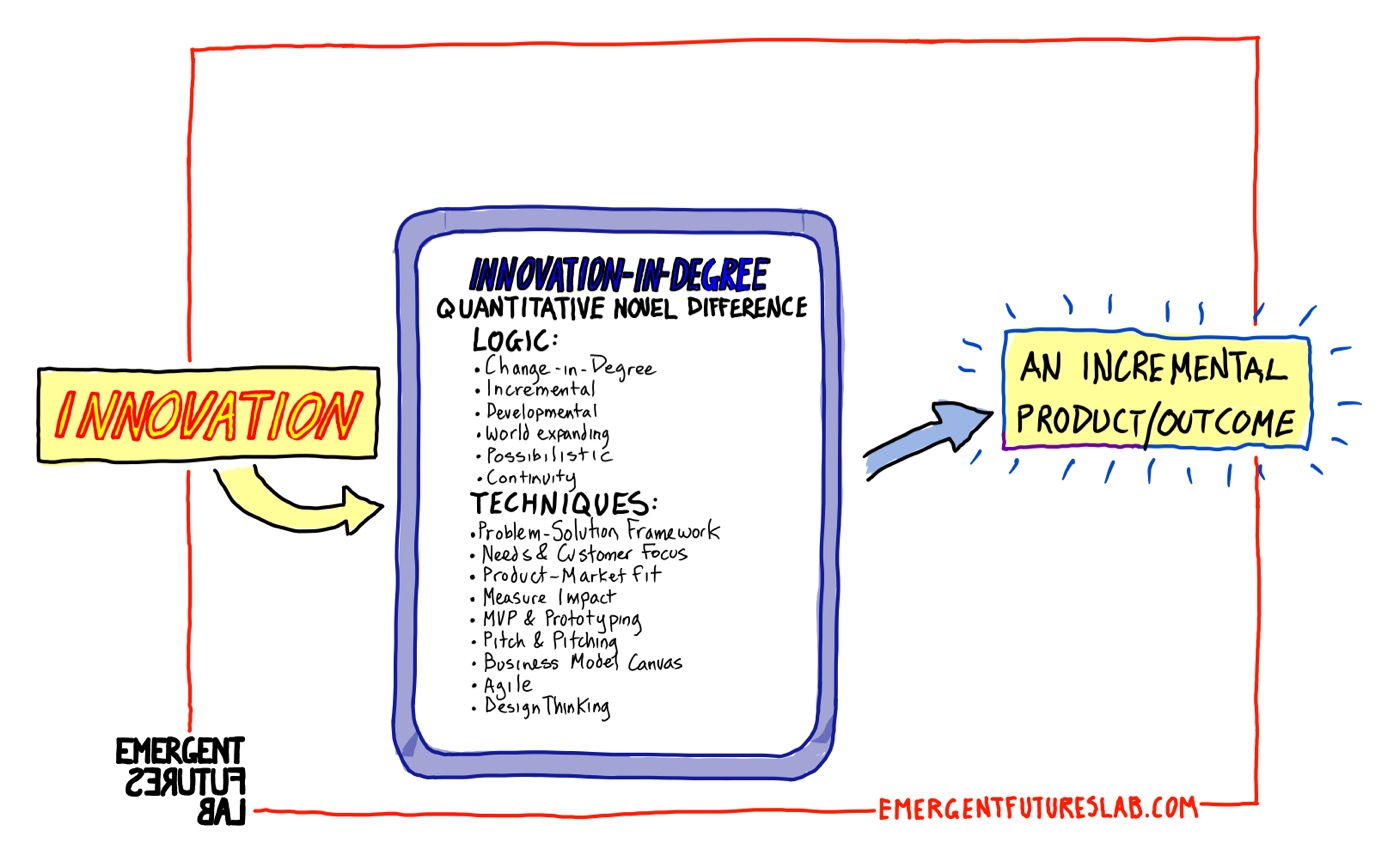
These two logics underpin a vast array of familiar creativity techniques: problem-solution frameworks, needs and customer focus, product-market fit, MVP and prototyping, pitching, business model canvas, agile, design thinking. They all produce incremental products and outcomes. We call this cluster developmental innovation. It is useful, and it does work in certain limited contexts.
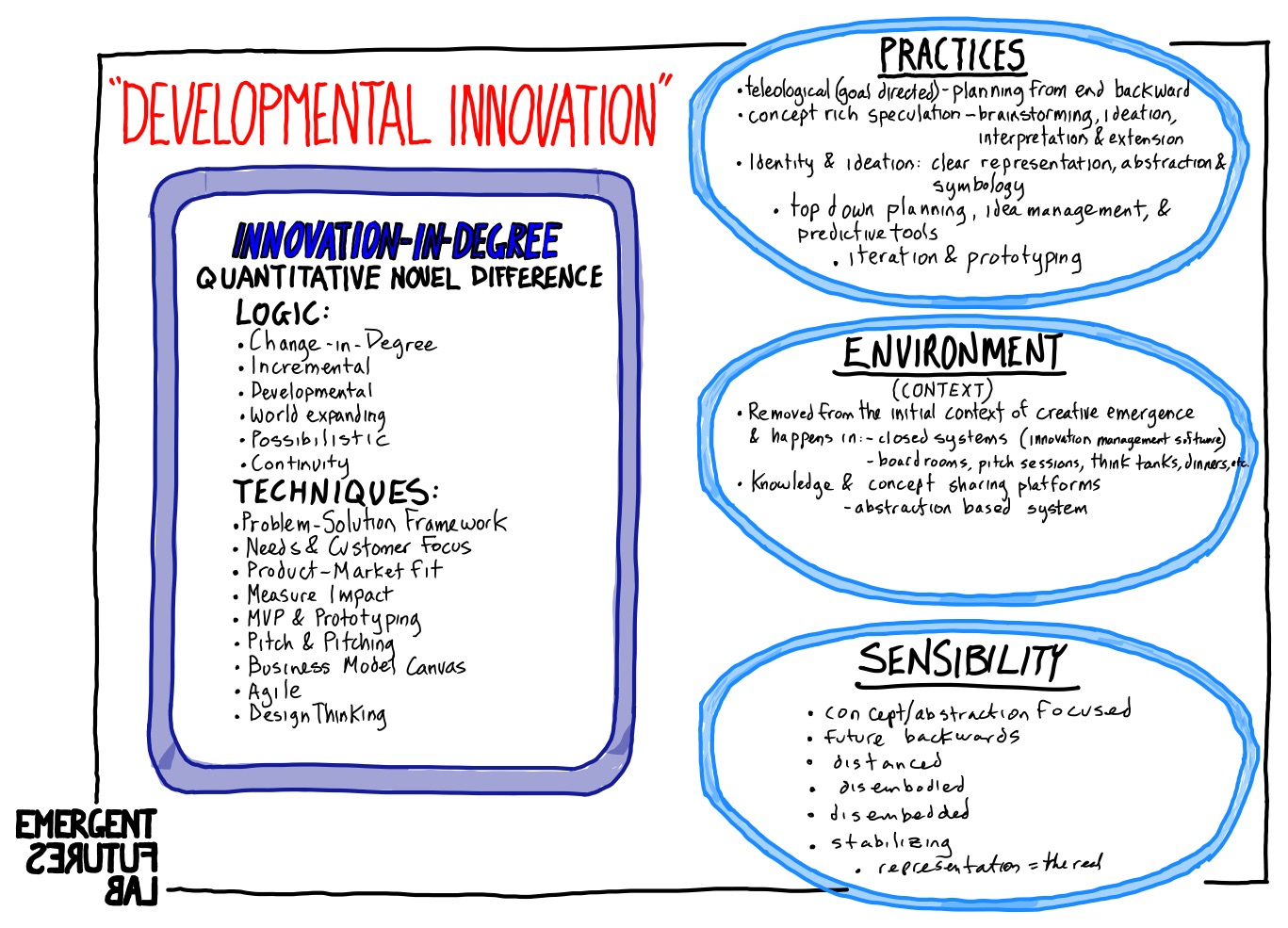
Zoom out on developmental innovation, and you see a consistent set of:
Practices (teleological, concept-rich speculation, brainstorming, ideation, interpretation and extension of what already exists), Environments (removed from the context of emergence – boardrooms, pitch sessions, think tanks, abstraction-based systems), and Sensibilities (concept-focused, future-backwards, distanced, disembodied, stabilizing – representation as the real).
So what is the problem with all of this? The trouble is that it gets borrowed to do a job it was never built for…
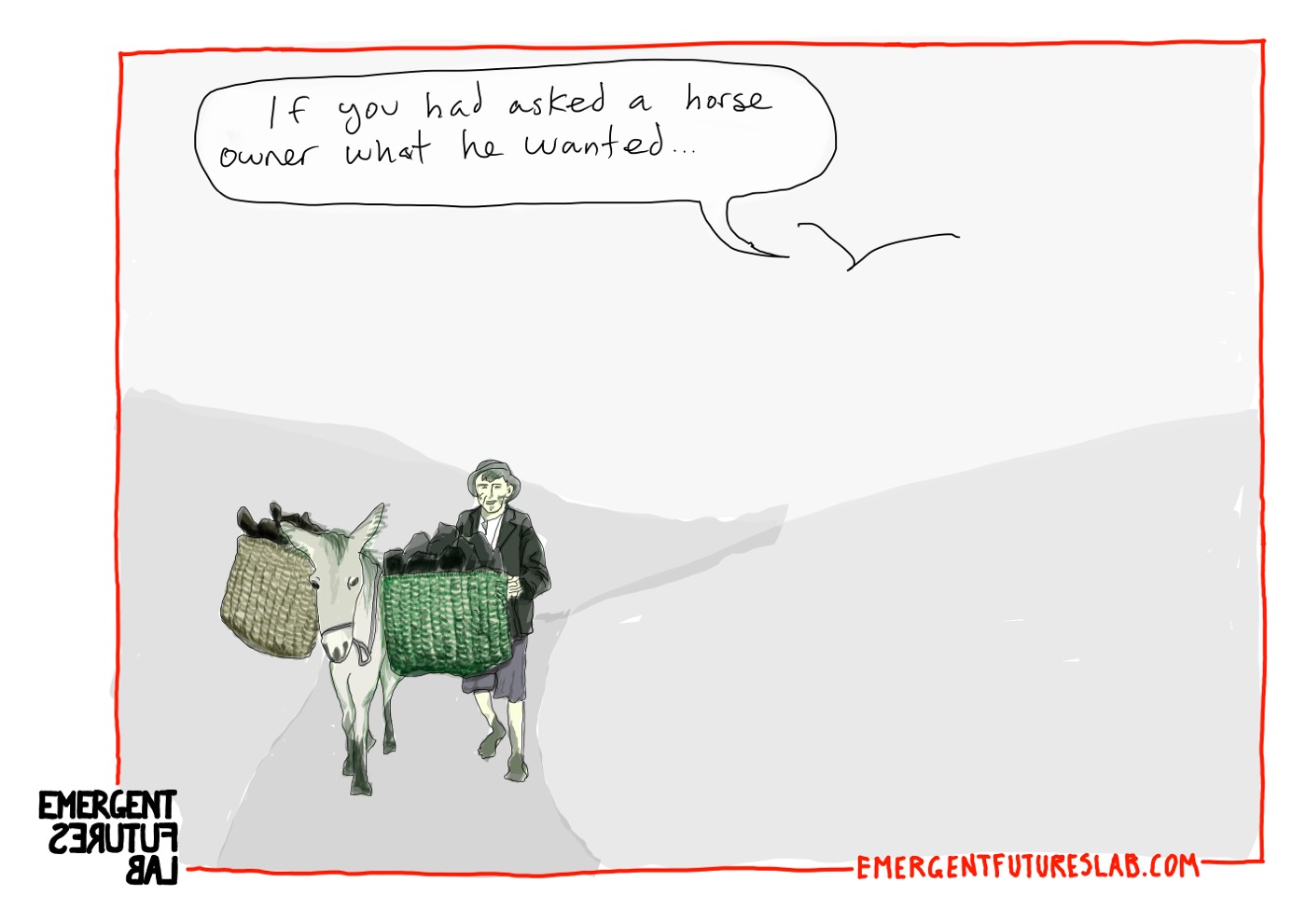
There's a quote – misattributed to Henry Ford, but still instructive:
“If you had asked a horse owner what he wanted, he never would have said a car. He would have said: faster horses that eat less, carry more, and need less rest”.
Nobody deeply embedded within “horse world” could have ideated their way to the automobile. Why? It wasn't a better version of what existed. It wasn't simply a variation of the known – it wasn't a change-in-degree. It was something else entirely. It was something paradigmatically – or qualitatively different. And ideational techniques, because of their conservative (change-in-kind) logic, are profoundly unsuited to engaging with qualitative differences.
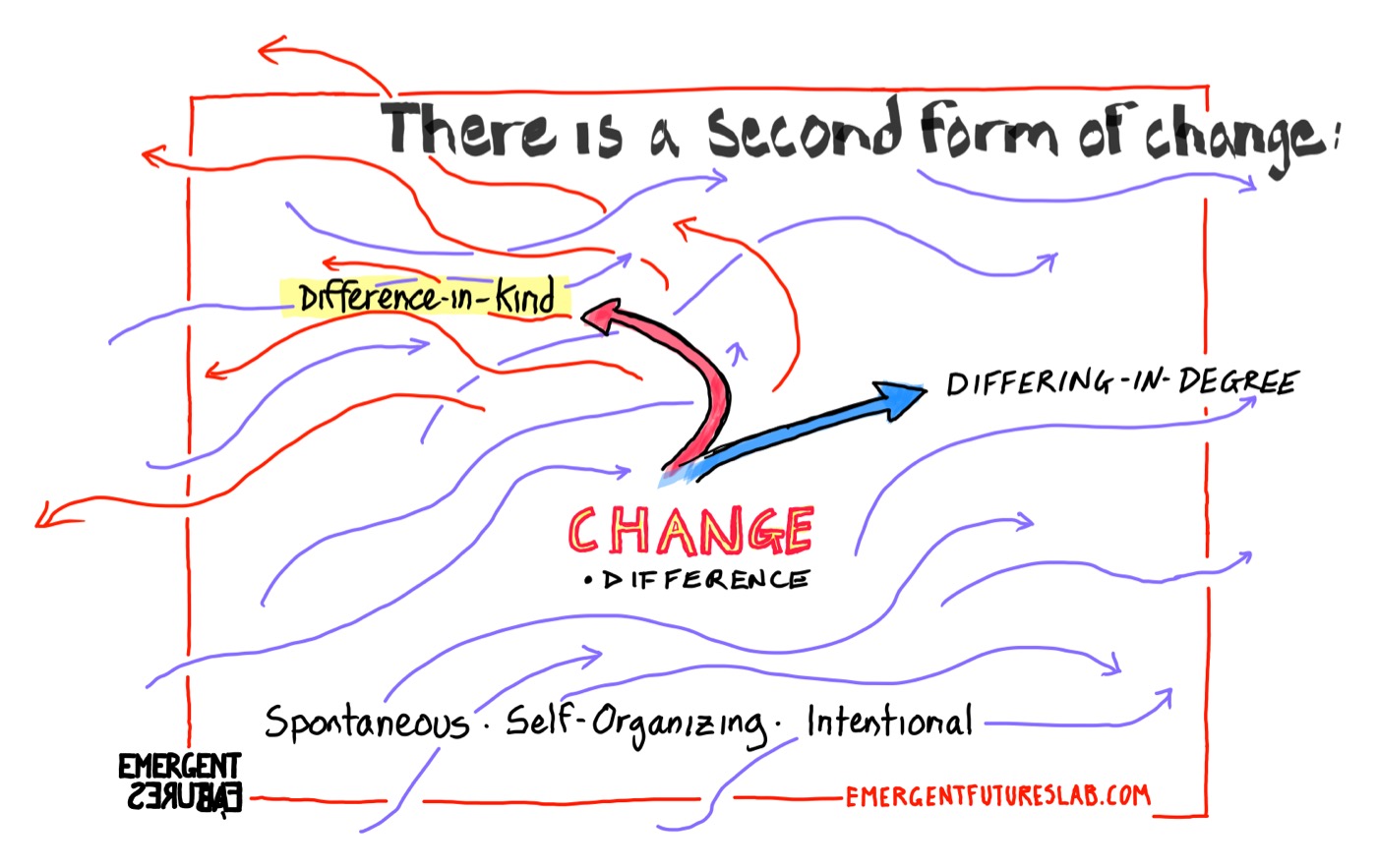
Which brings us to the second form of change: difference-in-kind.
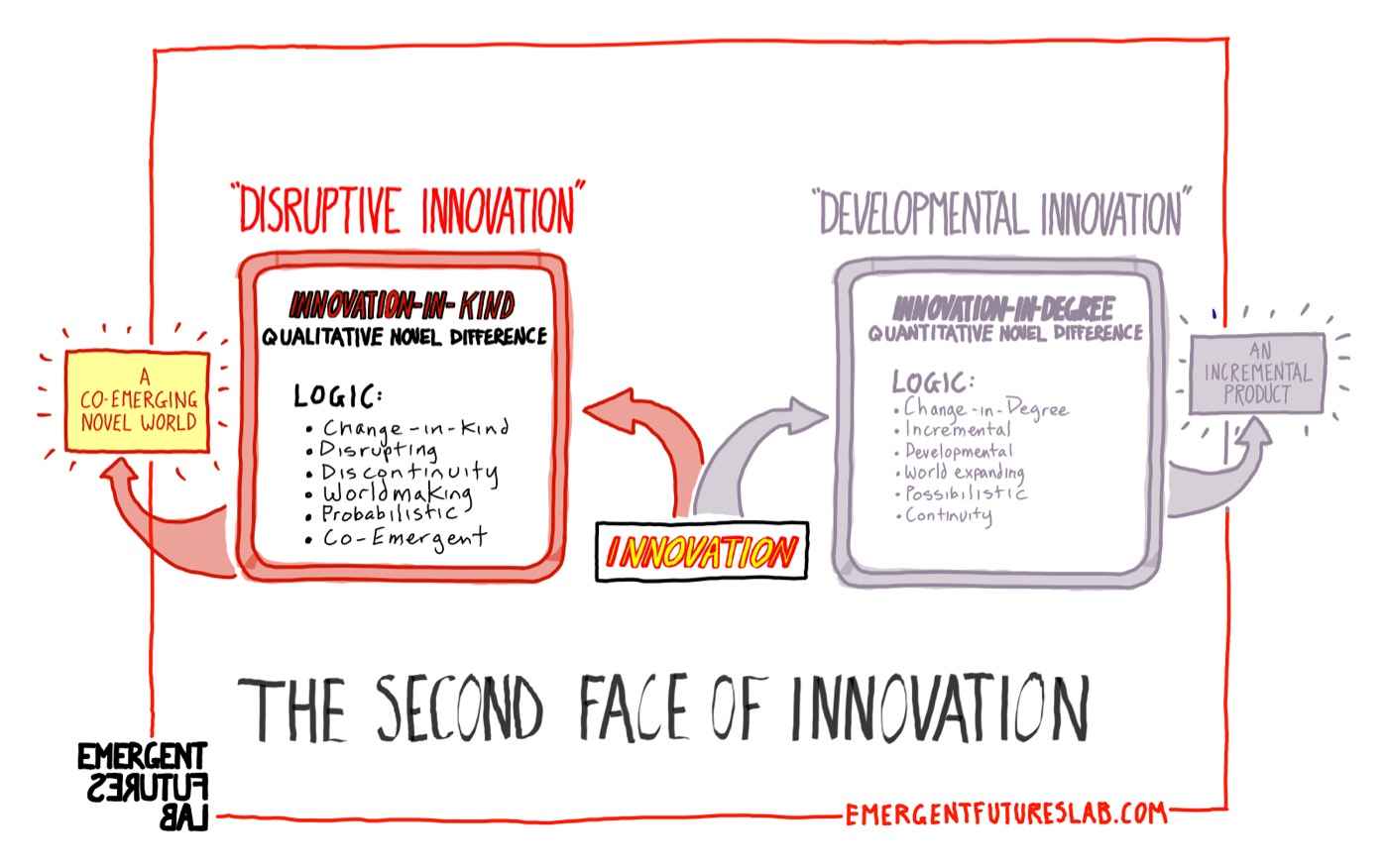
Change-in-kind is qualitatively novel. It doesn't improve what exists. It ruptures it. It makes worlds rather than products. It is discontinuous, possibilistic, and co-emergent. This is the “second face” of innovation that is far too often forgotten or simply conflated with the first.
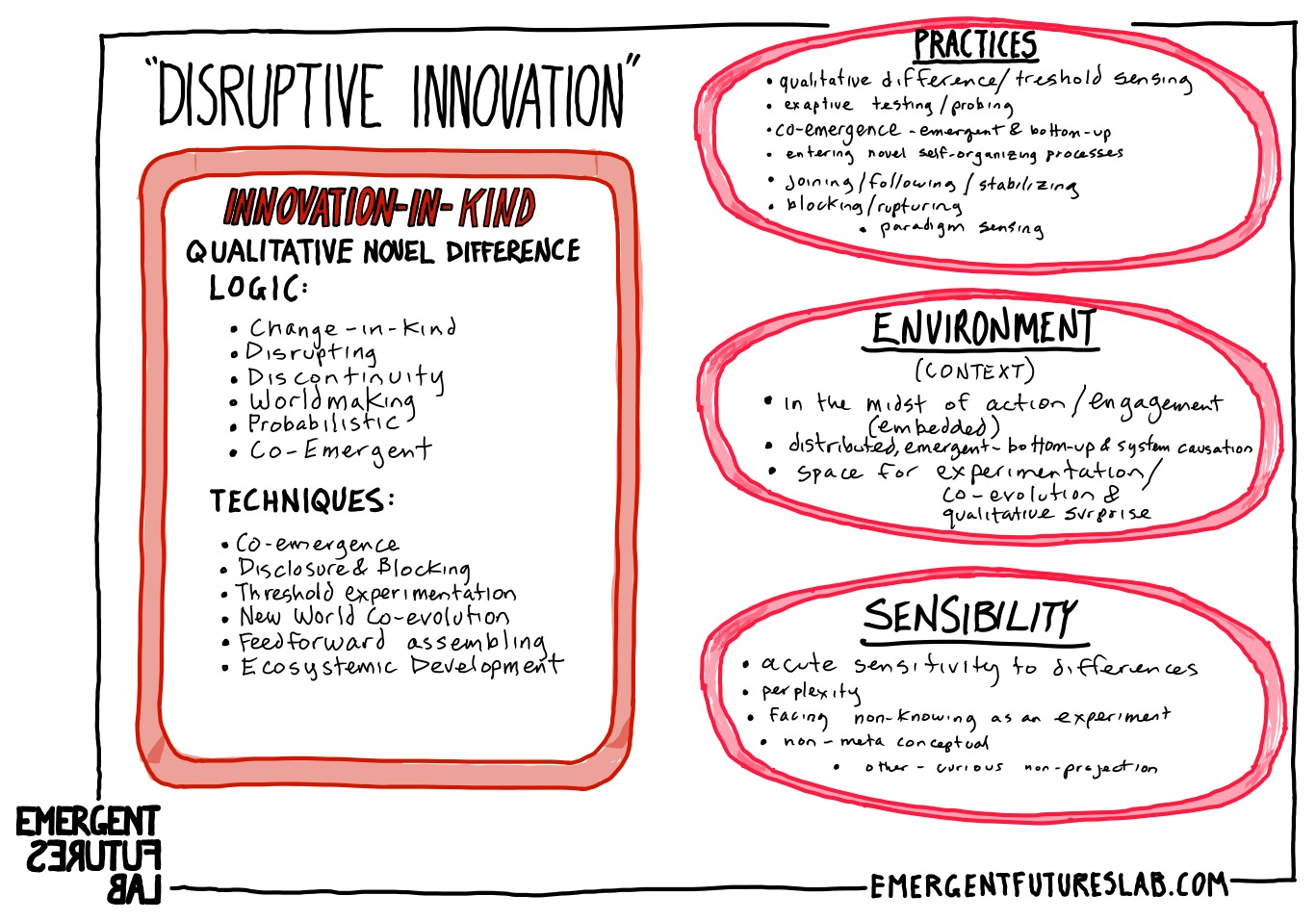
When we pursue innovation-in-kind – genuine disruption – the entire paradigm and logic shifts from that of the far more common change-in-degree.
The new logic is not incremental or developmental – rather it is disruptive, discontinuous – it is probabilistic and co-emergent – and rather than world-expanding, it is worldmaking.
The techniques become ones that are strange to many: co-emergence, disclosure and blocking, threshold experimentation, new-world co-evolution, feedforward assembling, and ecosystemic development.
The environment in which change happens must be approached quite differently: we must be embedded – in the midst of action, distributed, work from a bottom-up and systems causation perspective, with space for novel co-emergent experimentation and qualitative surprise.
The sensibility shifts as well: we need to develop an acute sensitivity to difference, welcome perplexity, face the non-knownable/non-pre-existant as an experiment, with curiosity over projection.
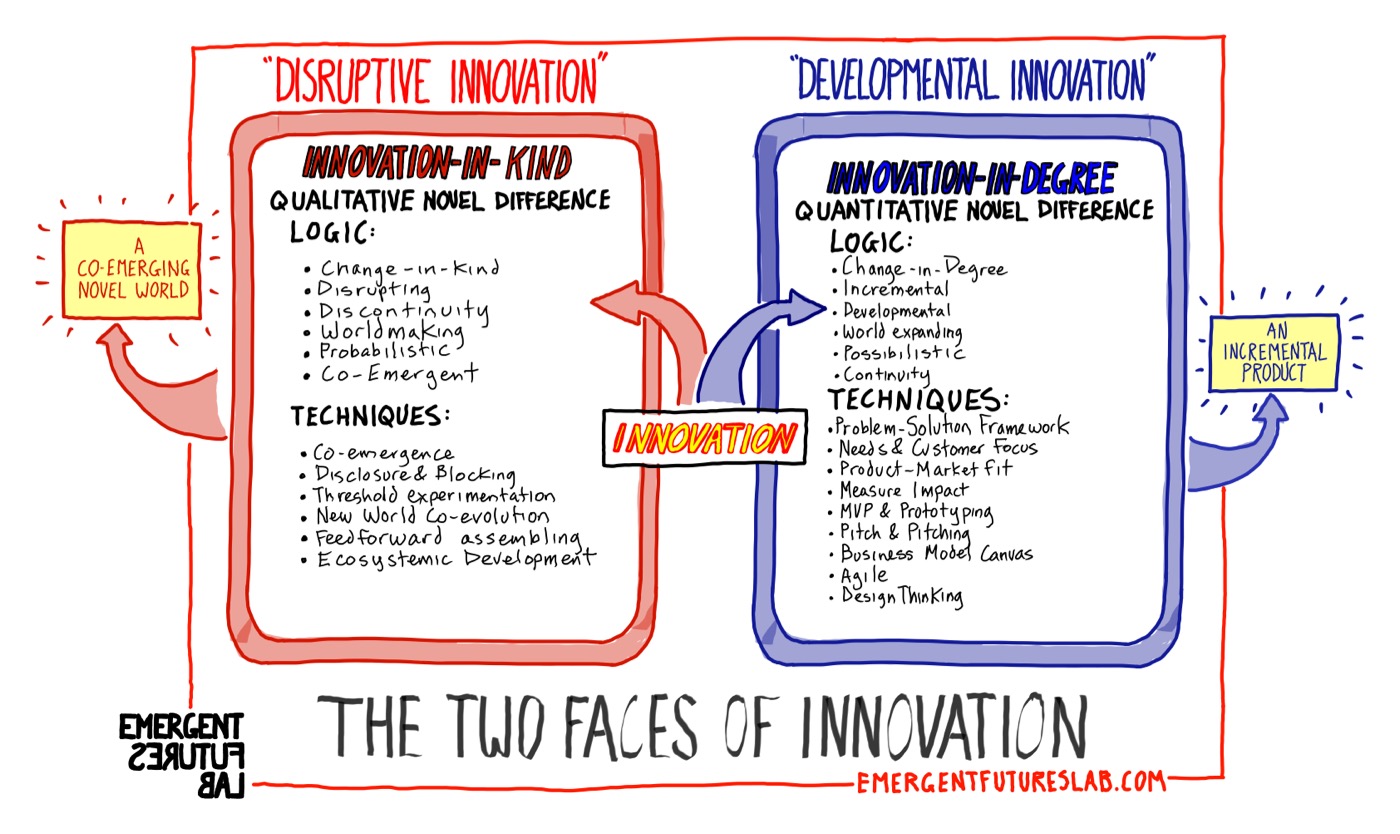
Considered side by side, neither form of change nor innovation is better than the other. Both are necessary. But qualitative change and disruptive innovation consistently get treated as if it's simply a variation of developmental innovation that is just pursued with more ambition:
It's as if you can sit in the same boardroom, use the same sticky notes, run the same workshop – just with bolder intentions and you will get to something you can’t even conceptualize whatsoever…
This is where everything breaks down. You cannot do innovation-in-kind with the same tools, the same environments, the same habits and structures. The two require fundamentally different orientations, tools, practices, concepts, and environments.
Before moving to the second pillar, we need to take a step backward and address the historical background that shaped how our current approaches to creativity became so focused on change-in-degree.
The creativity framework most of us are working inside isn't neutral. It has a history. It was built on a specific set of assumptions, and understanding – and understanding where those came from conceptually is a necessary step toward being able to leave them behind.
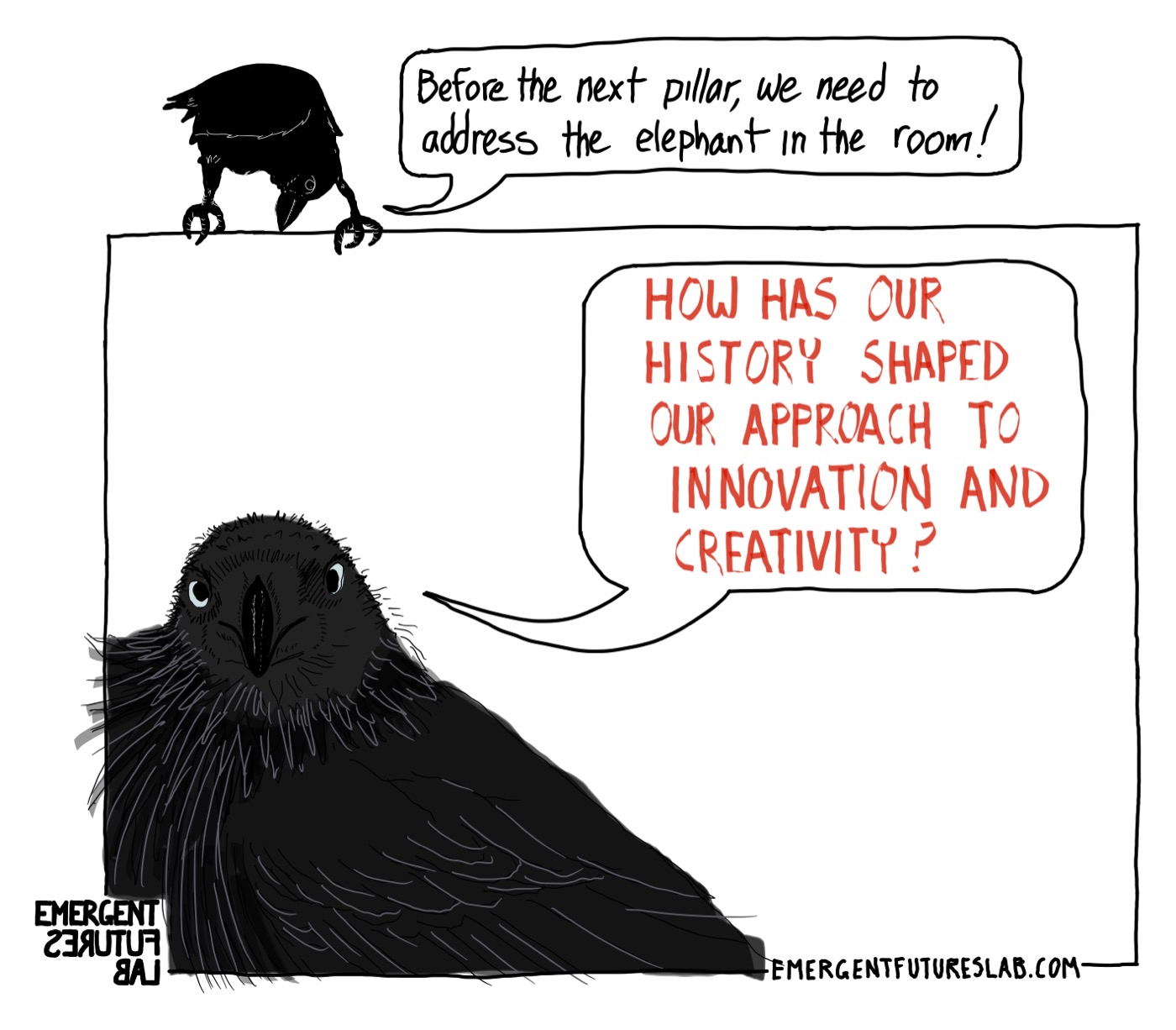
The question is: How has our history shaped our approach to innovation and creativity?
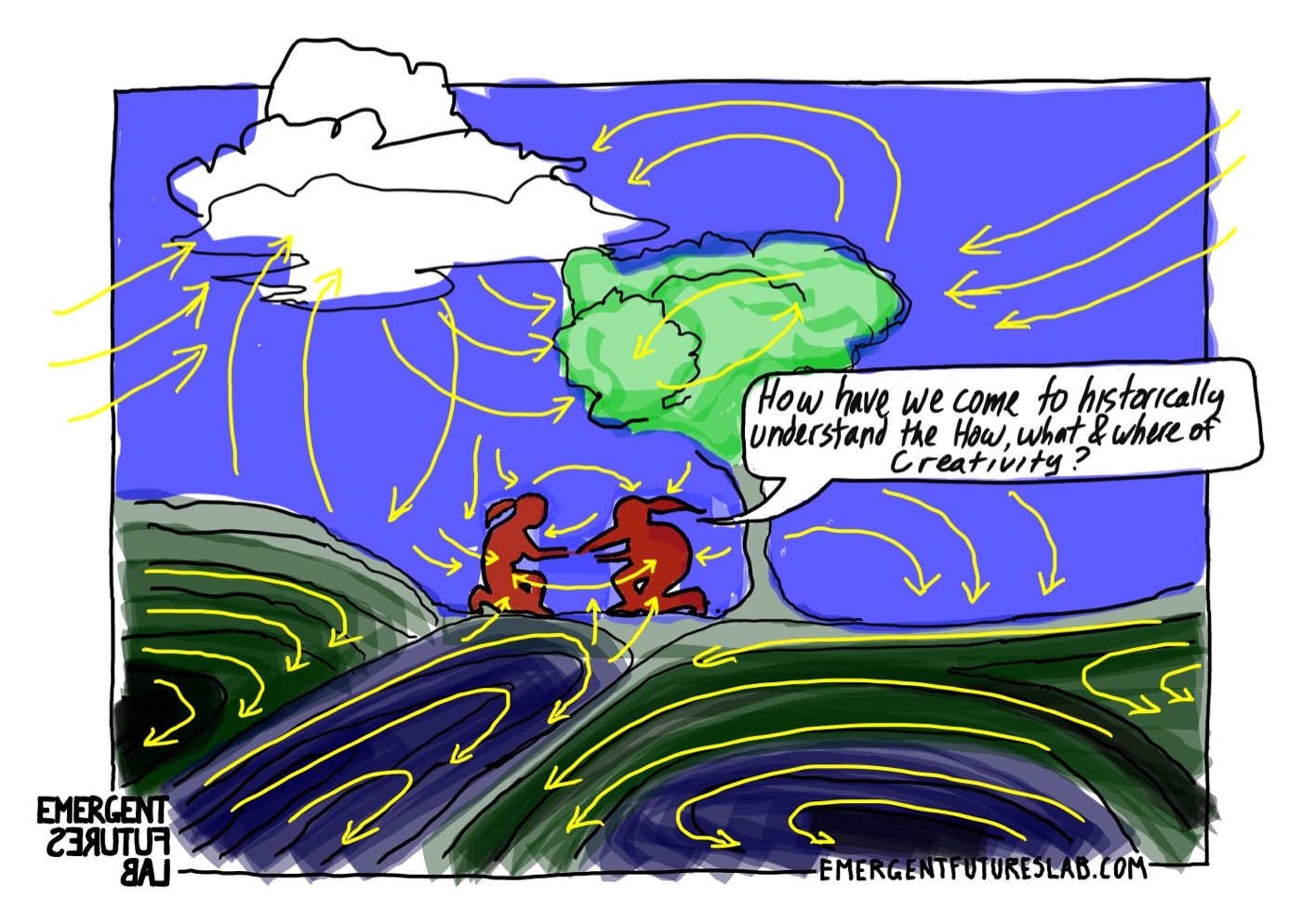
Let’s return to the three opening questions:
What is creativity? Where is it? And how is it done?
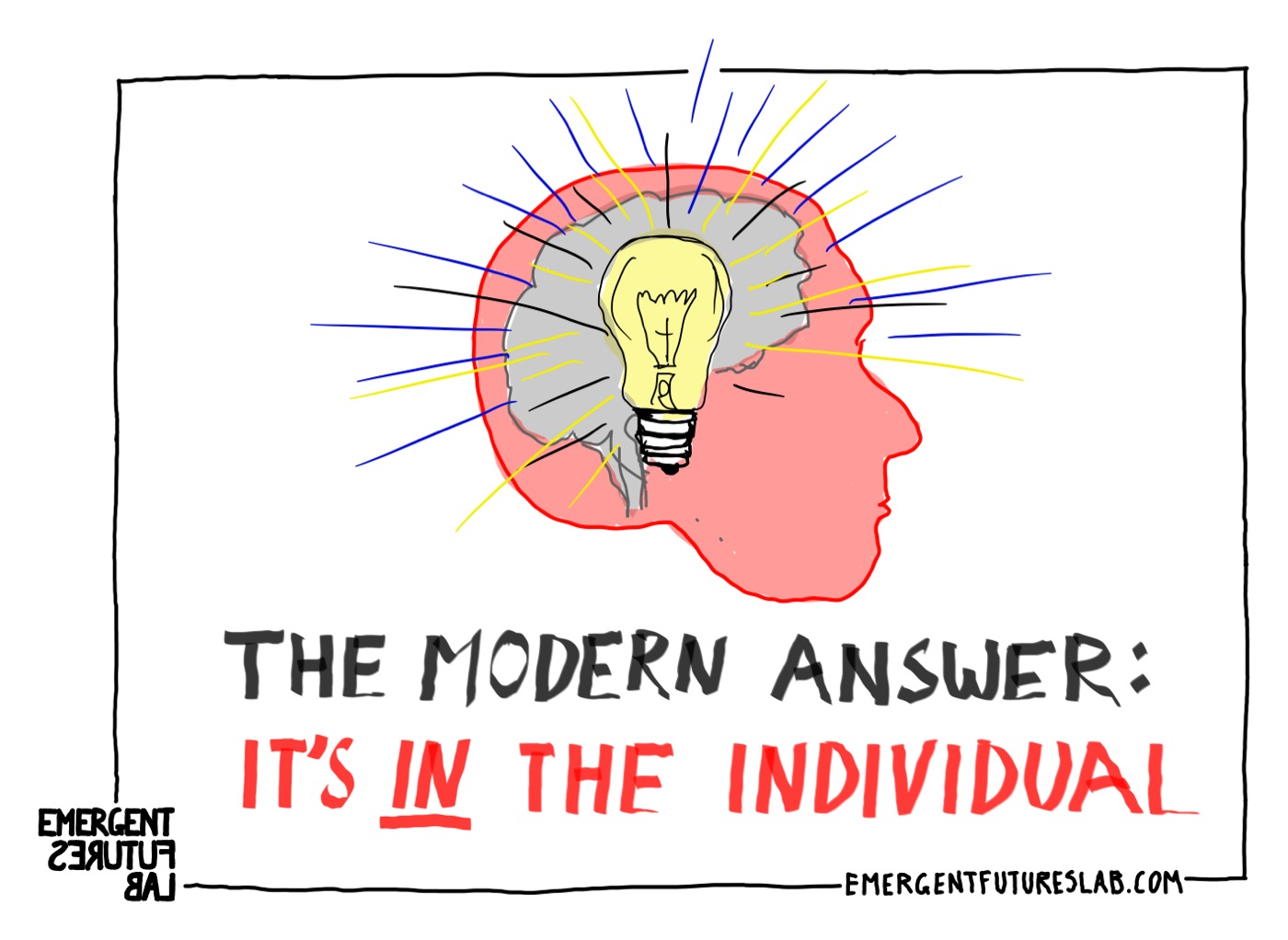
The modern answer comes fast and with great confidence: creativity is an idea, and it lives in the individual. Specifically, in the brain. Some neurologists will tell you they can pinpoint the precise set of locations. There's a whole research industry built around locating the neural correlates of creativity.
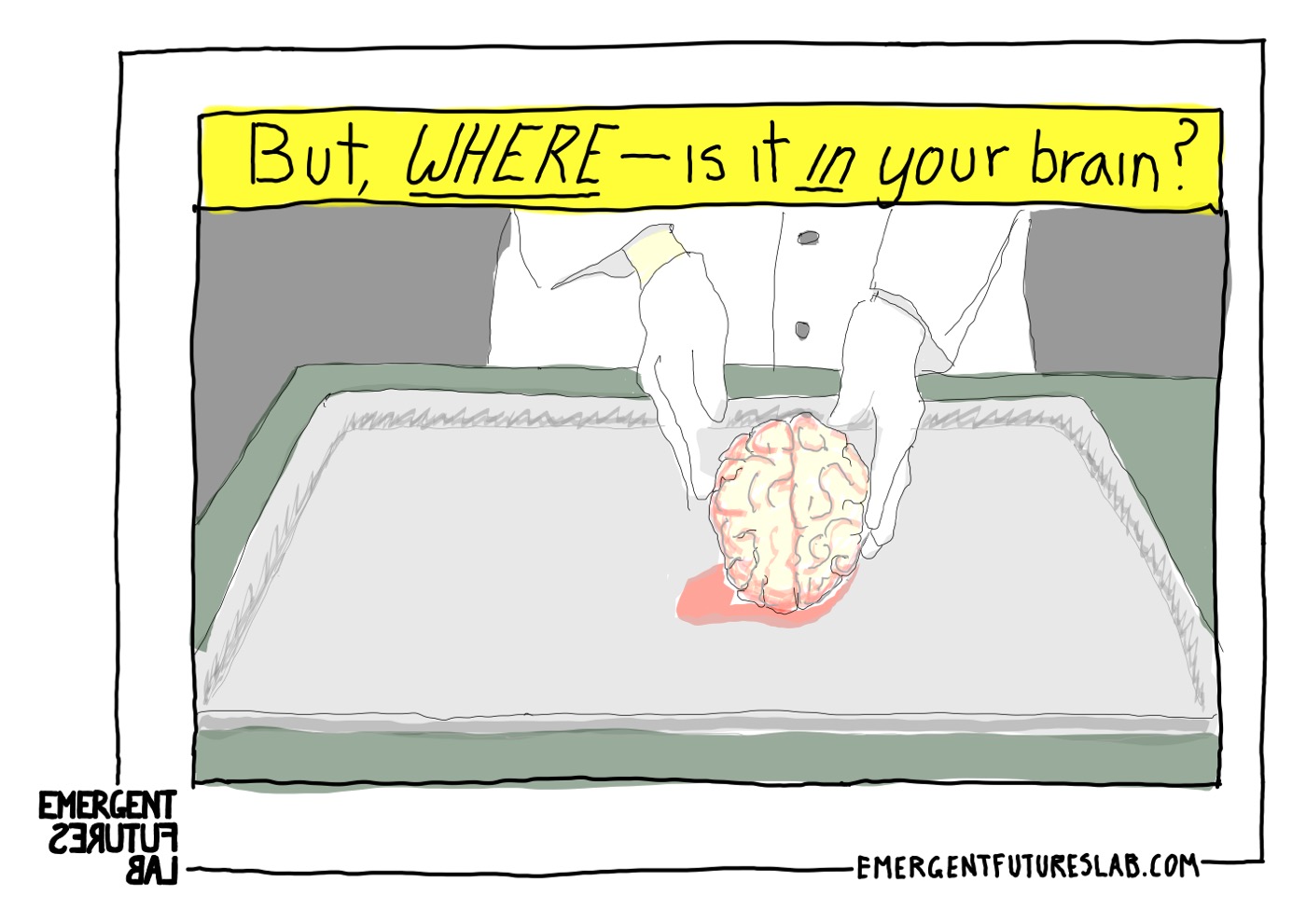
But where exactly in the brain?
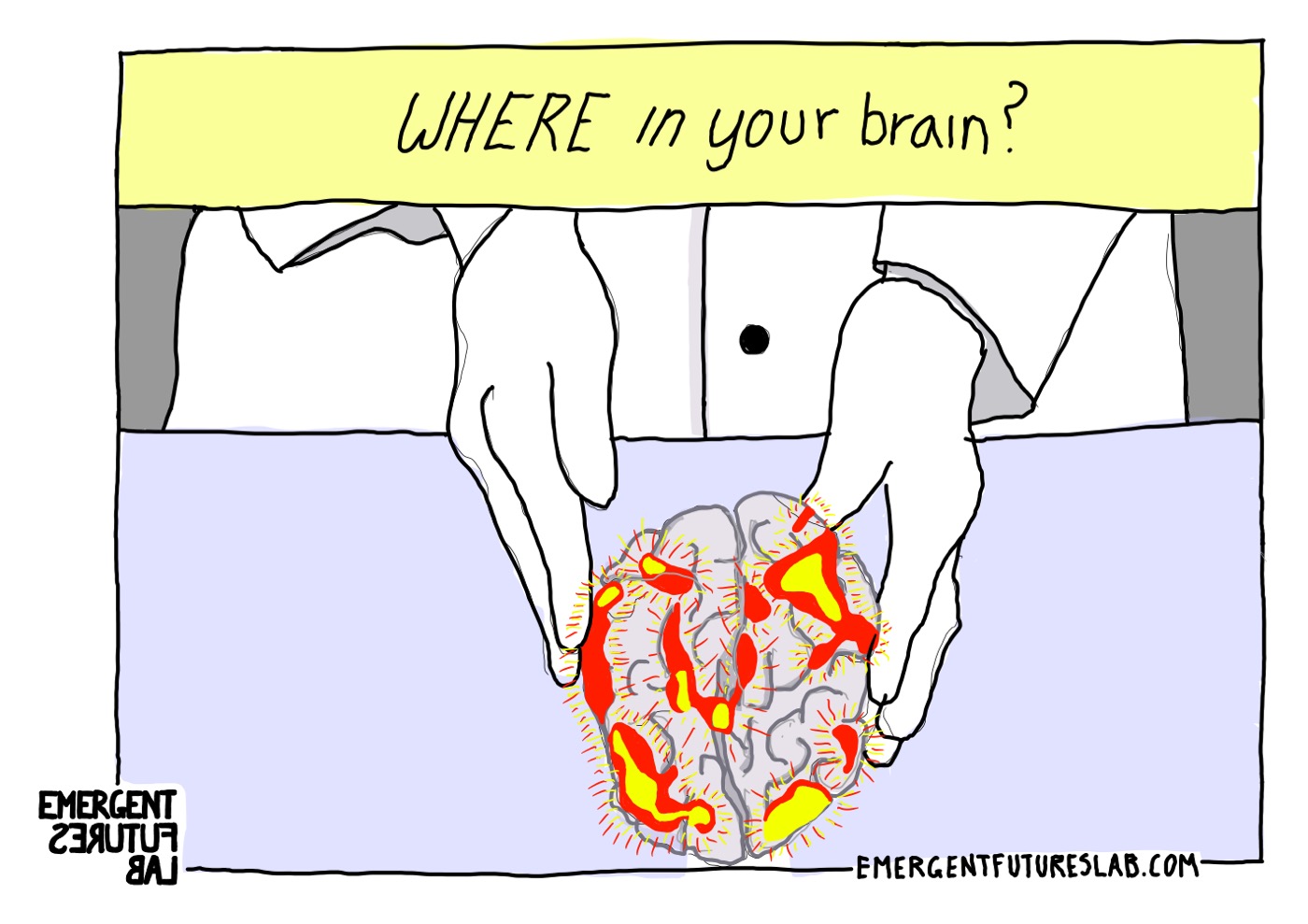
The EEG images are striking. The problem is that this is a category error, and it shapes everything that follows. But before getting to this – it is important to see what follows from this problematic assumption:
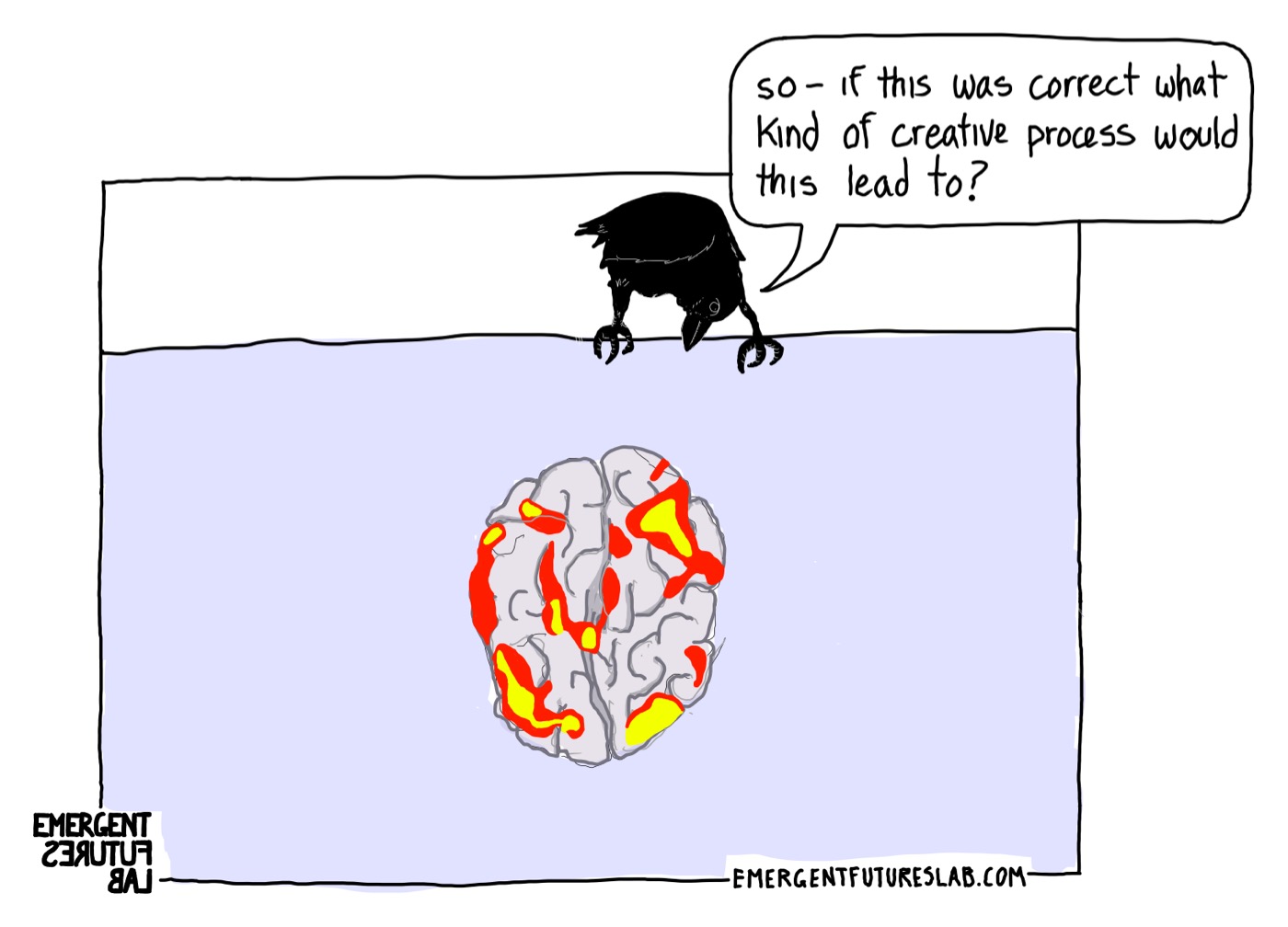
If creativity is in the brain – in some identifiable neural substrate – then the creative process must be a particular kind of thing. It's going to be human, individual, and brain-focused. Let's look at where that logic leads.
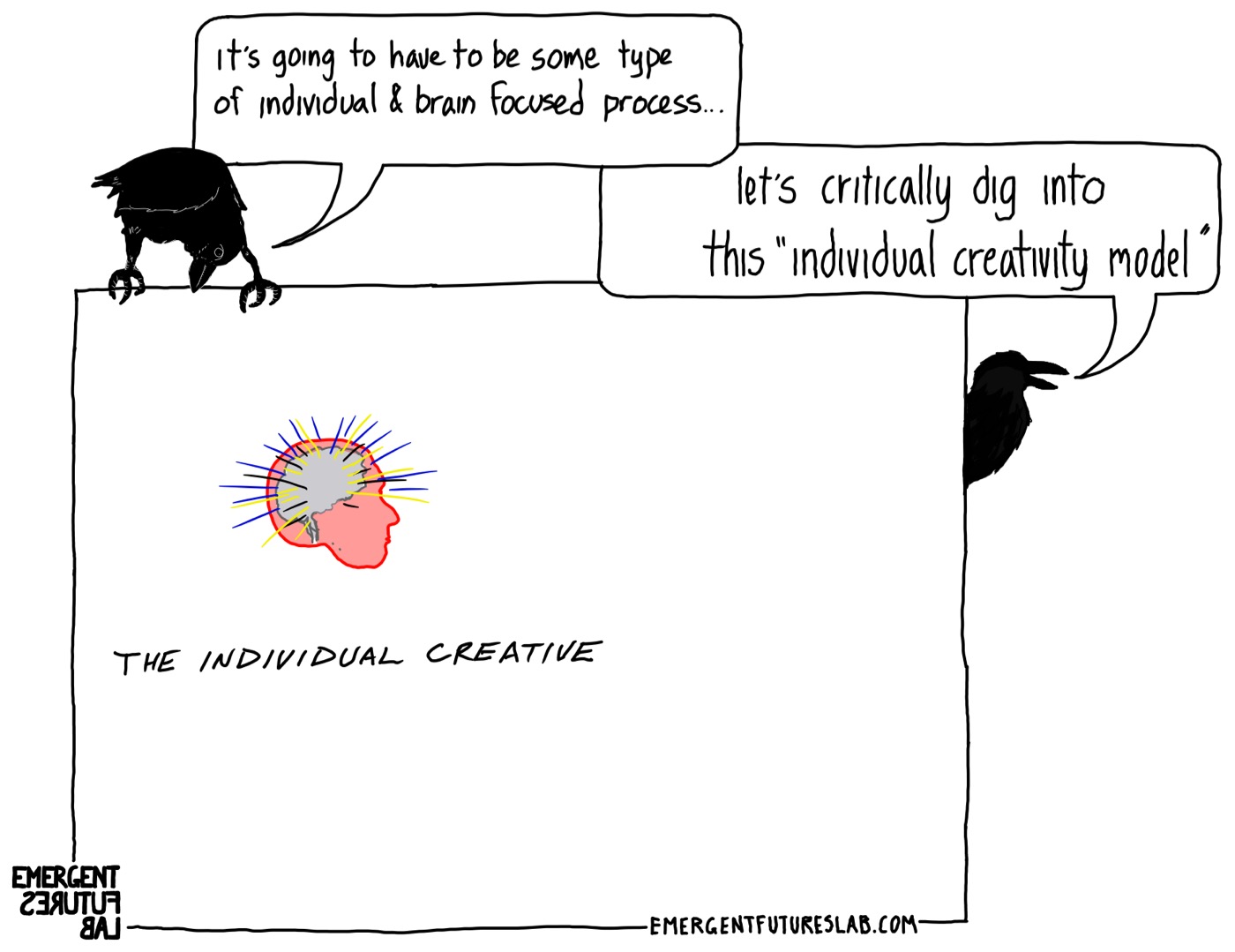
Historically, it has led to a model of radically individualized creativity.
Walk through this broadly used model:
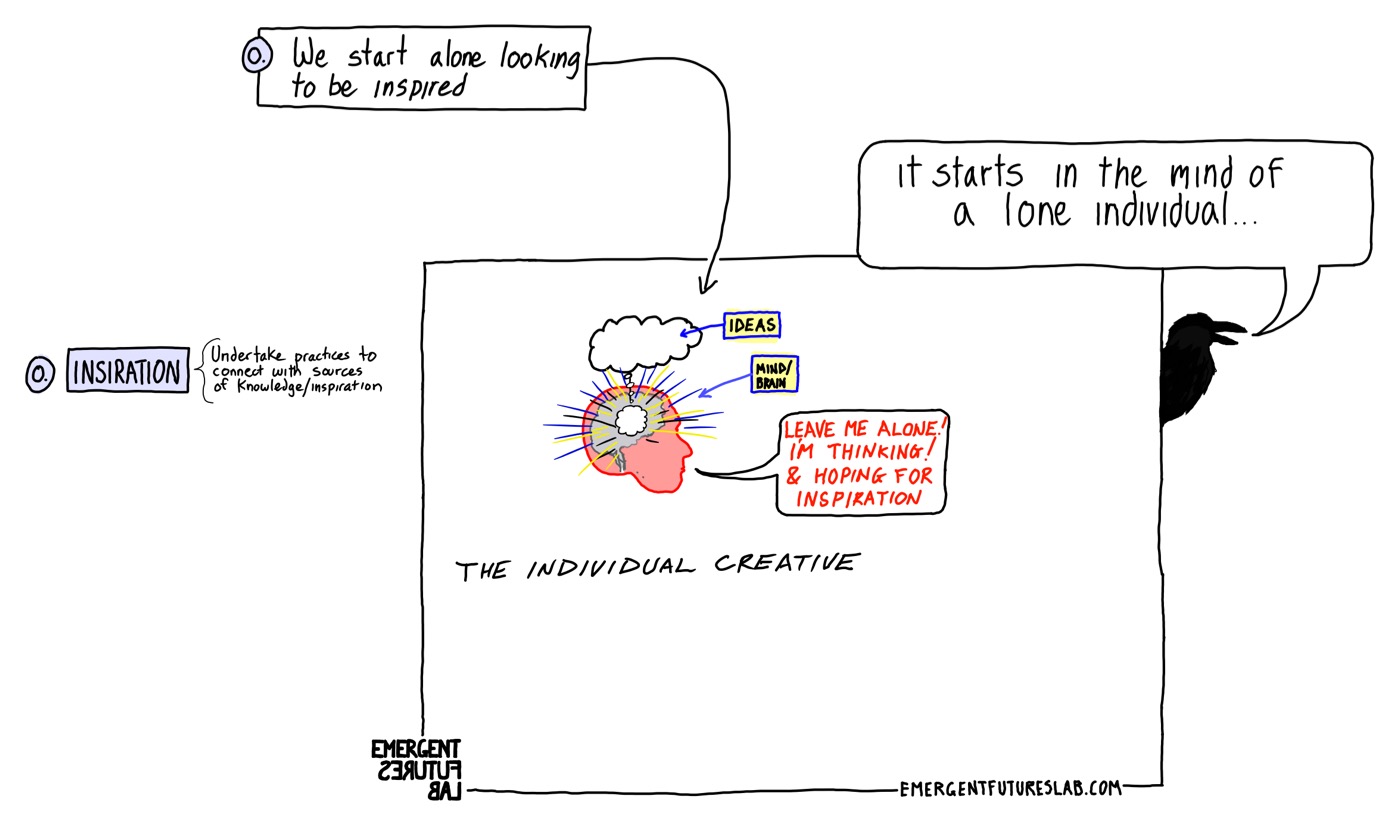
Step Zero: Inspiration. You start alone, looking to be inspired, and undertake practices to connect with sources of knowledge and inspiration.
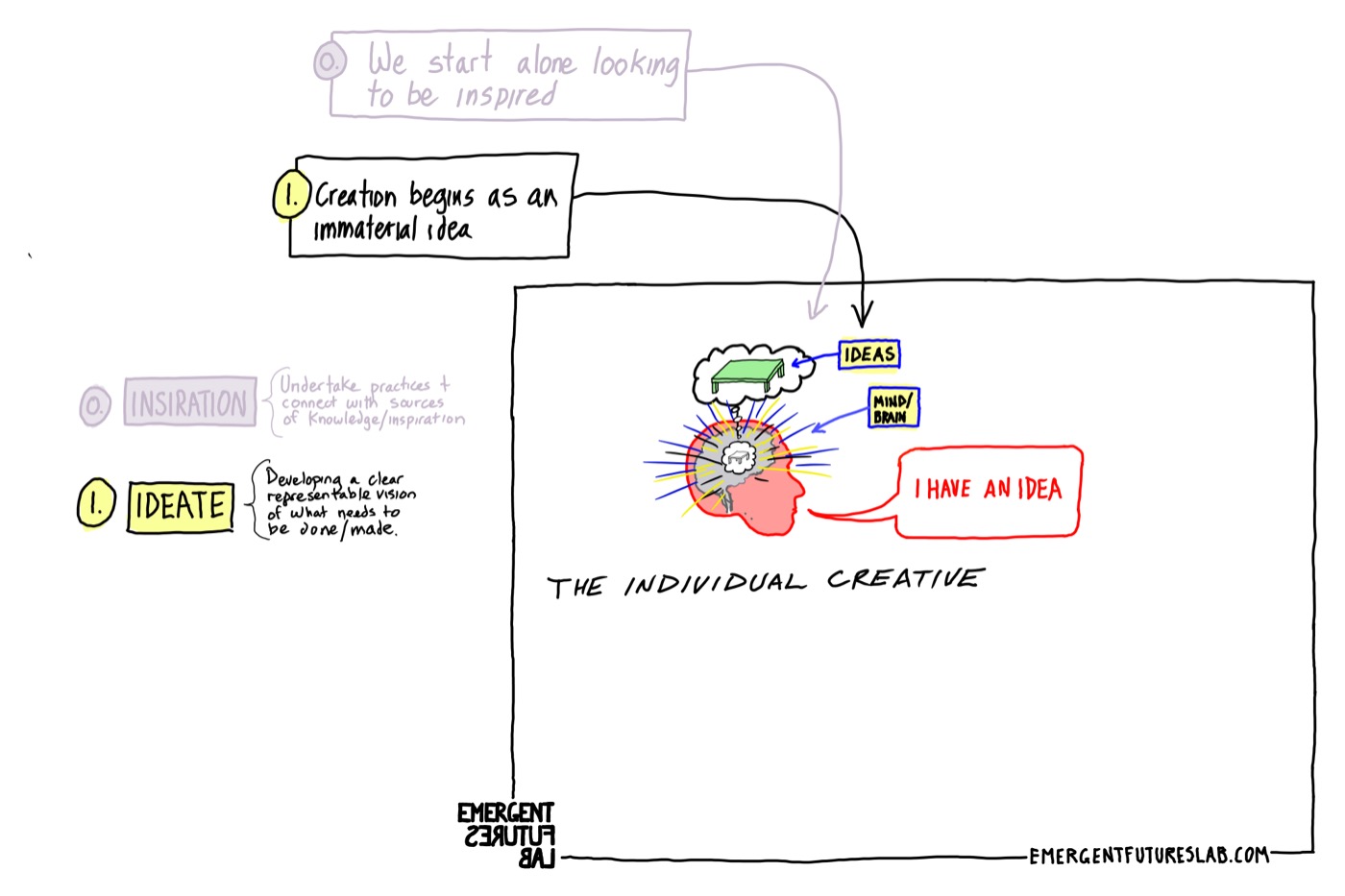
Step One: Ideate. One develops a clear, representable vision of what needs to be done or made.
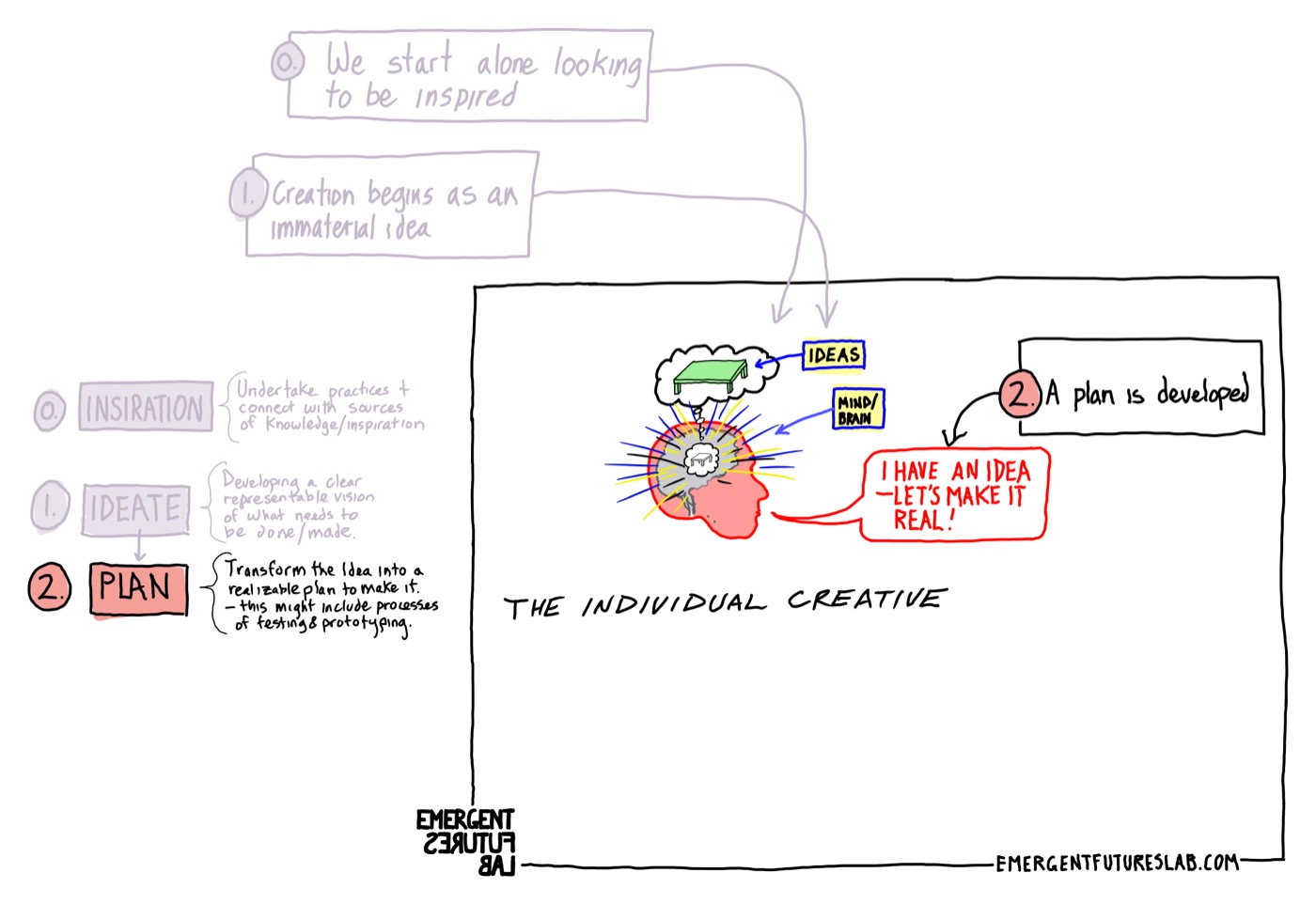
Step Two: Plan. Transform the idea into a realizable plan – which might include processes of testing and prototyping.
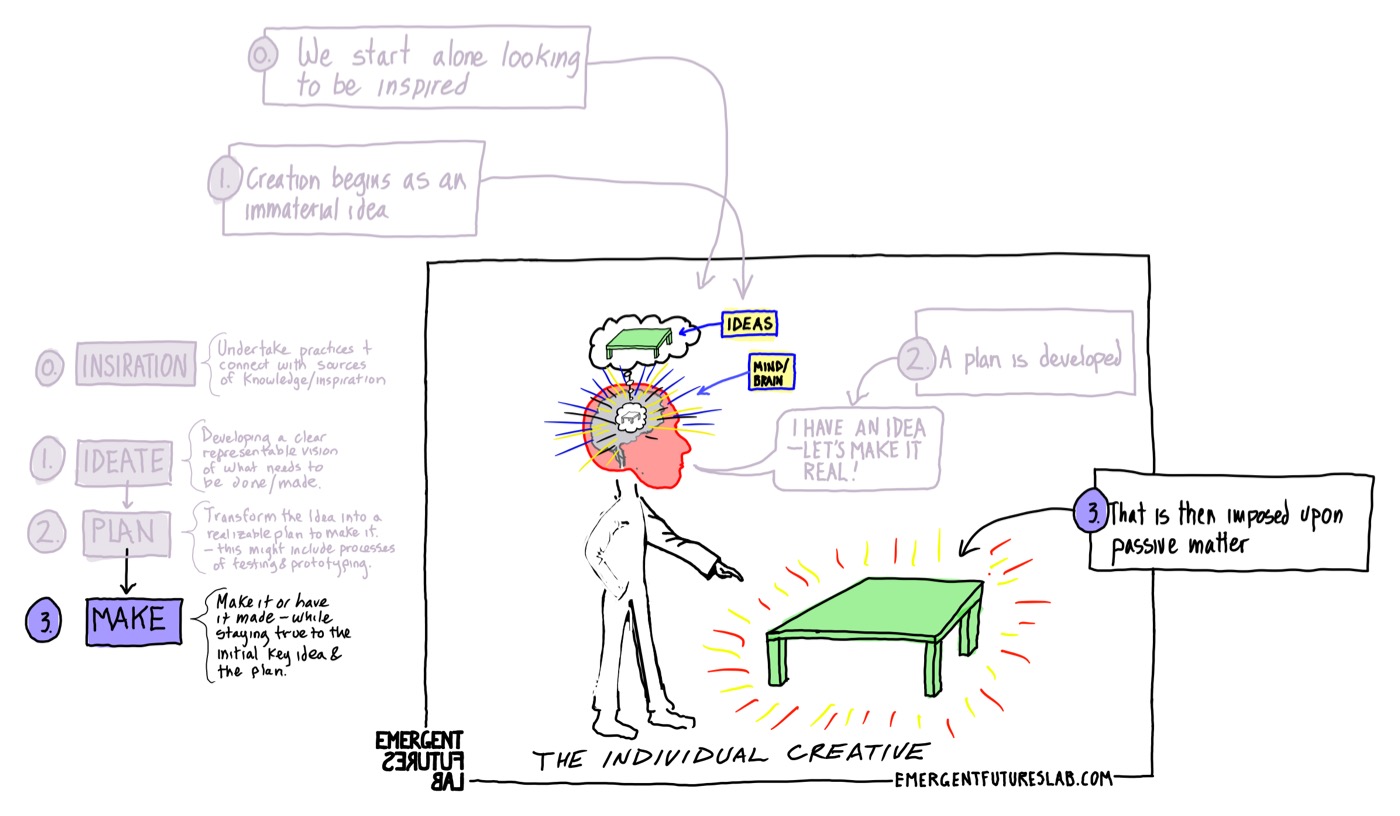
Step Three: Make. Make it, or have it made, while staying true to the initial key idea and the plan. That ideational creation is then imposed upon passive matter.
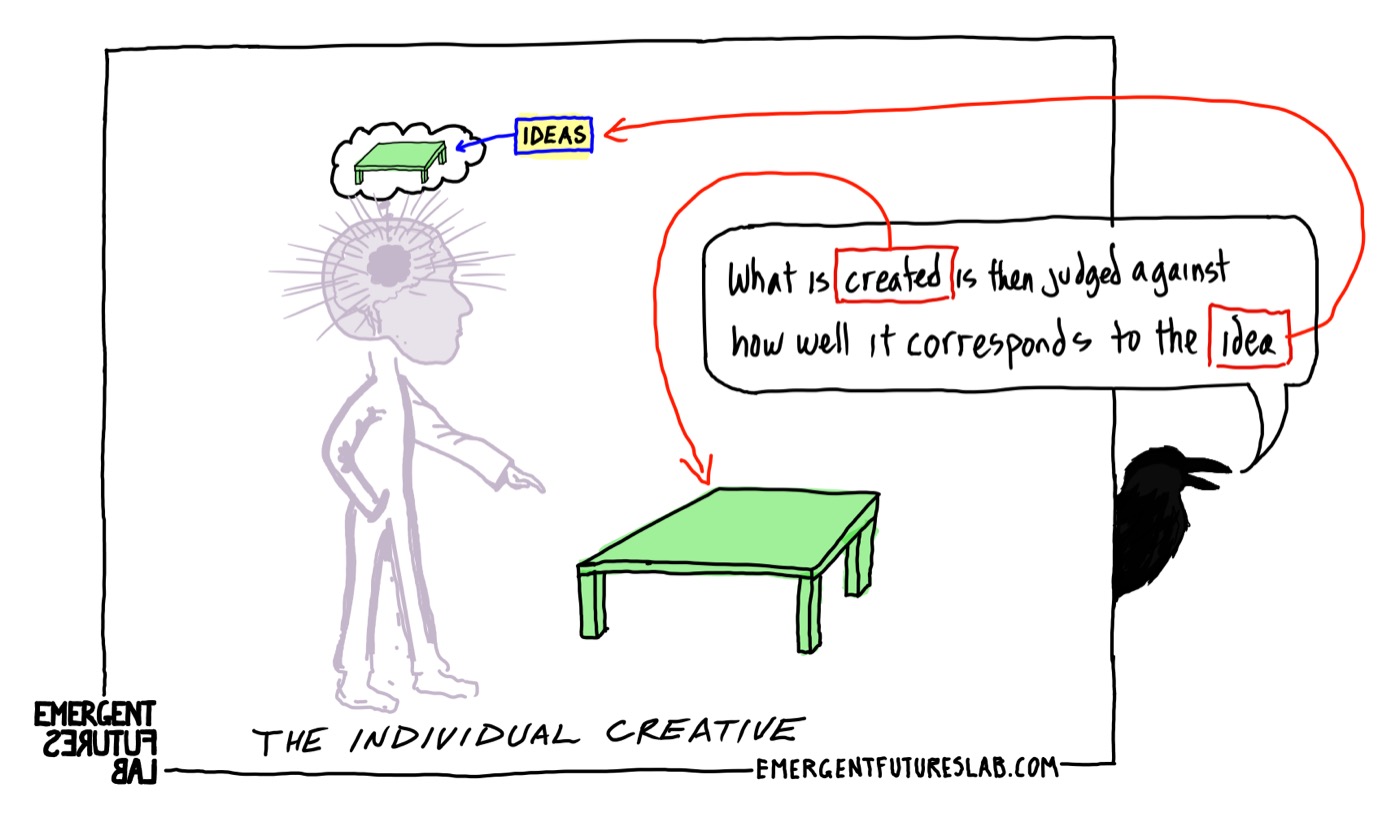
Step Four: Judge. What is created is then judged against how well it corresponds to the original idea. The loop closes: the output is only as good as its fidelity to the initial concept. If reality required compromises, we say “we were constrained – the vision was right, but we had to cut corners, meet budgets, and satisfy stakeholders. If only we'd been left alone…”
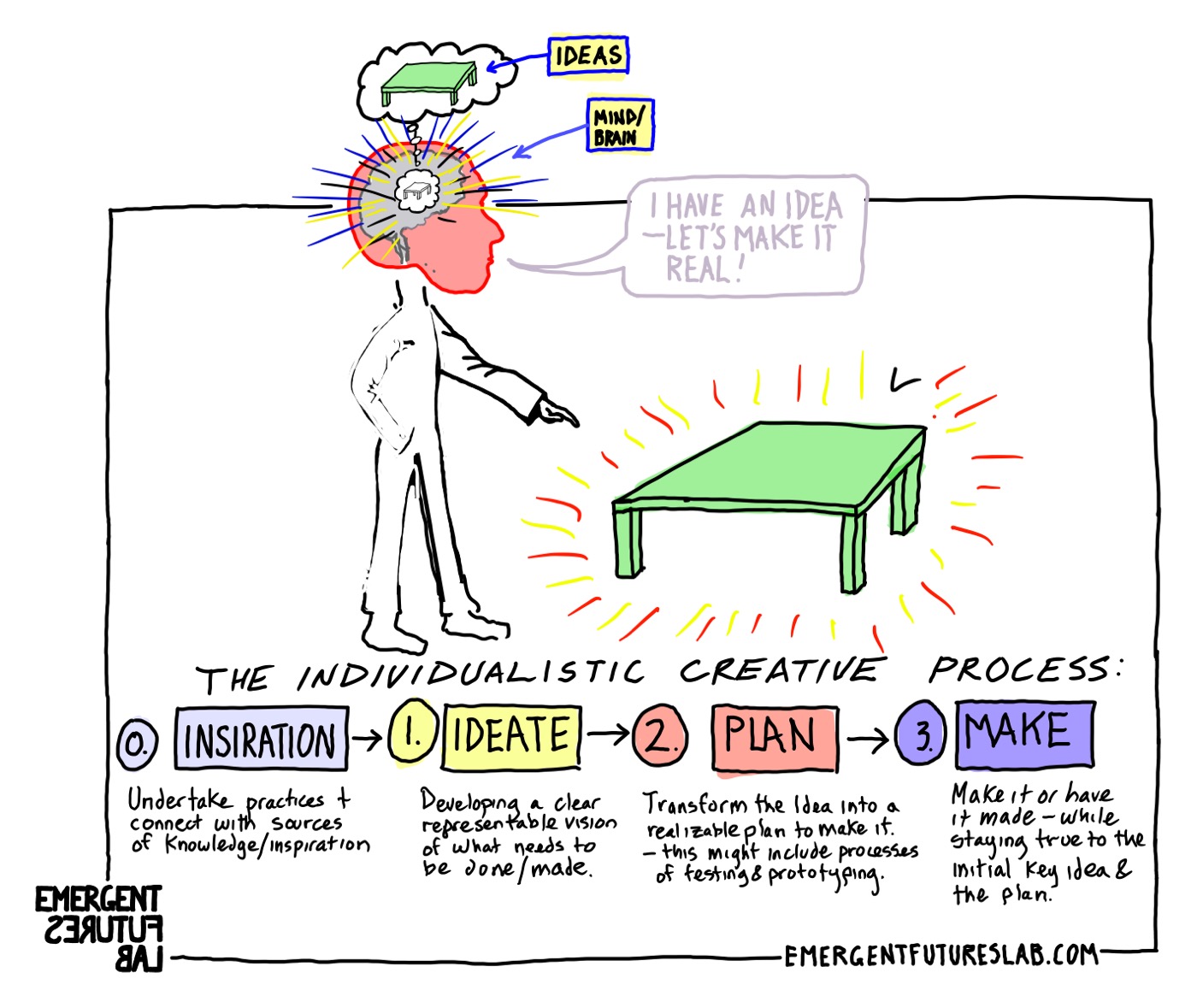
This is the individualistic creative process in full: Inspiration → Ideation → Plan → Make. We call it the God model. It's a theological model, borrowed from the Greeks – the creator conceives the world in mind before imposing it on matter. Critically – nothing new emerges from the process. The end is already contained in the beginning.
And it is critical to recognize: ideation (which drives this process) is conservative – because it is based in representations (words and images), it can only ever be a variation of seeable and sayable givens (change-in-degree).
Let us turn our attention to this four-step model:
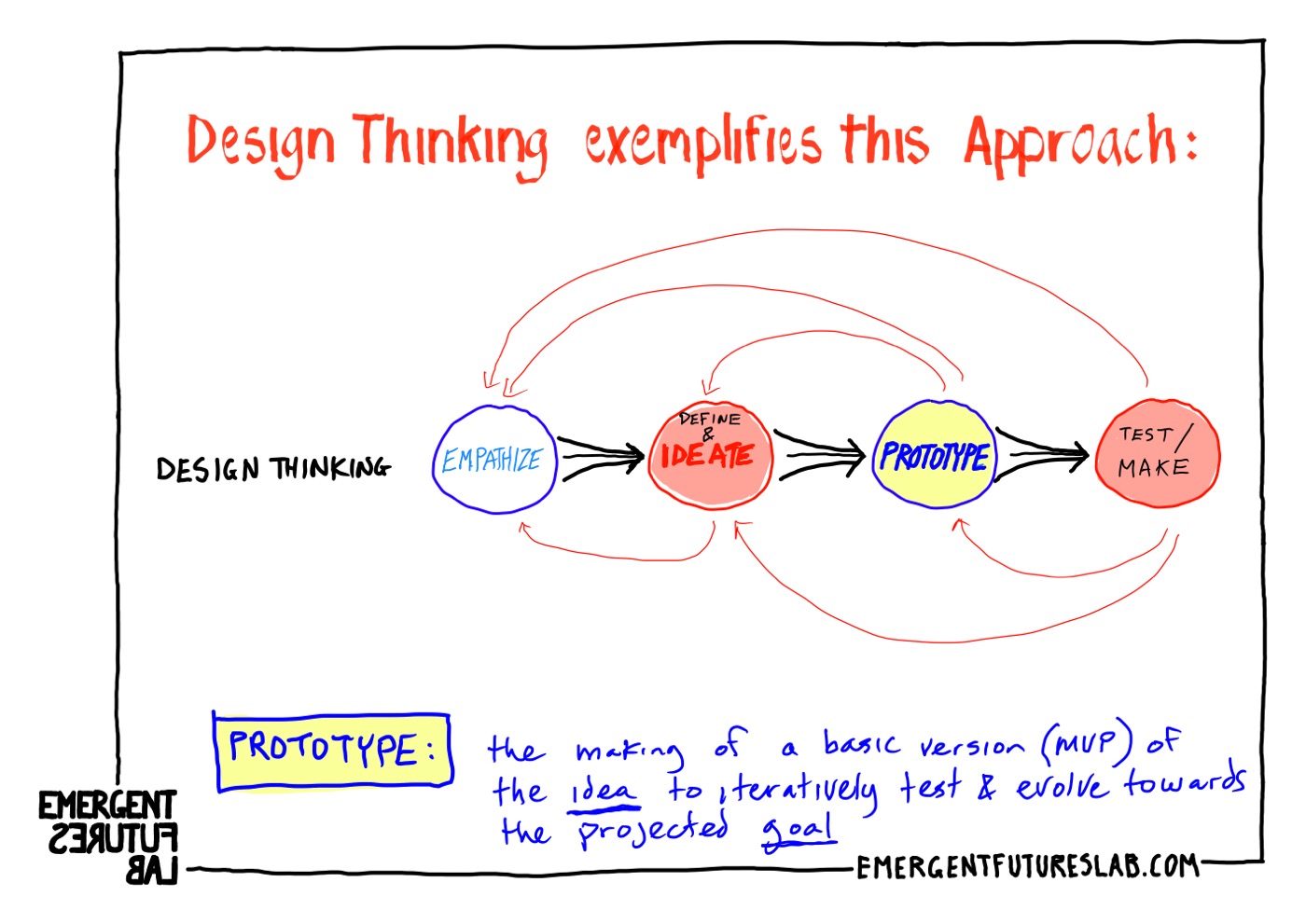
Design thinking is its most celebrated instantiation: Empathize → Define and Ideate → Prototype → Test/Make. With classical linear ideation at the center of the process...
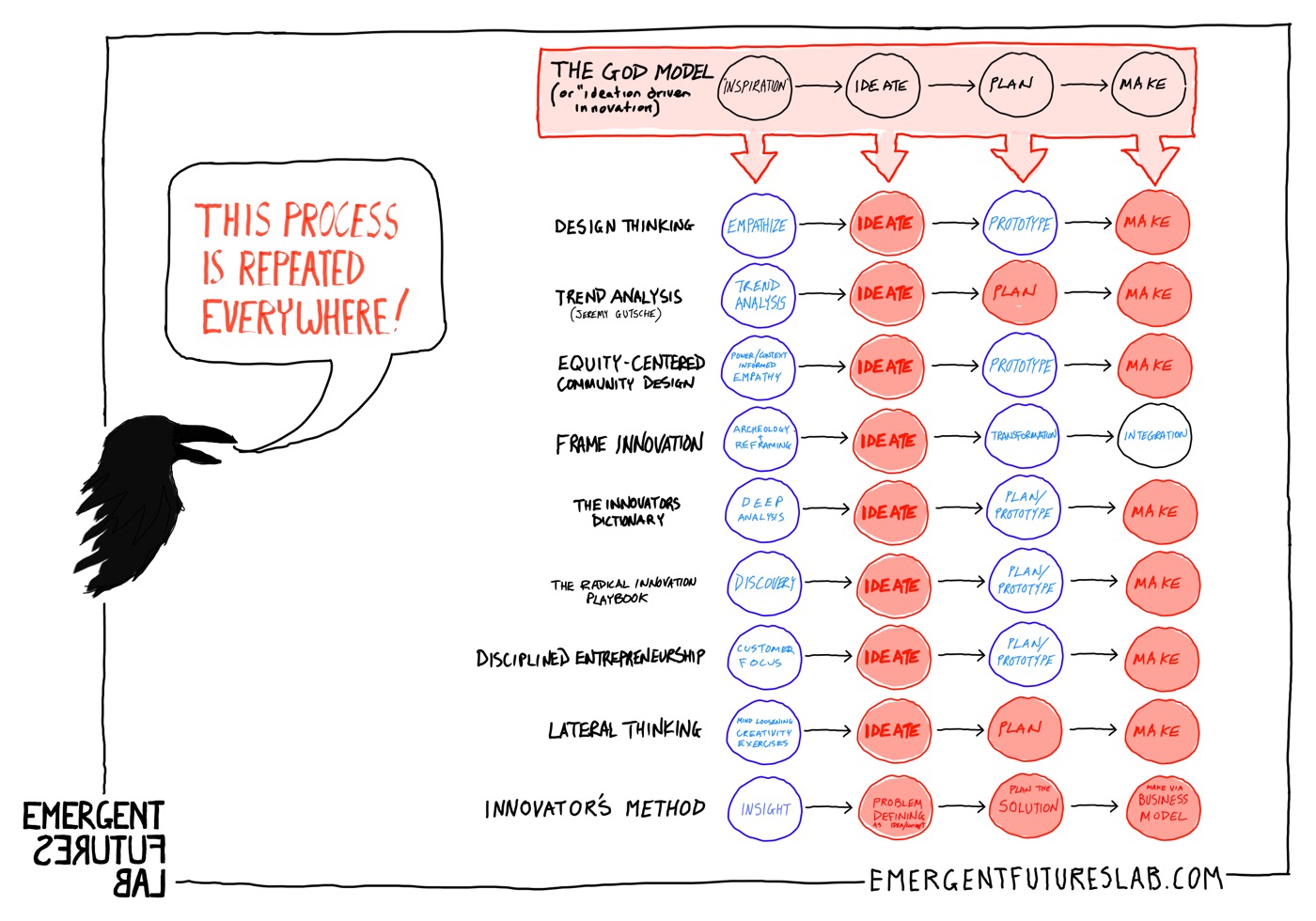
But here is what's important: this isn't only at work in design thinking. Look at most innovation frameworks: trend analysis, equity-centered community design, frame innovation, the innovator's dictionary, the radical innovation playbook, disciplined entrepreneurship, lateral thinking, the innovator's method, the double diamond – and you find the same underlying structure. Some form of preparation, then ideation, then planning, then making. This process is repeated everywhere.
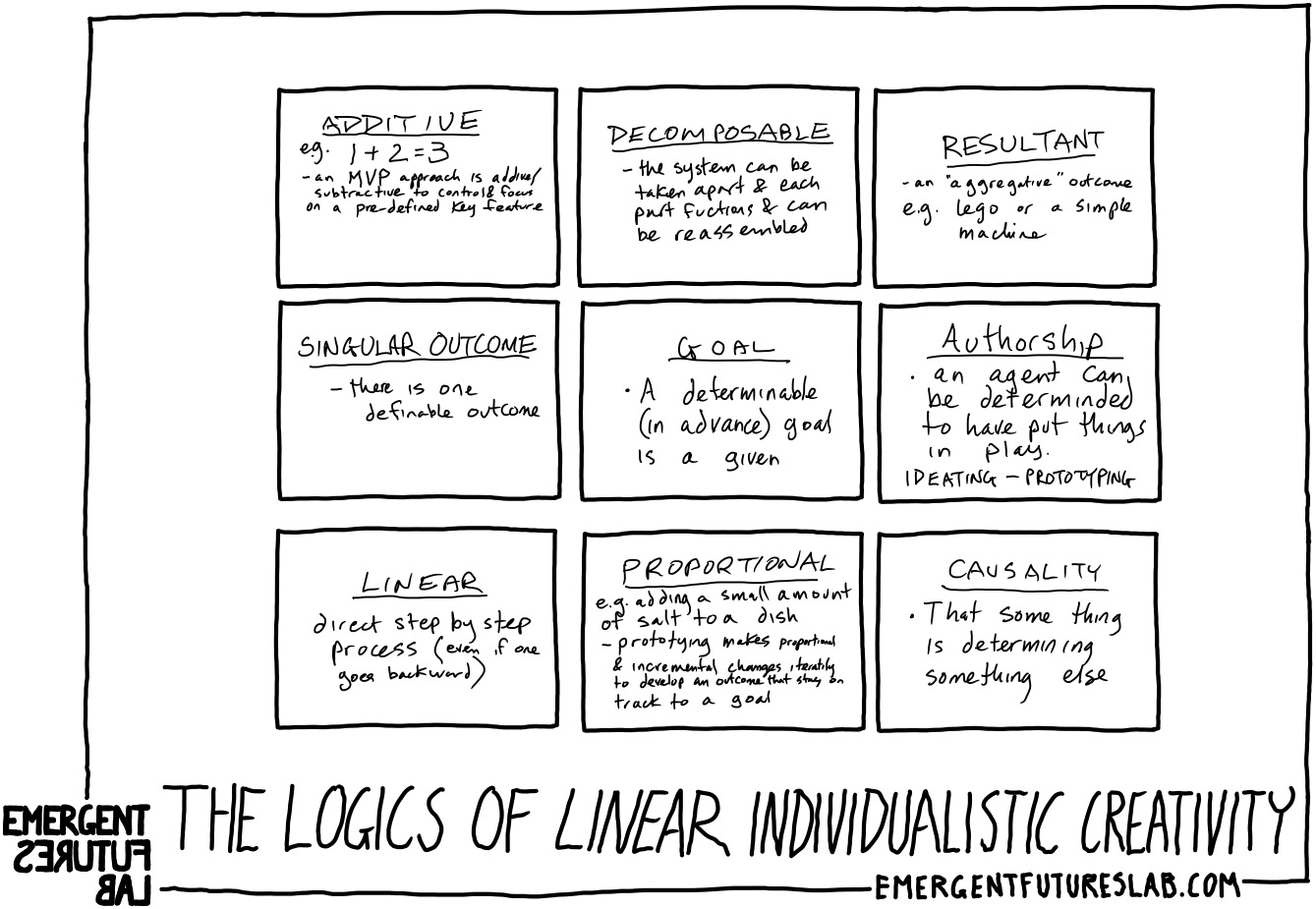
The underlying logics are always consistent: linear (direct, step-by-step, even when it iterates back), additive (1+2=3, an MVP approach is additive or subtractive to control focus on a pre-defined feature), goal-oriented (a determinable outcome defined in advance is a given), singular outcome (there is one definable result), decomposable (the system can be taken apart and each part examined or reassembled), authored (an agent can be identified as having put things in play – ideating and prototyping toward attribution), resultant (an aggregative outcome, like a Lego build or a simple machine), proportional (adding a small amount of salt to a dish changes it proportionally – prototyping makes proportional, incremental changes to stay on track toward a goal), causal (something is determining something else).
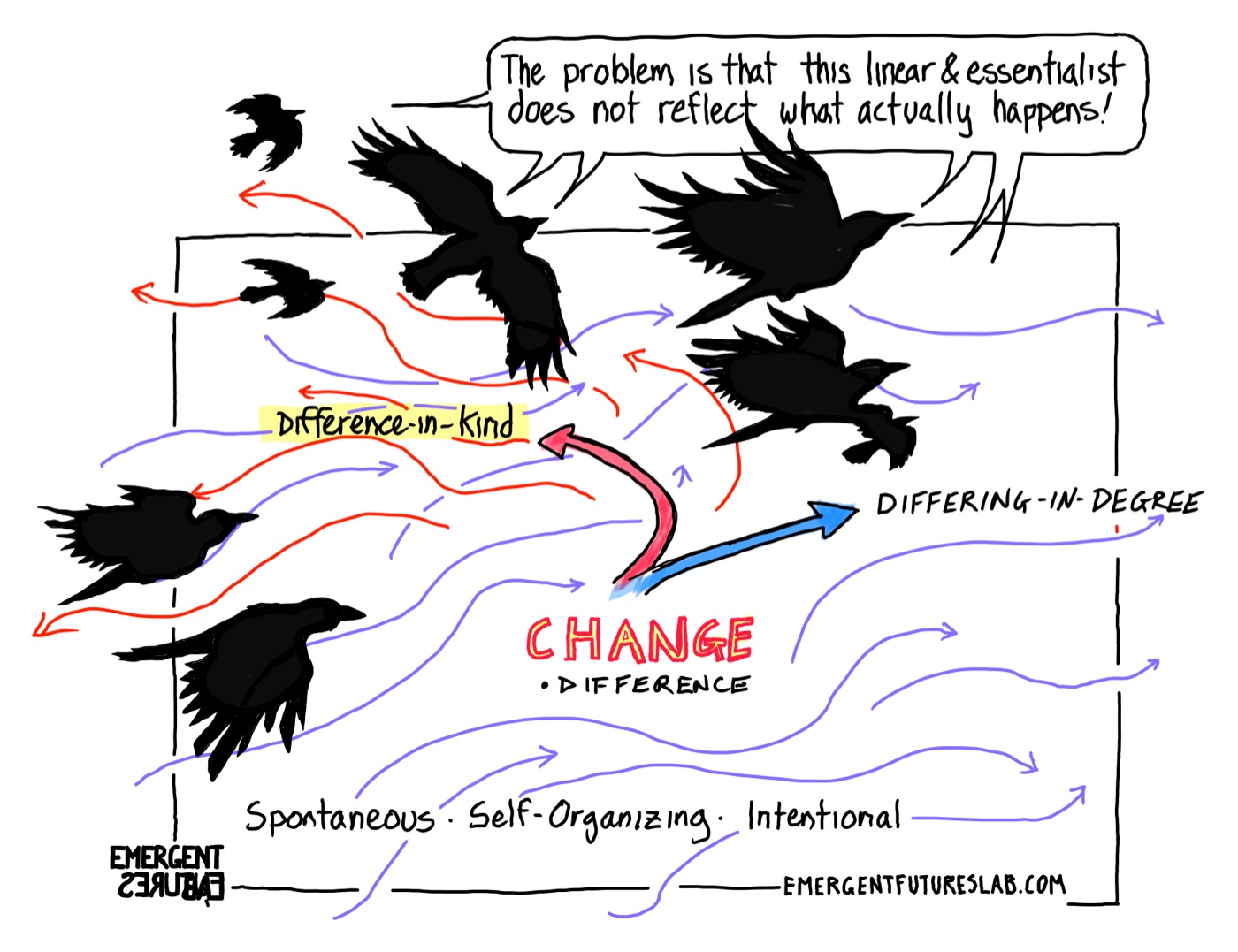
The problem is twofold: One – ideation is profoundly conservative in relation to novelty, and two – linear, essentialist models do not reflect what is actually happening. Given this, the four-step model and future backwards design are of a profoundly limited utility…
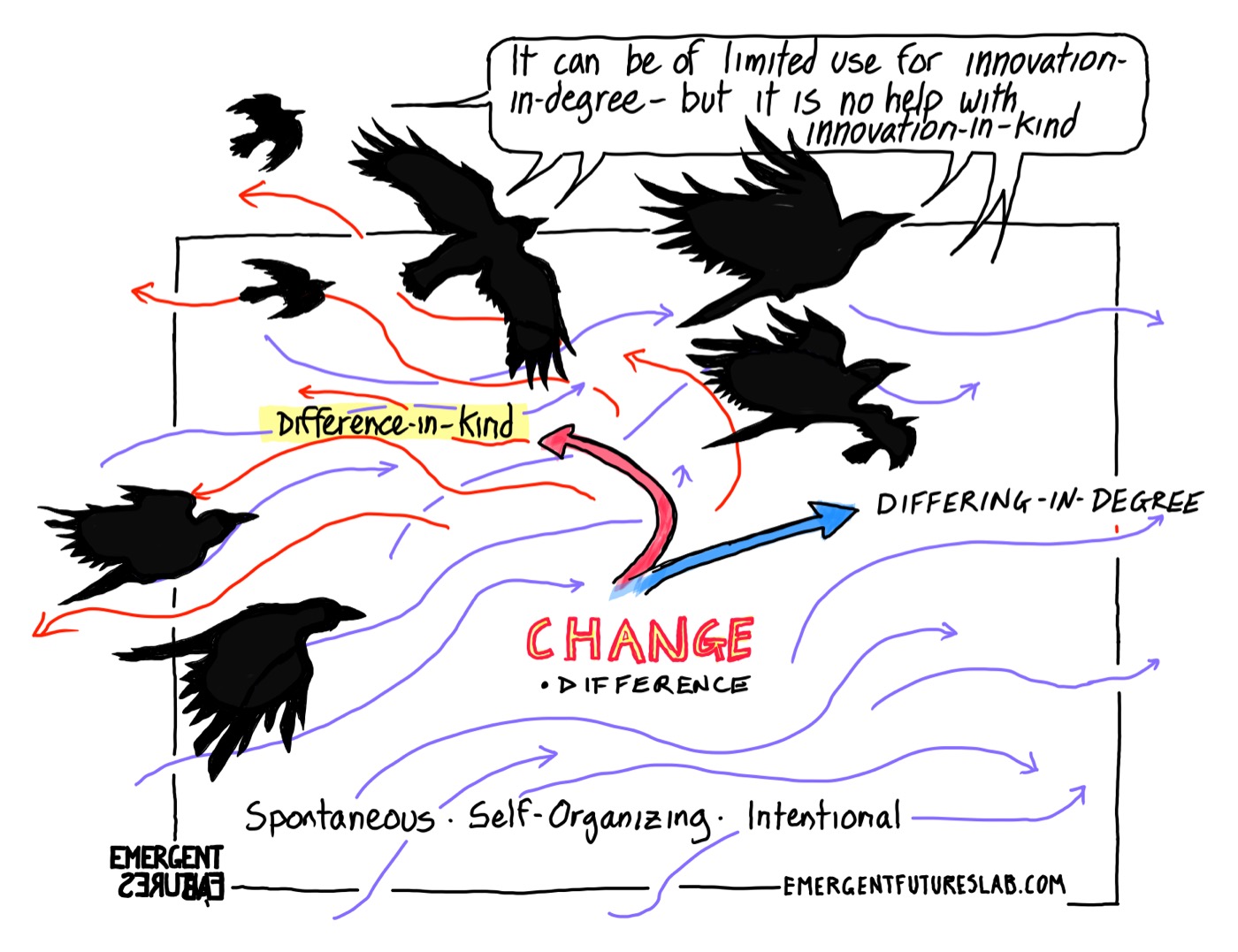
… – even for innovation-in-degree. And for innovation-in-kind – for qualitative, disruptive change – it is of no use at all.
So what would be a more useful way to approach innovation-in-degree and innovation-in-kind in general?
We need to shift our automatic habitual answers to the what, where, and how of creativity from essentialist, individualistic, ideational, and linear ones to something far different.
We need to gain an intuitive and rich feel for a far more dynamic, ecosystemic, and not human-centered approach to creativity.
Here is an analogy we have borrowed (and transformed) from Evan Thompson that helps us get at this.
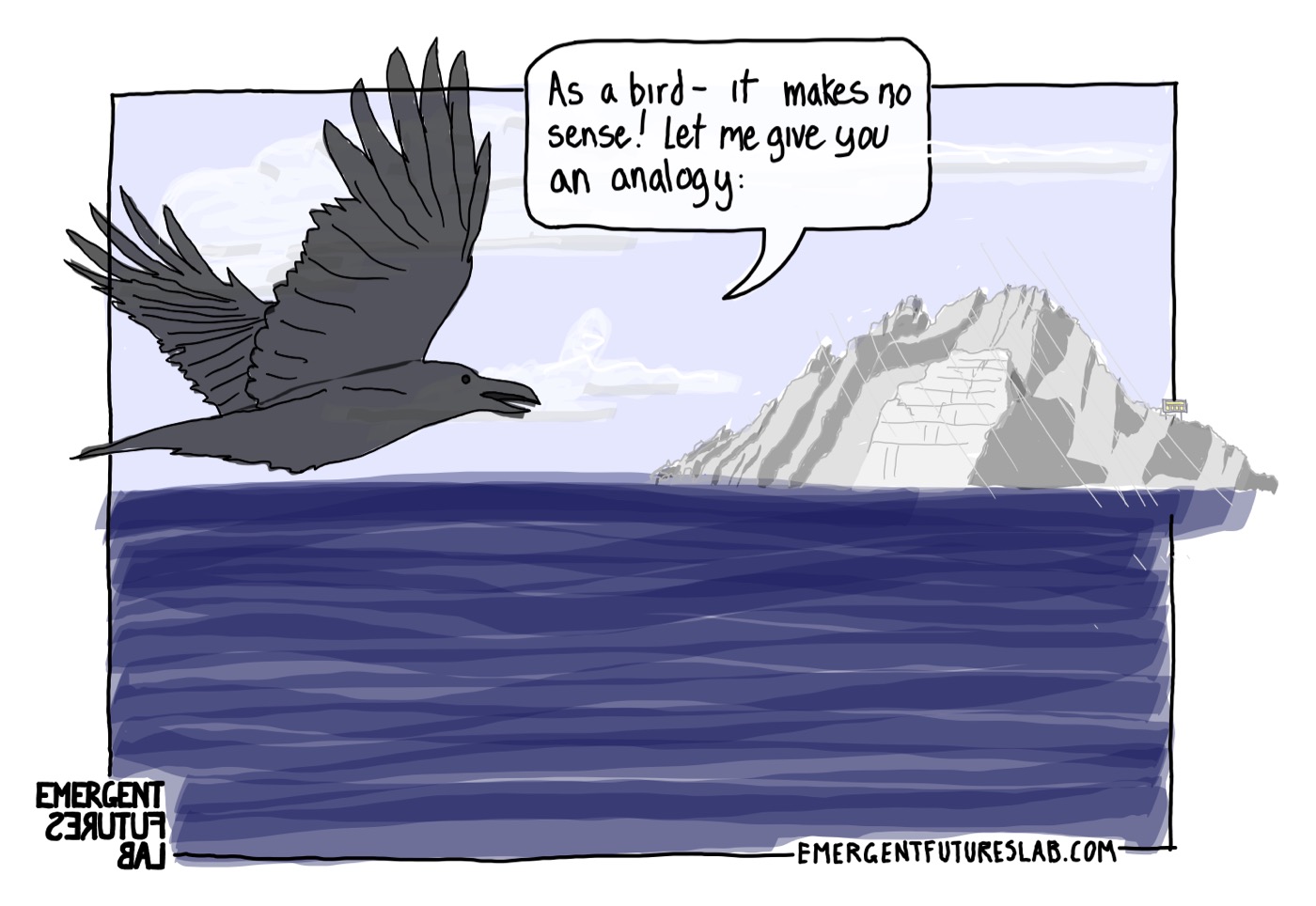
From the perspective of bird flight and trying to understand the where and what of flight – the linear-essentialist model makes no sense whatsoever.
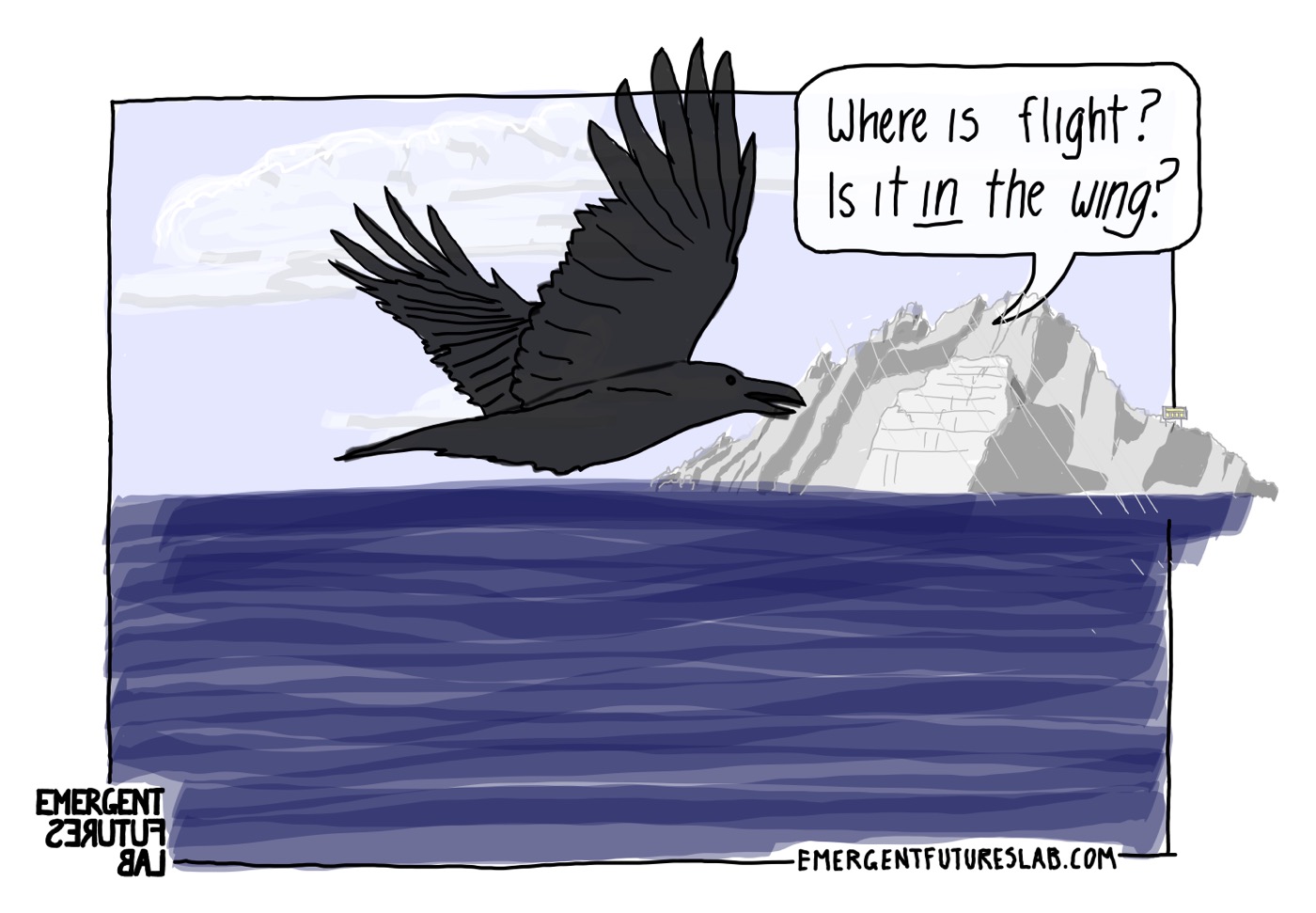
Consider the question: Where is flight? The classical approach to creativity would say that it must be in something. Well – Is it in the wing? Is it in the feather?

Good luck finding flight in the feather. Is it in the brain of the bird? Where is ‘flight” to be found?
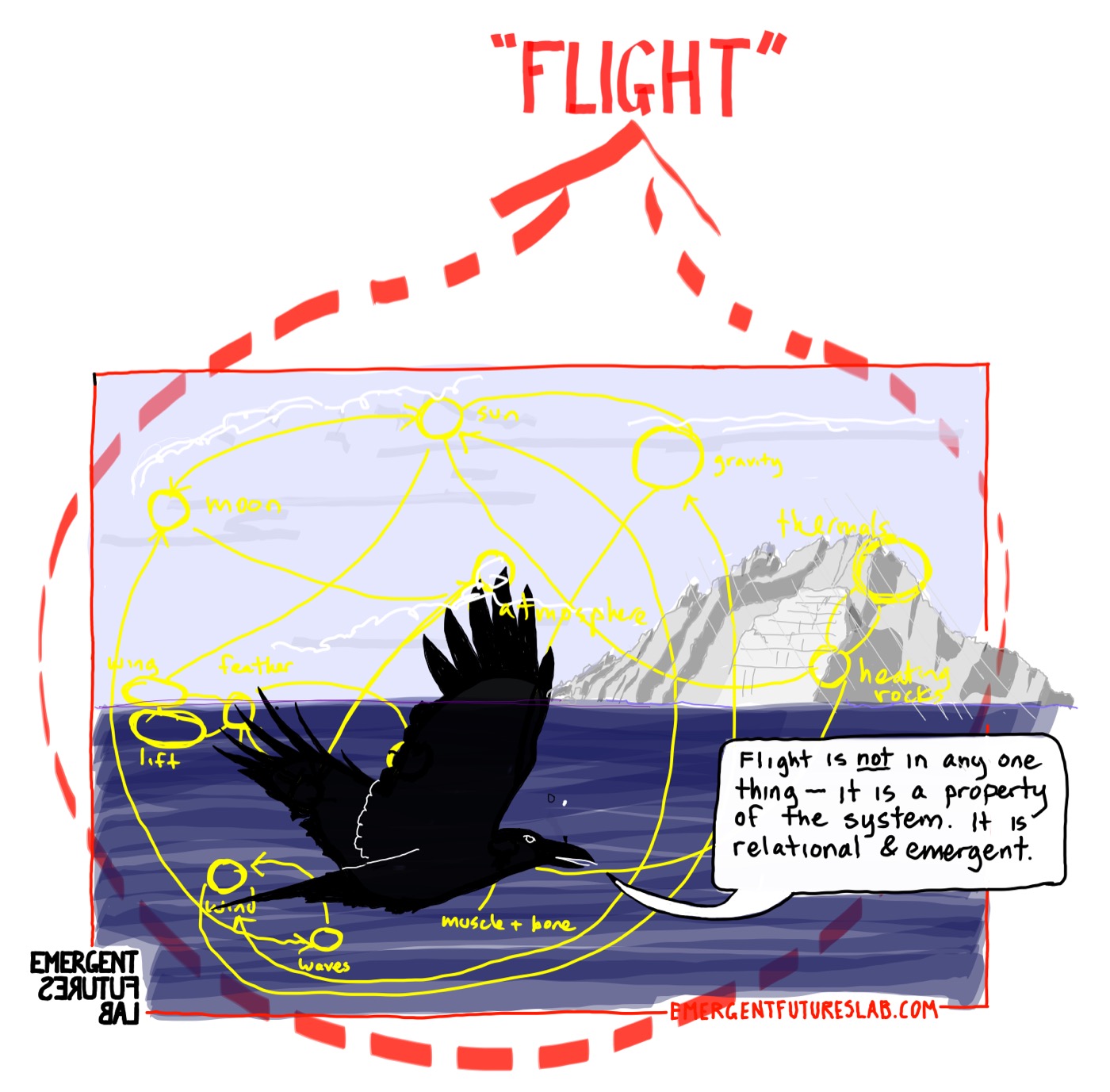
Flight is not in any one thing. It is not a thing. It is the relational and emergent property of the dynamic system. It requires a bird, wings, feathers, thermals, air density, gravity, muscle and bone, lift, heating rocks, waves – all in very specific and specifically maintained relations. None of these things, taken alone, is flight. Dig into any one component, and you will not find flight there. It is the emergent relational property of a dynamic system.
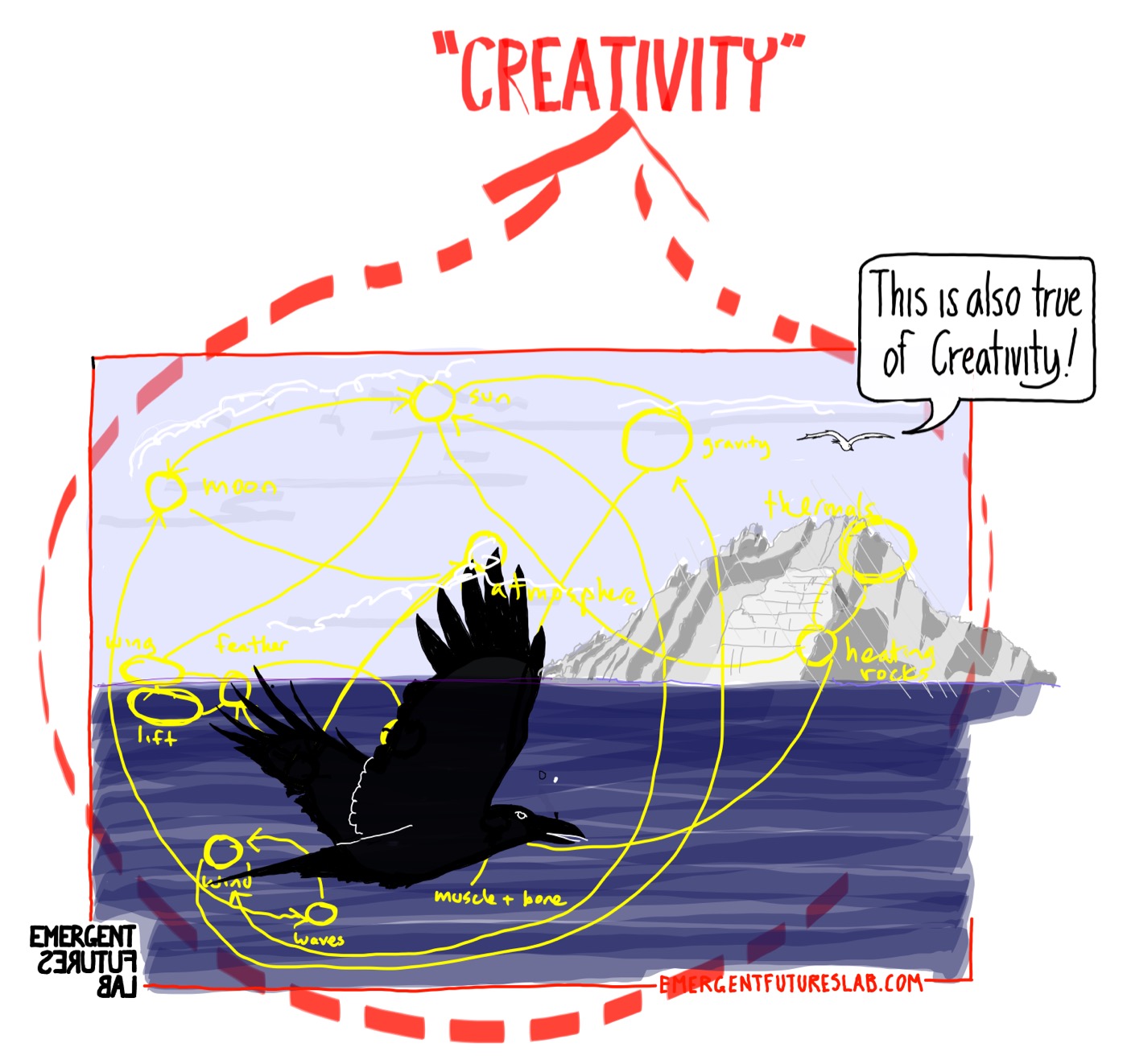
And this is also true of creativity.
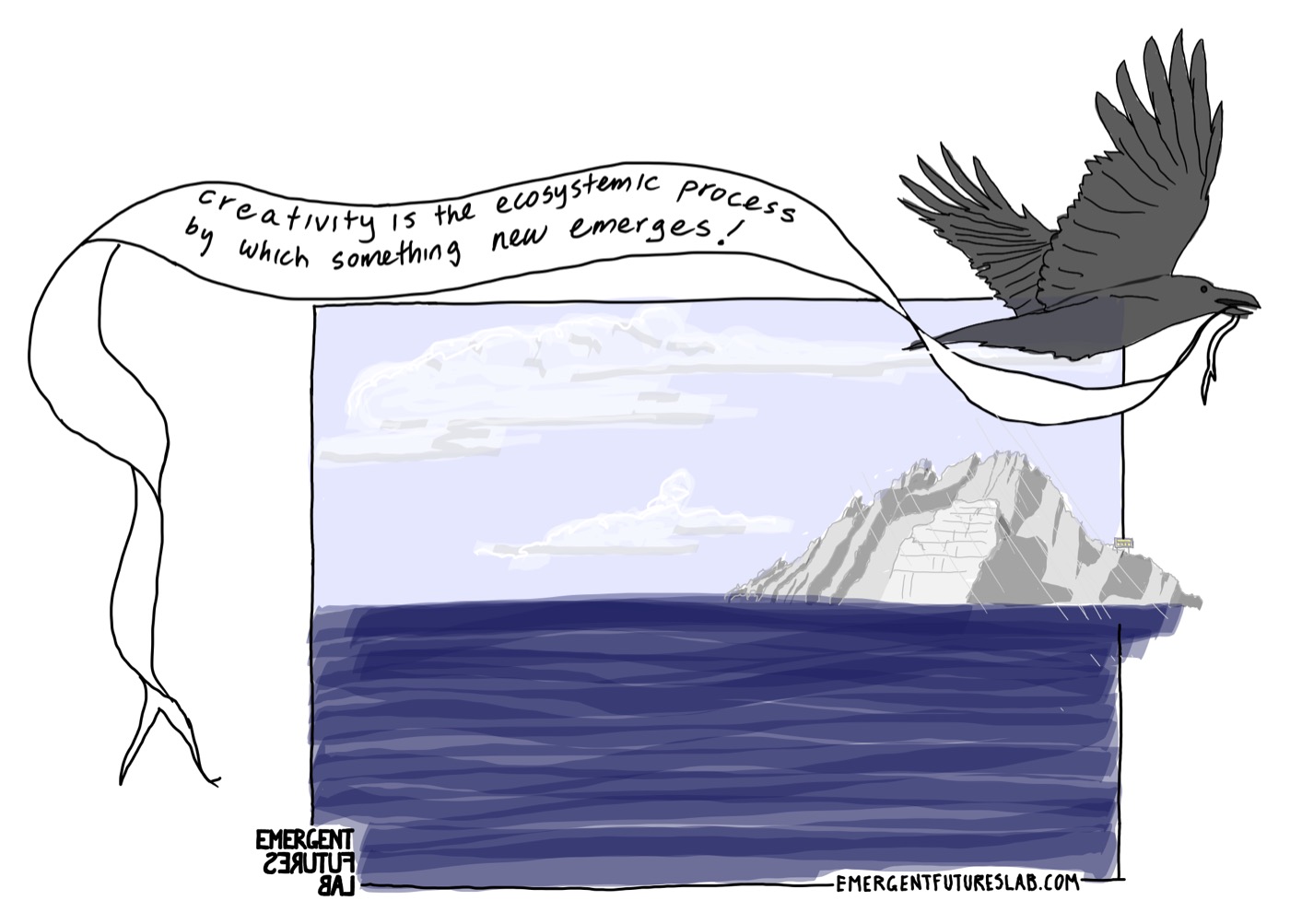
Creativity – the processes by which novelty emerges – is not to be found in any thing – rather it is an outcome of an ongoing distributed relational emergent ecosystemic process.
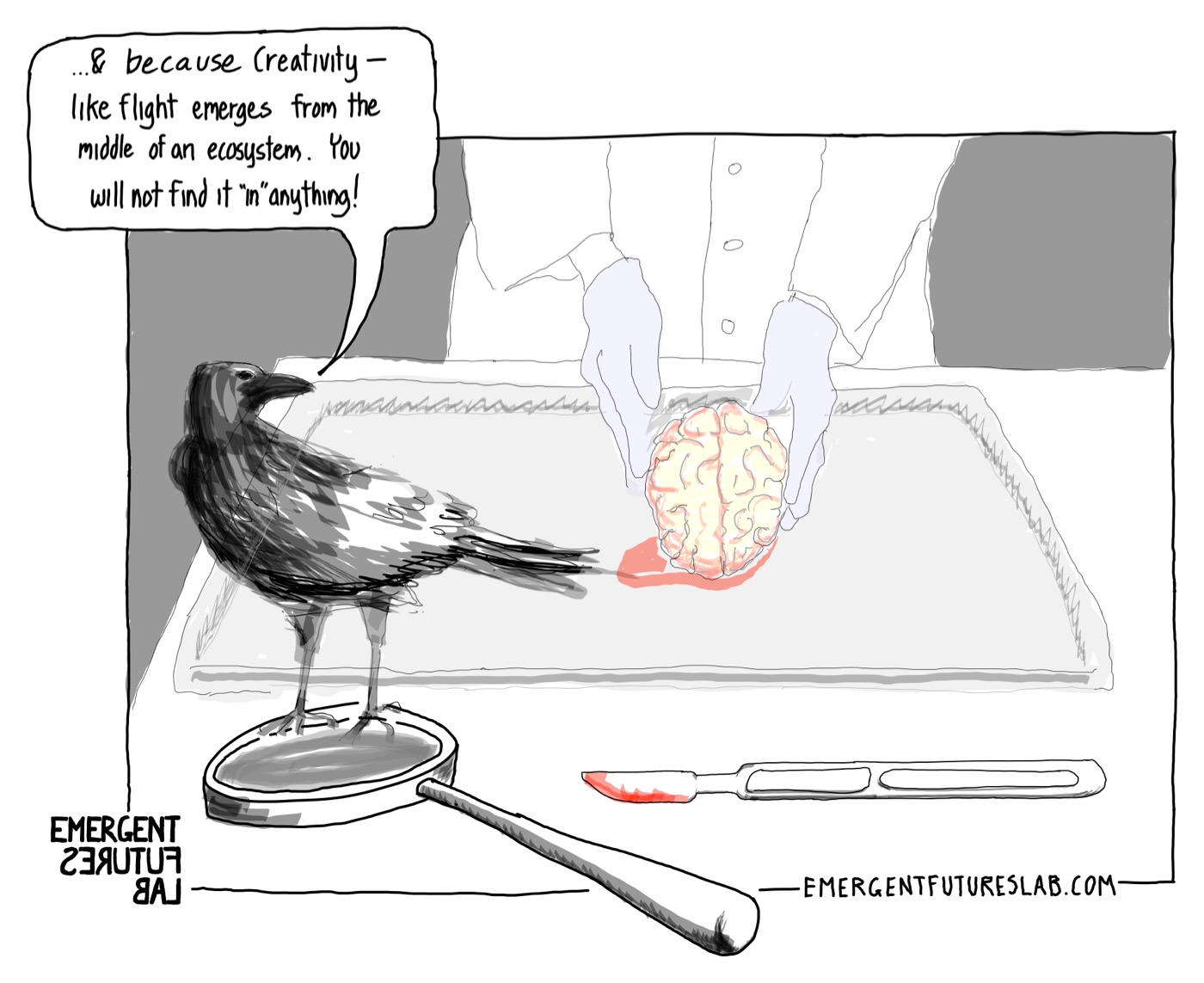
Like flight, creativity emerges from the middle of an ecosystem. You will not find it in anything.
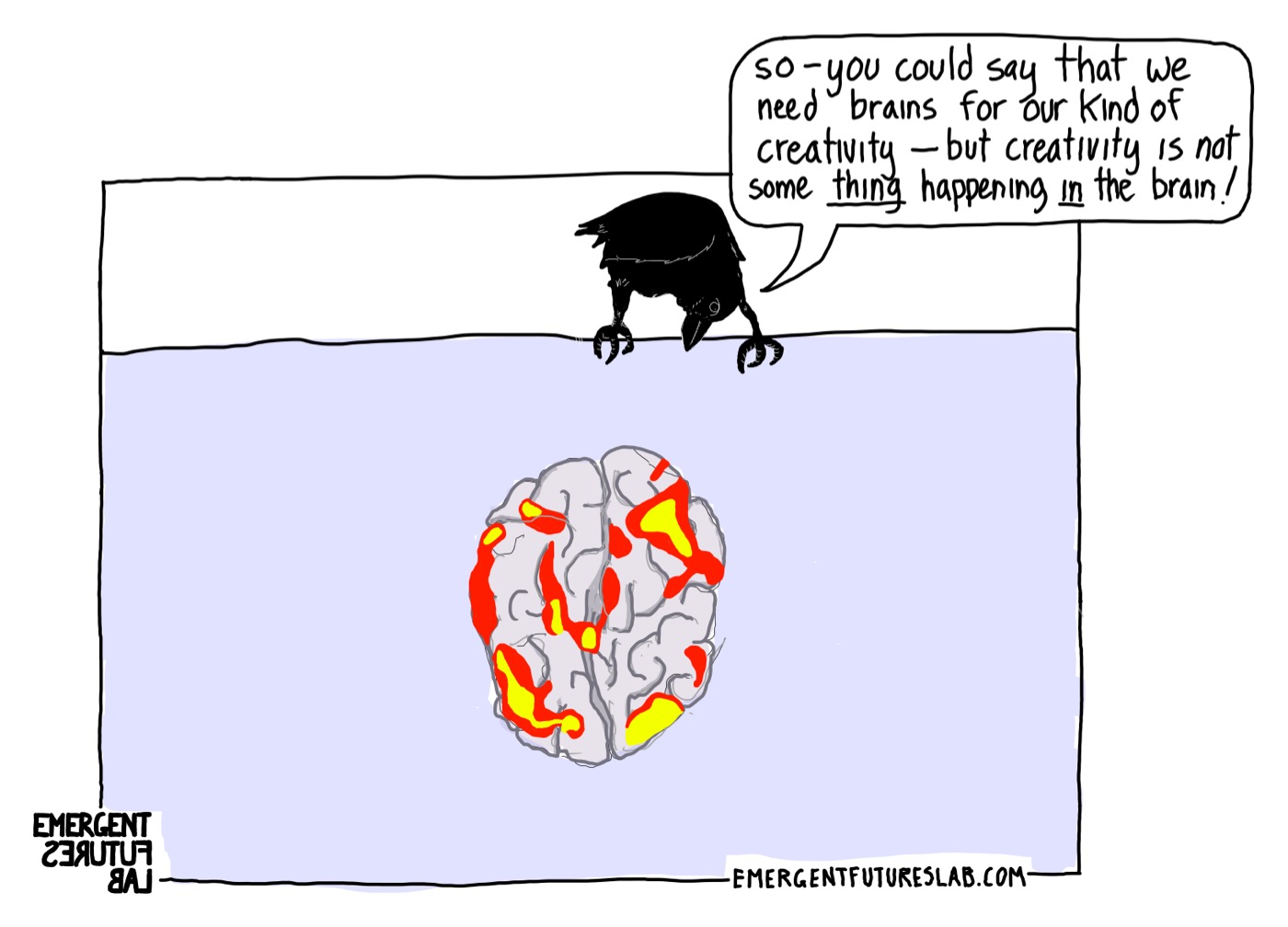
Yes, we need brains for our kind of creativity, just as birds need wings for flight. But creativity is not some thing happening in the brain, any more than flight is something happening inside a feather. The brain is necessary, but not sufficient, and certainly not the location. This distinction matters enormously for how we practice and engage with creative processes.
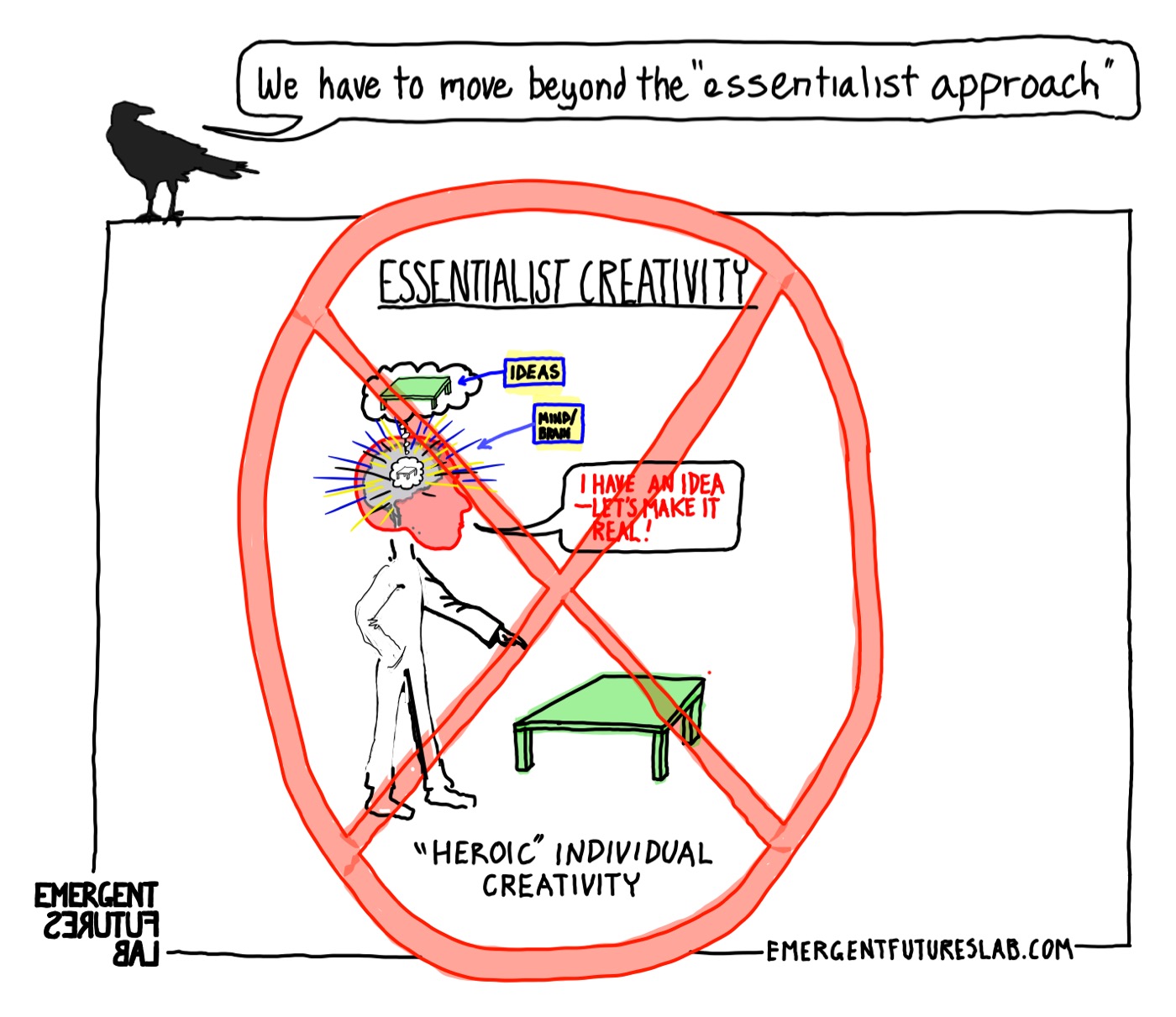
We have to move beyond essentialist approaches, linear step-by-step approaches – and especially the heroic individual creativity model – entirely.
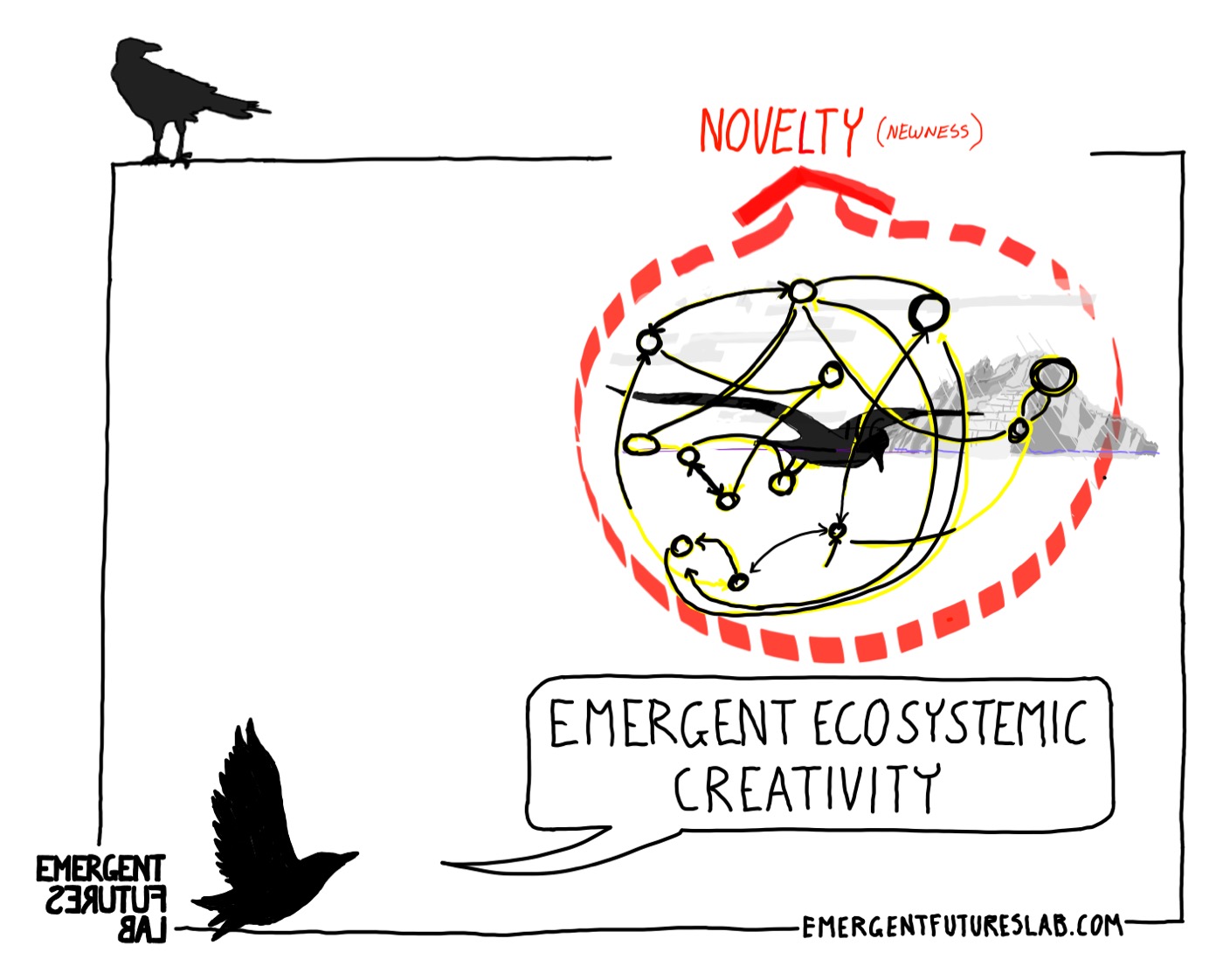
What replaces it is an emergent ecosystemic creativity, and it has a structure:
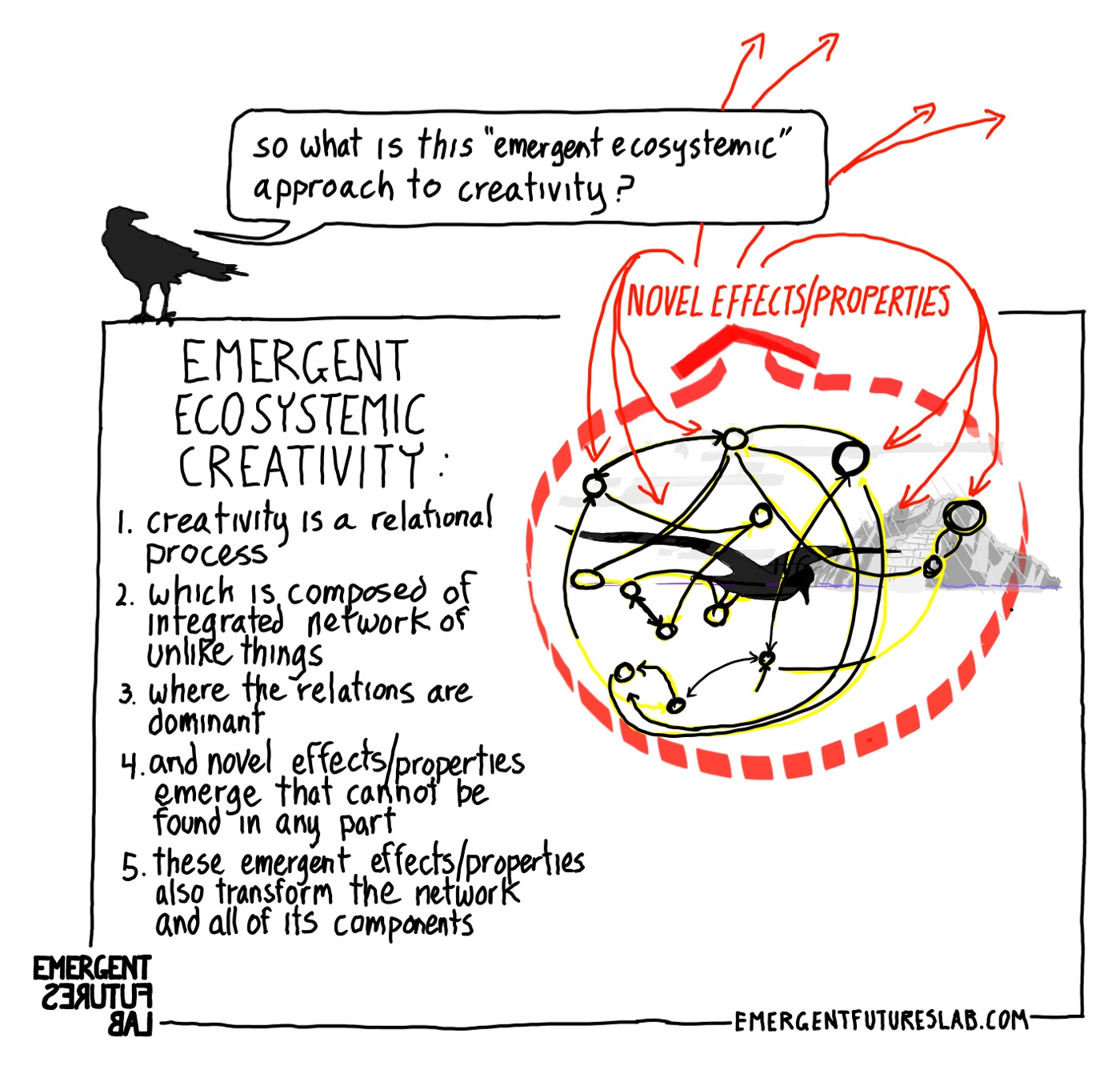
First: creativity is a relational process. Second: it is composed of an integrated network of unlike things. Third: the relations are dominant – not the parts. Fourth: novel effects and properties emerge from the network that cannot be found in any individual part. Fifth: those emergent effects also transform the network and all its components.
This is what ecosystemic creativity looks like in motion: novel effects and properties emerge, and what emerges cannot be reduced to any single cause, any single actor, any single moment. Rather than focus on strong ideas – we need to collaboratively participate in the co-development of ecosystems…
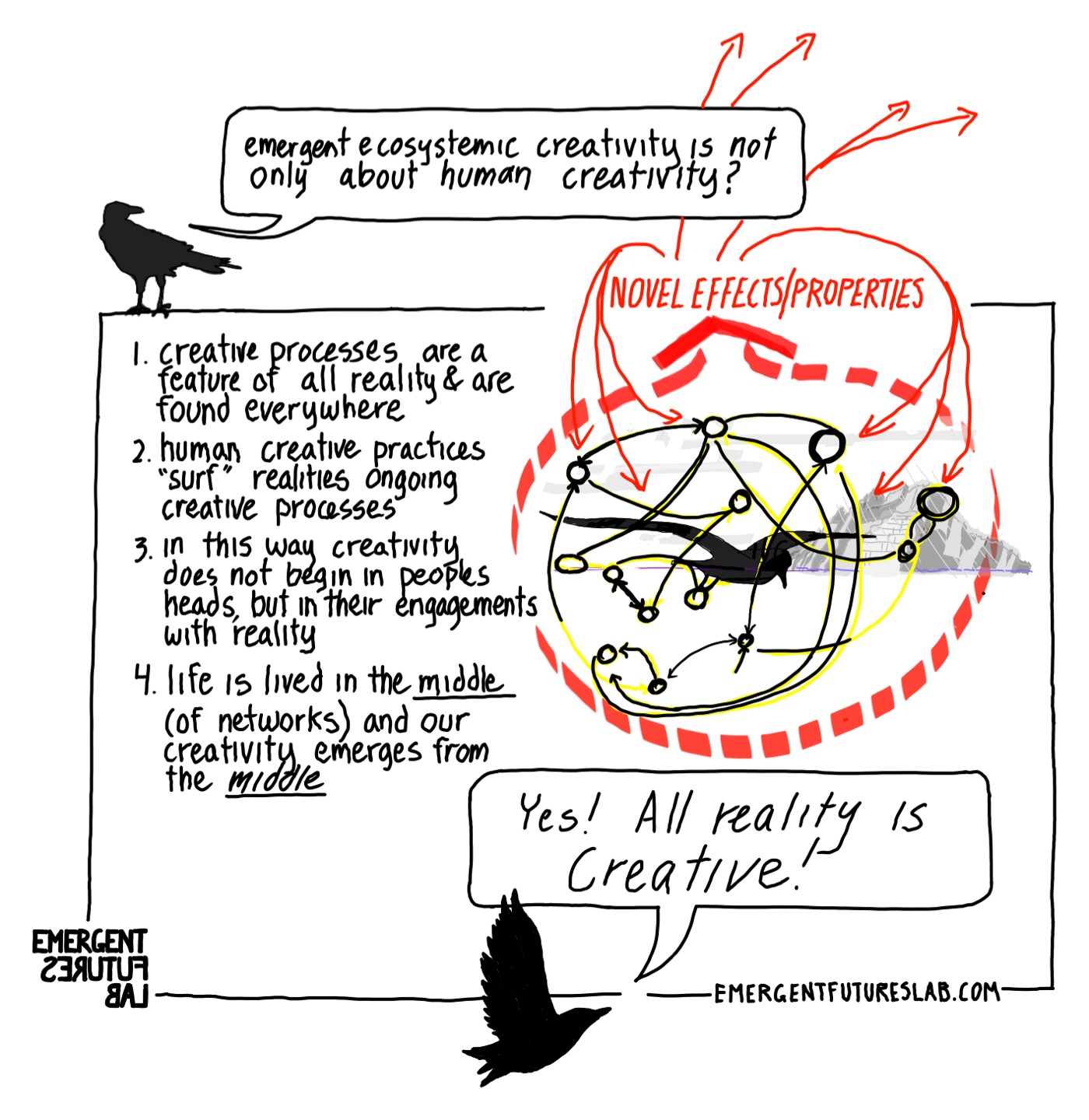
And in this we need to realize that the human – and especially the lone human is not the locus of creativity. Creative processes are a feature of all reality, found everywhere. Human creative practices surf reality's ongoing creative processes – they enter and work with what is already moving. Creativity does not begin in people's heads, but in their engagements with reality. Life is lived in the middle of networks and relations, and creativity emerges from that middle.
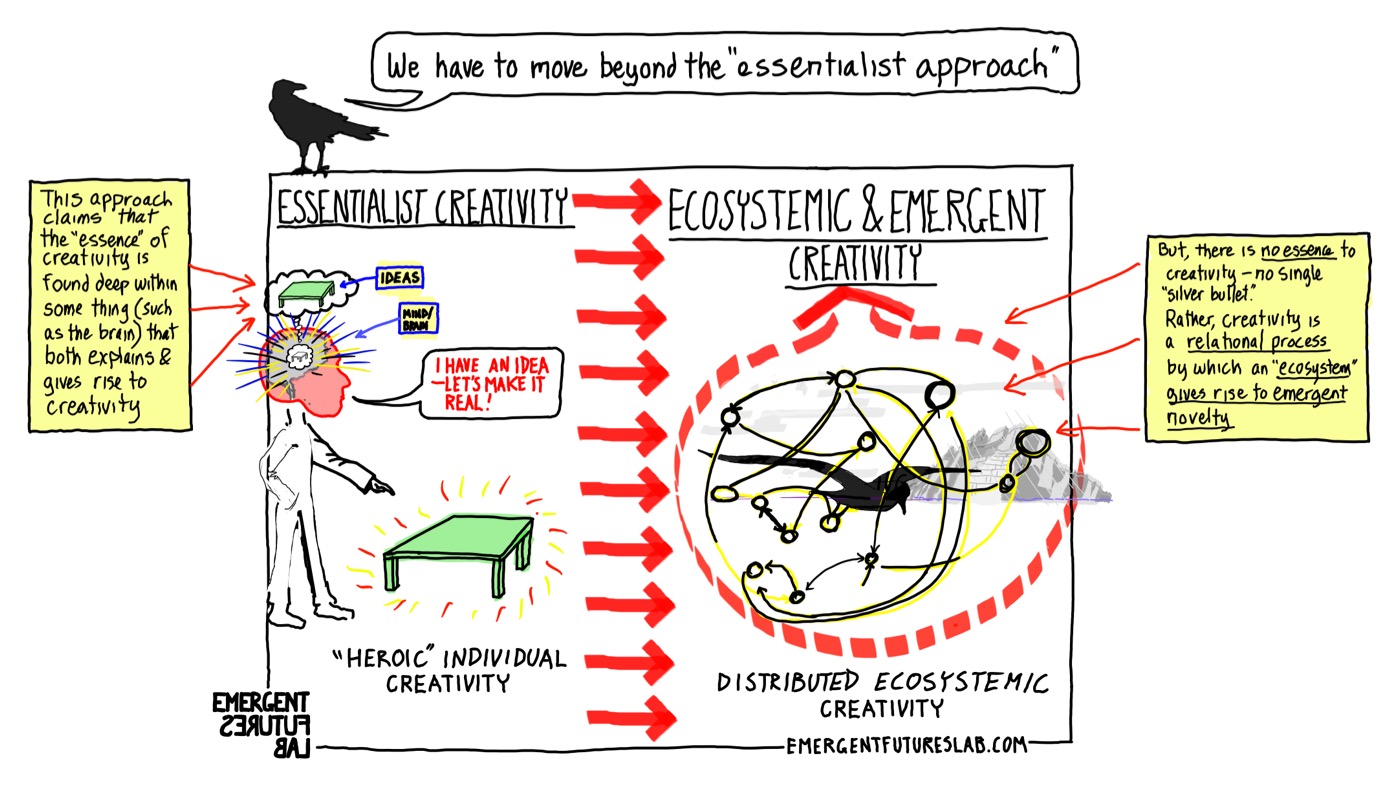
To be direct: there is no essence to creativity, no silver bullet, no single faculty or technique that contains it. Rather, creativity is a relational process by which an ecosystem gives rise to emergent novelty. The difference between this and the heroic individual model isn't incremental. It's a profound change-in-kind.
Which brings us back to where we started: creativity involves change. And while change is everywhere and ongoing – all change is not the same. We have to recognize the differences between change-in-degree and change-in-kind and realize the need for radically different approaches to both. We have many modestly effective (if problematic) techniques for engaging in very limited forms of change-in-degree. But we use these very same techniques also to engage with change-in-kind processes – and here they simply do not work.
We need both new approaches to engaging with creative processes in general and new ecosystemic sets of practices, processes, tools and environments to do this…
Well – this seems like as good a place to pause for the week as we are going to get in this lecture.
Have a great solstice weekend – and don’t forget last week's exercises – they make a perfect accompaniment to a picnic!
Till next week when we continue onto the next two pillars in an alternative approach to engaging with creative processes – keep things ecosystemic and worldly!
Until next week - keep difference alive,
Jason, Andrew, and Iain
Emergent Futures Lab
+++
P.S. This newsletter continues in our community—where you can comment, question, and explore further. Emerging Futures + brings you into the conversation. Join here
P.P.S. WorldMakers goes beyond the newsletter: 40 live events annually, weekly podcasts and exercises, our annotated bibliography, and practitioners across diverse fields reimagining creativity together. Discover WorldMakers


