Newsletter
Resources
Courses
Books

Welcome to Emerging Futures -- Volume 203! Micro Experiments to Enliven the Wanderings...
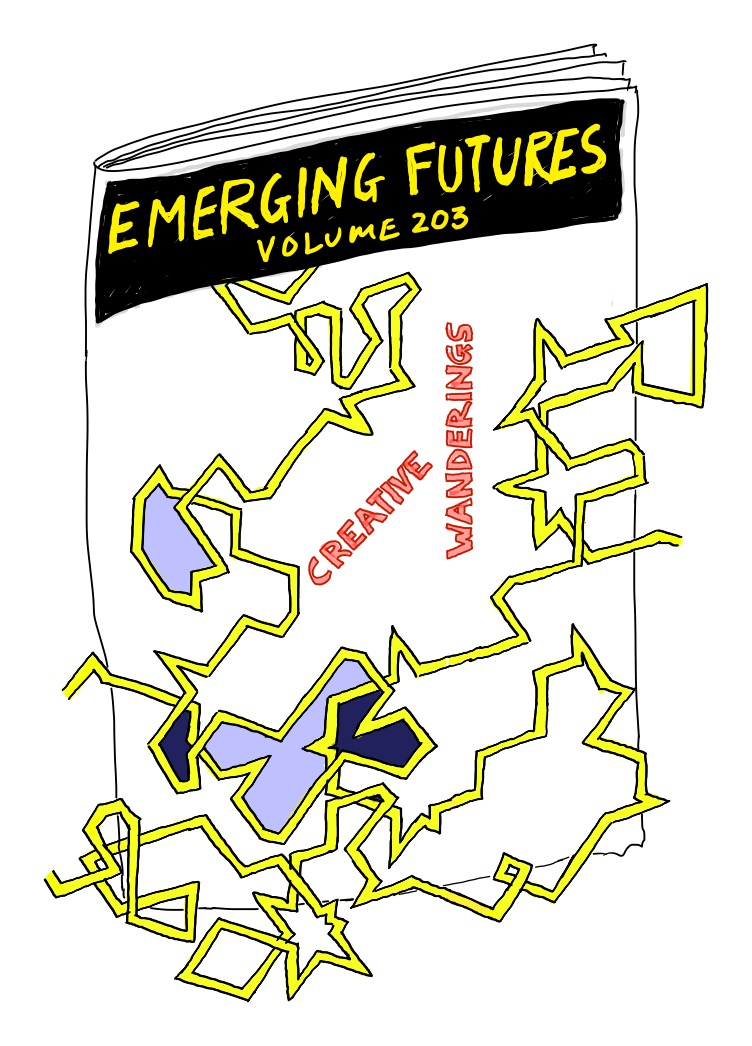
Good Morning speculative perturbations,
It is the first of August – high summer for some and deep winter for others on this astonishing planet.
We have been thinking about big outdoor adventures and strategic indoor adventures as we have heard from many of you about your August plans. Our plans run modestly, involve unplugging and little else that is tightly scripted.
Depending on where you are on this planet, you might be seeking reprieve from the heat or the cold at this time of year. Museums – especially the free ones are great places for an afternoon of collective respite from either. Museums are great places to experiment with creative practices, which we will get to in a moment – but they are also simply wonderful community gathering spaces. We love to go to various free museums to just work, people watch, and wander a bit with curiosities emerging from whatever we are working on. Many of our practices were first developed working with various museums, art institutions, and similar organizations – but that is a story for another day.
Over the years, we have been experimenting with Art Institutions of all sorts as places to hack for non-art World-Making experiments. And for this week’s newsletter, we are sharing a few of our favorite experiments. We have three fun experiments – a bigger one, a simple one, and a fun city walk experiment.
It is important to find the right kind of museum for this experiment. You are looking for a museum with a broad international art and anthropological collection. The second criterion is that they have lots of objects and not just paintings. Ideally, we are looking for a mix of everyday and special objects (e.g., from bowls to sculptures – no paintings). Finally, it does not need to be a big museum – those are great. We have used the Met in New York City (very big), the Newark Museum of Art (medium), and the Qualicum Beach Museum (small – but right by where my mum lives (Iain)). All have what we are looking for: a broad range of objects made across time and from diverse cultures.
PS – ideally, they are either warm and cozy or cool and breezy!
At the same time as picking the location, you should think about your team. It is easier and often more rewarding to do this with others. Ideally, there will be a few of you who are part of this experiment. Just ask your team to come curious about differences, neither fixated on value judgements or the contemporary status of things as art, and willing to speculate with you in real time.
Bringing a small sketching notebook and a pencil/pen is also very helpful.
The goal of this experiment is to
To do this experiment in contrast, you will need to establish a connecting thread or theme. These could be very simple qualities – such as:
We would recommend object types as a great starting place (cups are really astonishing).
With your theme established, go to the museum, and if they have it, pick up a guide/map. Choose three very different cultures and time periods (say Classical Greeks, Japan in the 1700s, and Contemporary Borneo). Plan a simple route to go to each of these.
Once in an area, wander through it and find all the examples of the objects that interest you (e.g., cups). Take them all in quickly. What are they like in general? Are there any exemplary examples?
Choose what feels like an exemplar. And pay attention to it. At first, ignore everything but the form – the shape and materials. Draw the shape from different angles.
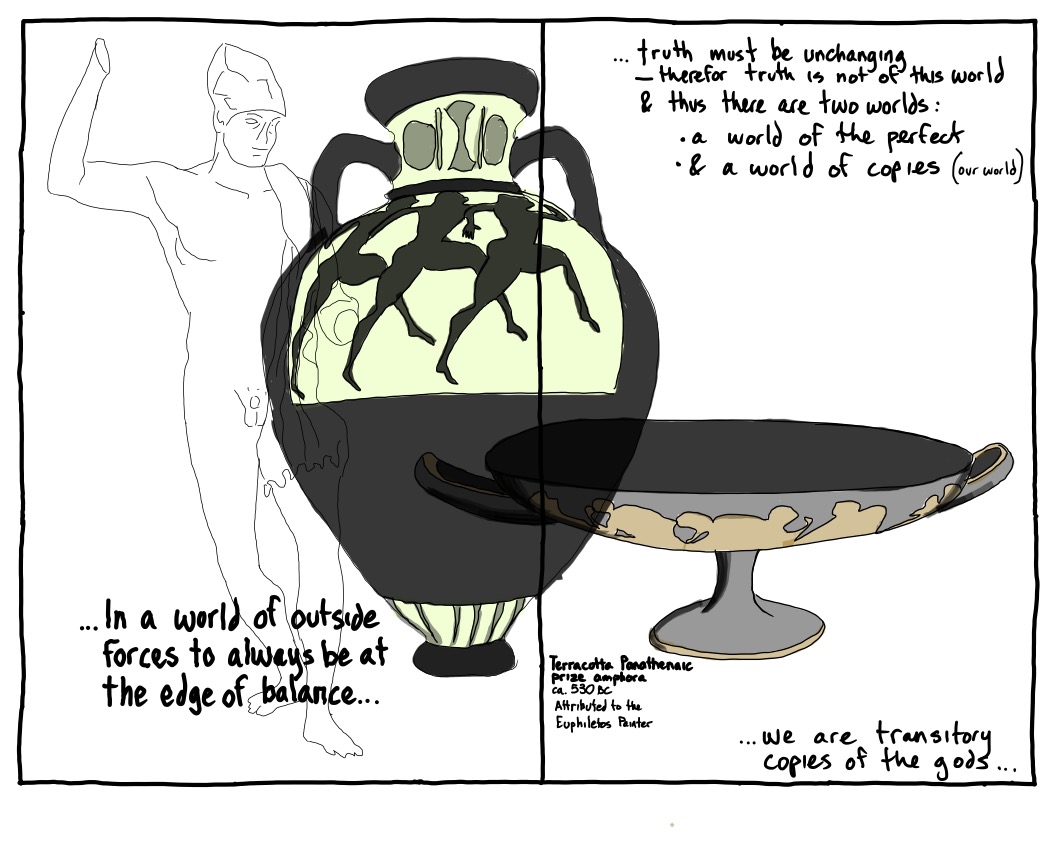
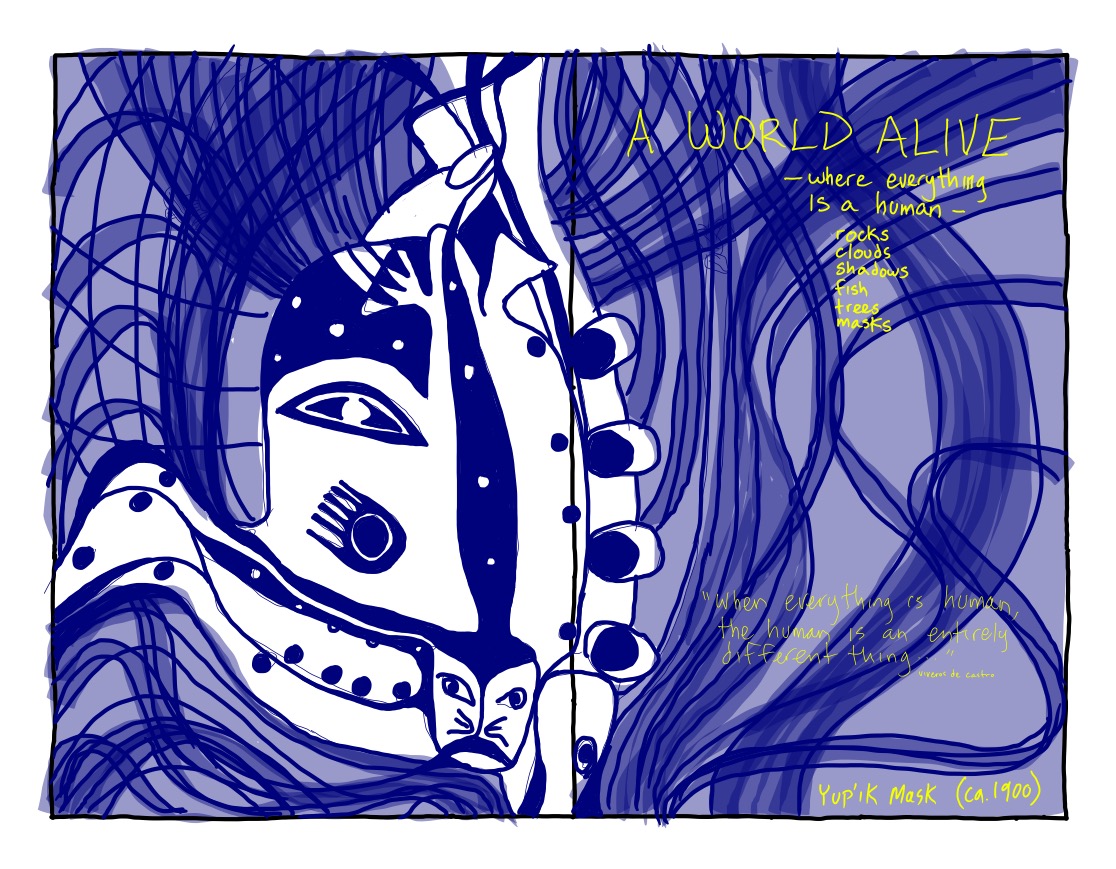
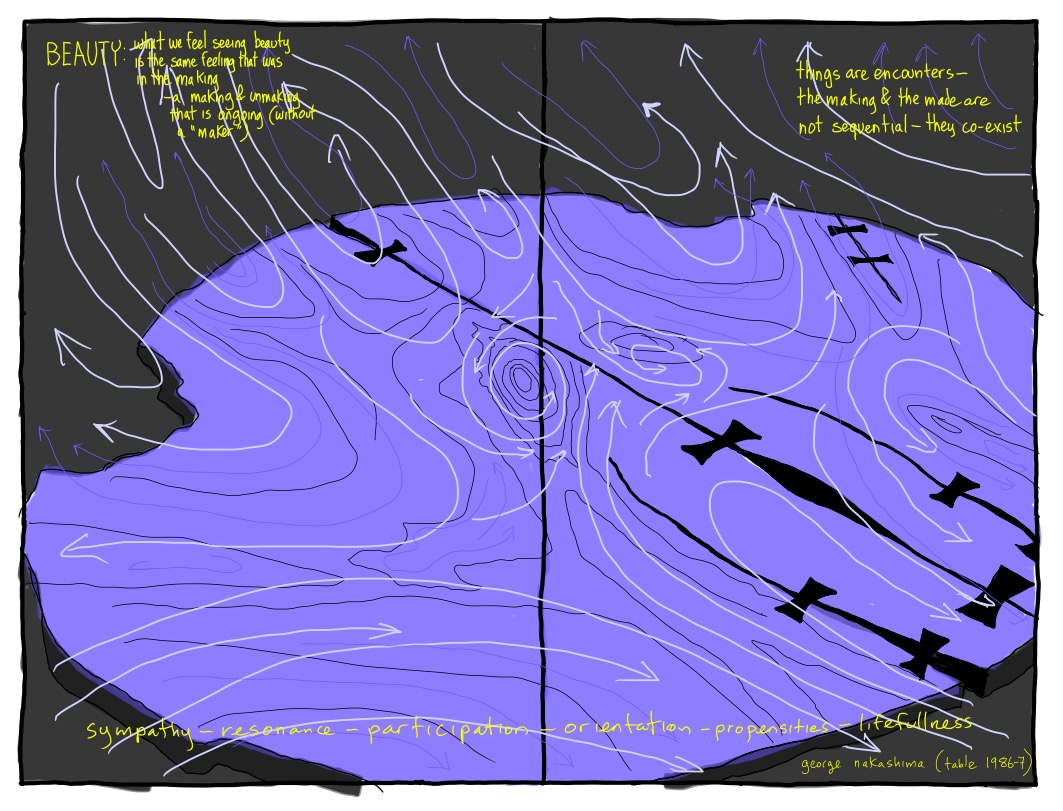
Go to the next two areas in the museum and do the same. Now discuss or ask yourself: what are the differences that make a difference between these areas in form, materials, and practices in relation to the “same” thing (eg, the cup or water, or whatever you choose as your theme)?
First, simply enjoy these differences. Go back to see how they play out in other objects in each area. Notice things that were invisible to you on previous visits.
Take time to think about why this is. Use these new emerging curiosities to connect you with these objects, practices, and cultures. Perhaps this takes you on new journeys to read books, try new practices (especially embodied ones), meet people, learn languages, travel…
Over the seasons and years, come back to this museum and others to expand on these practices, curiosities, and speculations.
This is a fun experiment you can do with very little time. If you see a work of art in a lobby, passing a free museum, or a commercial gallery, just pop in for fifteen minutes.
The key to this experiment is that we are playing with how seeing is an activity. Seeing is not the discreet activity of a solitary sense organ – rather it is very much a fully embodied practice that is part of a way of being alive. As you take pleasure in this experiment – really feel how rich an activity seeing is.
NOTE: You will need a small sketch book and a pen/pencil.
This experiment is especially fun with one or two other people. Each of you does the experiment with their own painting independently, and then you guide each other through your experience. Now it becomes really interesting!
In a Museum or Gallery, find a large painting (you can even work with any size, but it is good to warm up with a bigger painting). A note on finding the painting: for this exercise, it is best if the artist and the artwork aren’t known to you, and that you do not read the label. Additionally, as you do this exercise, don’t begin from the question: what are the artist's intentions? Just focus on your experiences, and how the two of you find a way to meet – much like you might experience a hike, a city square, or meeting a strange creature.
Stand about twenty feet away and, standing in one place, carefully observe and sense the painting via a simple drawing and writing exercise. Your sketch and notes are just tools to help you see – the drawing is especially helpful. But the drawing does not need to be “good” or approached as “art”. It is just about you stabilizing the work into something.
Now get closer – say about ten feet away. Move as you look at it from side to side while not getting any closer. On a new page in your small sketch book, make a new drawing, or drawings, and some notes about what you sense, notice, and speculate about.
Now get as close as you are allowed and really move back and forth as well as up and down – even looking from the edges. Sit, kneel, stand, walk, peer, twist and squint as needed. On a new page in your sketch book. Make a series of quick observational sketches and notes.
Now sit down on a bench and consider what you just experienced. What changed with the distances/practices? What was the overall feel that emerged with the work? This exercise is about sensing things and sensing how you meet things. Observe this and dwell on it with enjoyment.
If you wish, now you can also read the label. How does this shift your experience? Don’t judge things as right or wrong – but enjoy the contrasts.
This is a really fun way to move in a city, connect with its movements, and end up in very new places. It also gives one a great feel for the forms of wandering that happen in exaptive processes.
While these practices are fun one-off experiences, they are, for us, ongoing practices. We do these as co-evolutionary practices that change us as they open us up to differences that make a difference. Try to incorporate your own version of such practices into your life. Start by noticing how you most likely already do your own versions of similar practices. Try making these monthly practices – do them with others.
And hopefully we will see you out there – perhaps we will end up following each other briefly or find ourselves all kneeling in front of the same religious statues in a museum.
We look forward to this, and until then – keep difference alive, stay cool or warm, be active in this world, and have a wonderful first week of August.
Keep Your Difference Alive!
Jason, Andrew, and Iain
Emergent Futures Lab
+++
P.S.: Loving this content? Desiring more? Apply to become a member of our online community → WorldMakers.


