Newsletter
Resources
Courses
Books

Welcome to Emerging Futures -- Volume 209! Creative Pragmatism: From N-1 to Blocking and Beyond...
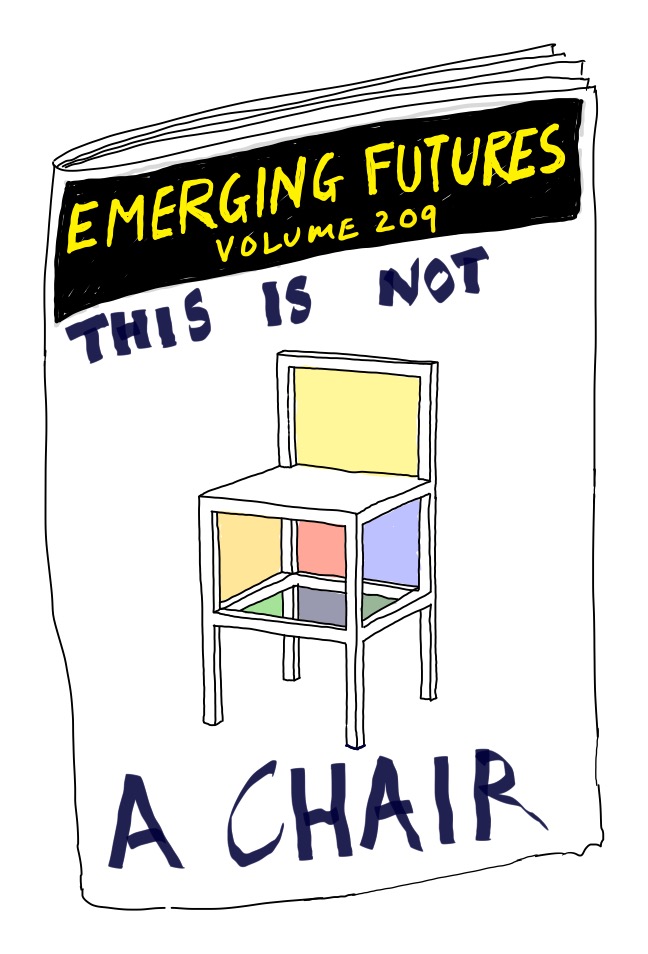
Good Morning flowing, leaking, eluding becomings,
What a week! Our modest team here in Emergent Futures Lab (Jason, Andrew, and Iain) has been burning all the candles from both ends. It has been a week dense with workshops, presentations, writing, drawing, teaching, and massive amounts of mundane but necessary tasks. Lest it sound like a complaint – it has been a great thing in its own way:
For the last couple of weeks, we have been preparing an exclusive presentation on “The Innovation Task of Co-Emergence” for the members of our WorldMakers community of practice. And this involved doing quite a bit of research into various case studies of technological innovation processes from AI to Penicillin. With a day to go, all of the research was long done, the thirty-plus images and diagrams were drawn for the slide deck, and everything was discussed and ready to present. But then I (Iain) made the grave mistake of waking up and taking a shower. While reflecting on everything we had researched while showering, I was suddenly and quite unexpectedly struck by an intuition that the process needed to go in a different direction – and so it was back to the drawing board and a long day of challenging wrestlings and exciting creative revisions.
This is one of the wonderful aspects of being in and of processes so deeply (even when it can feel like too much) – novel forces sweep us back out to sea and into the thick of a new creative re-engagement.
And we never have a sense of when this will happen… We hope that it has been that kind of week for you as well – where novel approaches emerge unprovoked from the midst of engagements (except for the candle burning at both ends!).
Since last week and our final newsletter engaging with A Thousand Plateaus (for now), on WorldMakers, we’ve continued the conversation about Deleuze and Guattari’s deceptively simple creative proposal of N-1:
“The multiple must be made, not by always adding a higher dimension, but rather in the simplest of ways, by dint of sobriety, with the number of dimensions one already has available— always n - 1 (the only way the one belongs to the multiple: always subtracted). Subtract the unique from the multiplicity to be constituted; write at n - 1 dimensions.”
At its simplest, their proposal for a creative practice is: Refuse and remove any totalizing structure. Which they explain with this simple formula: n - 1.
But what exactly is this “one” that they are subtracting?
Last week, we briefly mentioned what this might look like in practice with one of our favorite examples: a chair. And this week, we want to go further into this in a way that can reveal a powerful creative practice.
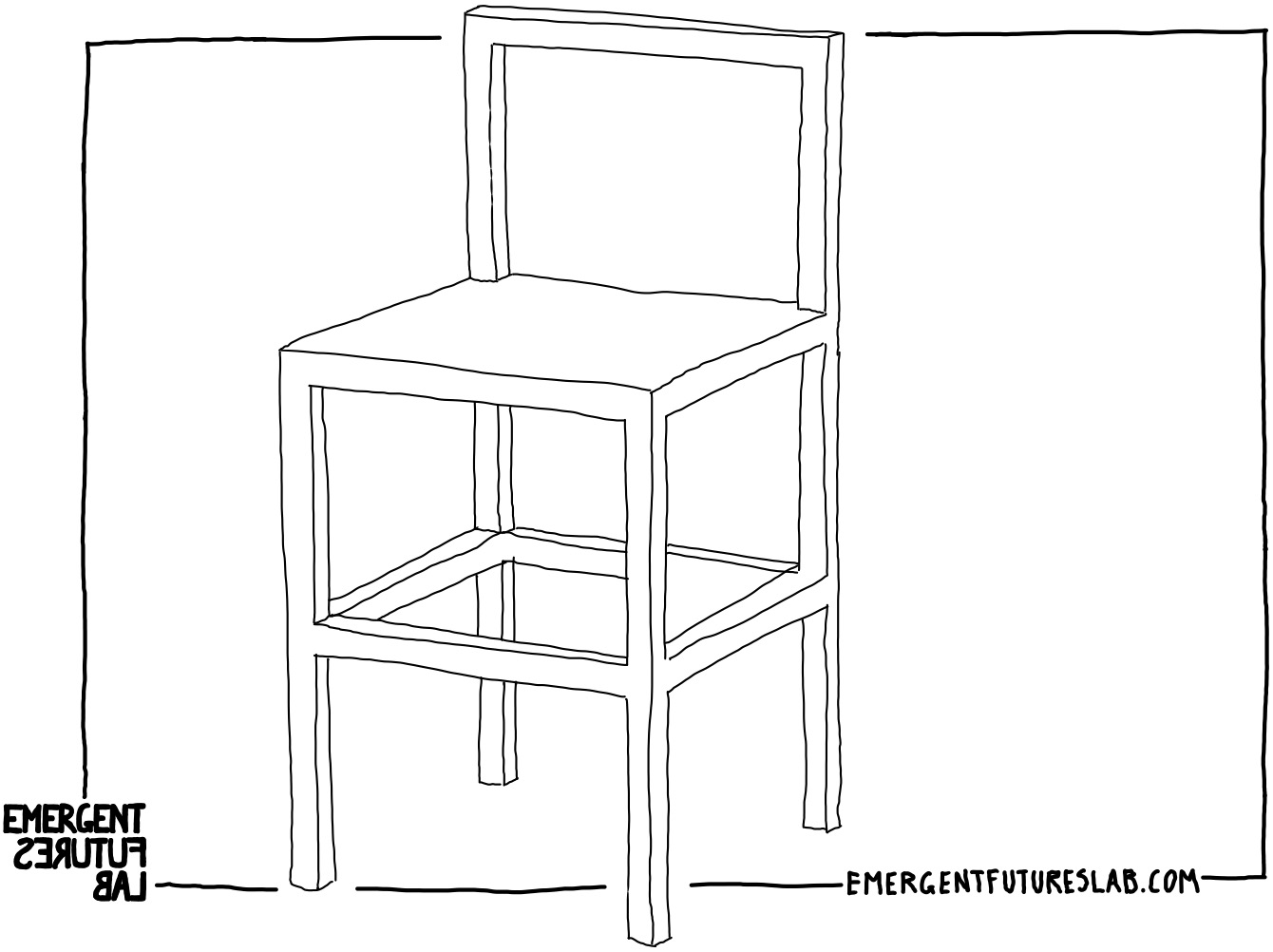
Let's go back to the chair. What is a chair? While we might not be able to exactly define it, it is one of those things where “we know it when we see it”:
And if asked what the purpose of a chair is, we would, without much hesitation, say “sitting” – and again we would know this when we see it:
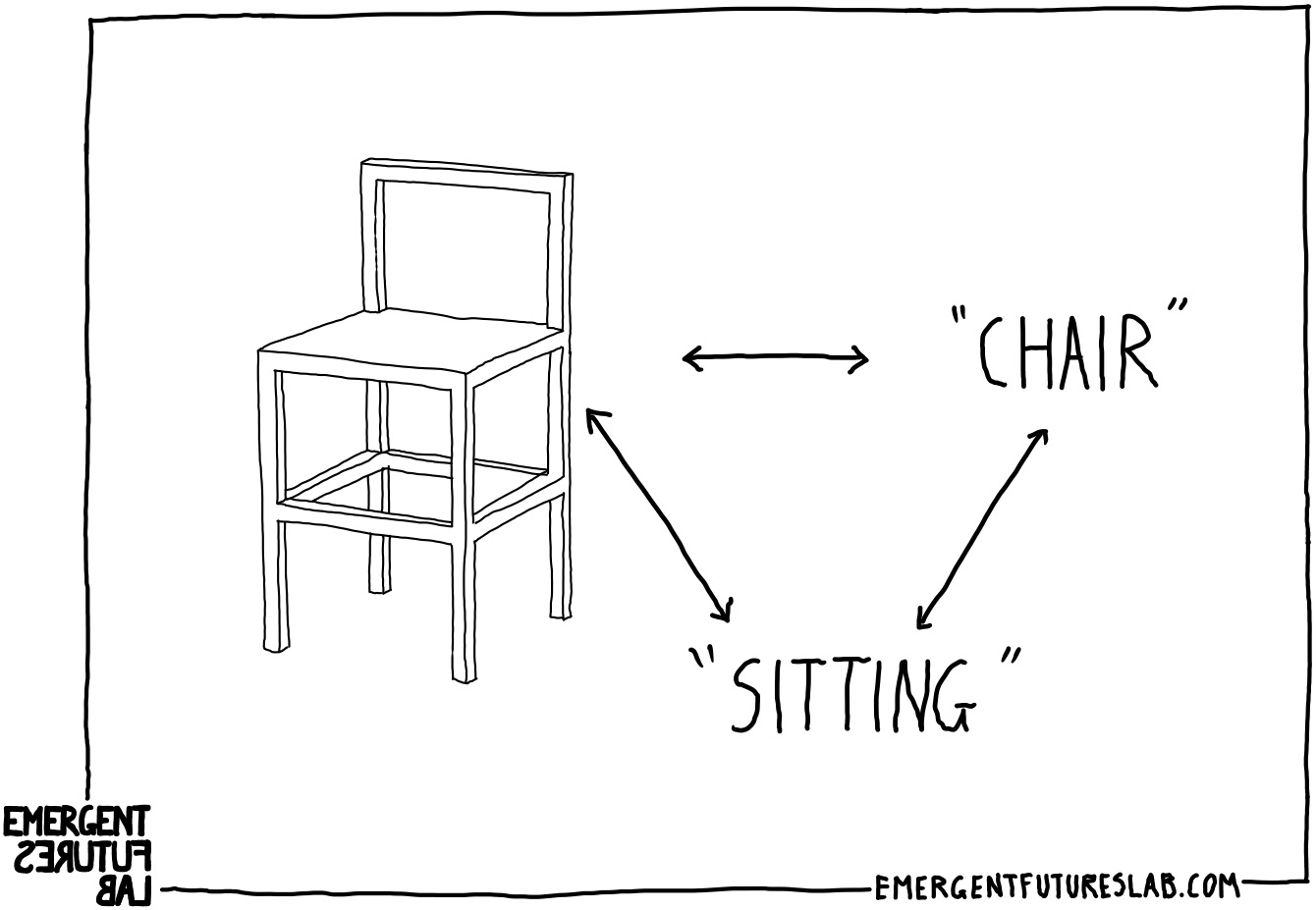
But how is it that this purpose – this “effect” comes to define this unique object?
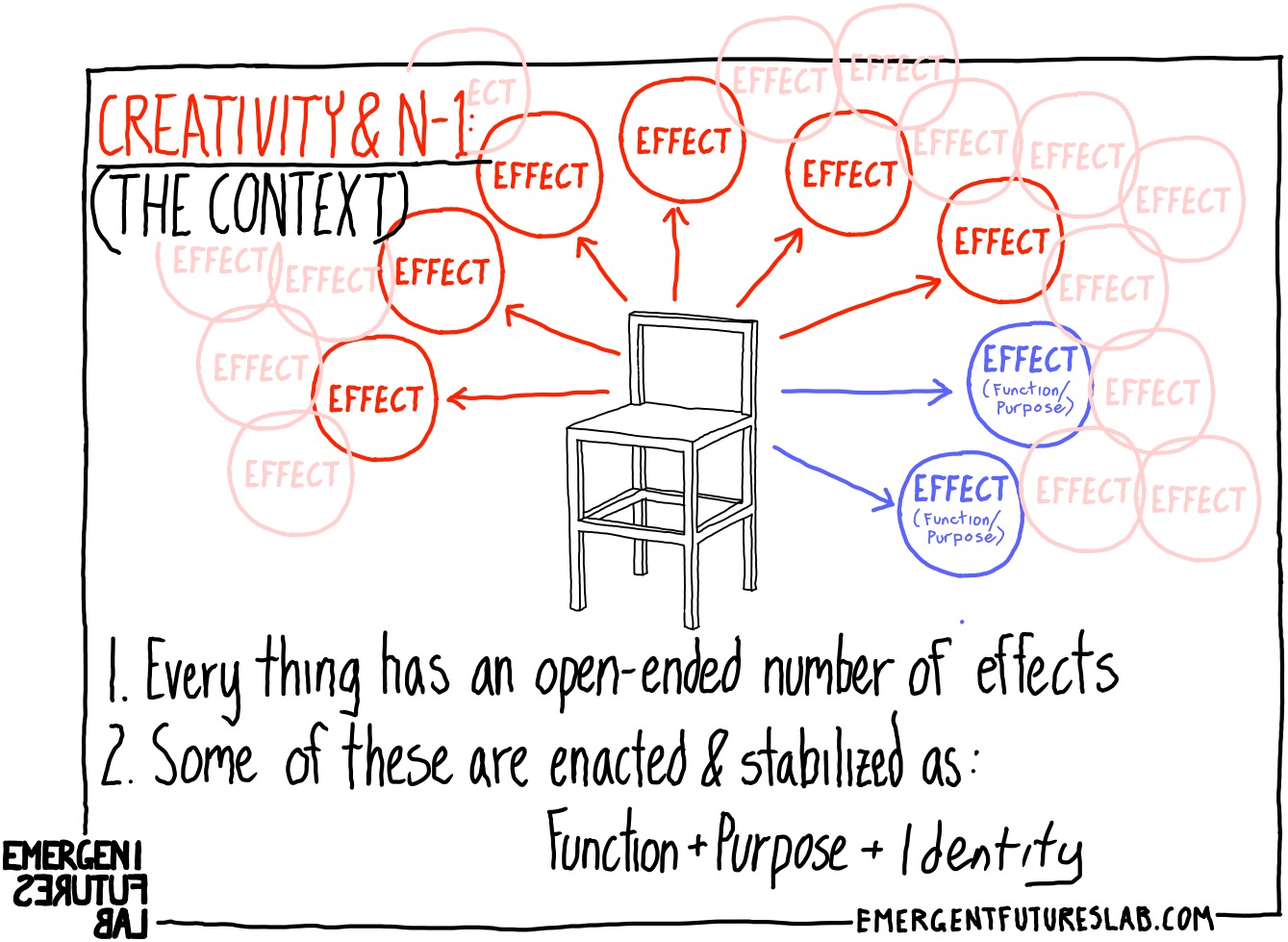
While the unique thing in front of us can be very effectively used for the effect of sitting, it can be potentially used for any number of other effects:
For example, I can use a chair to get some really interesting musical effects by dragging the chair along the floor – the scratching effect of this chair dragging is surprisingly interesting and has let us on many an exploratory musical journey:
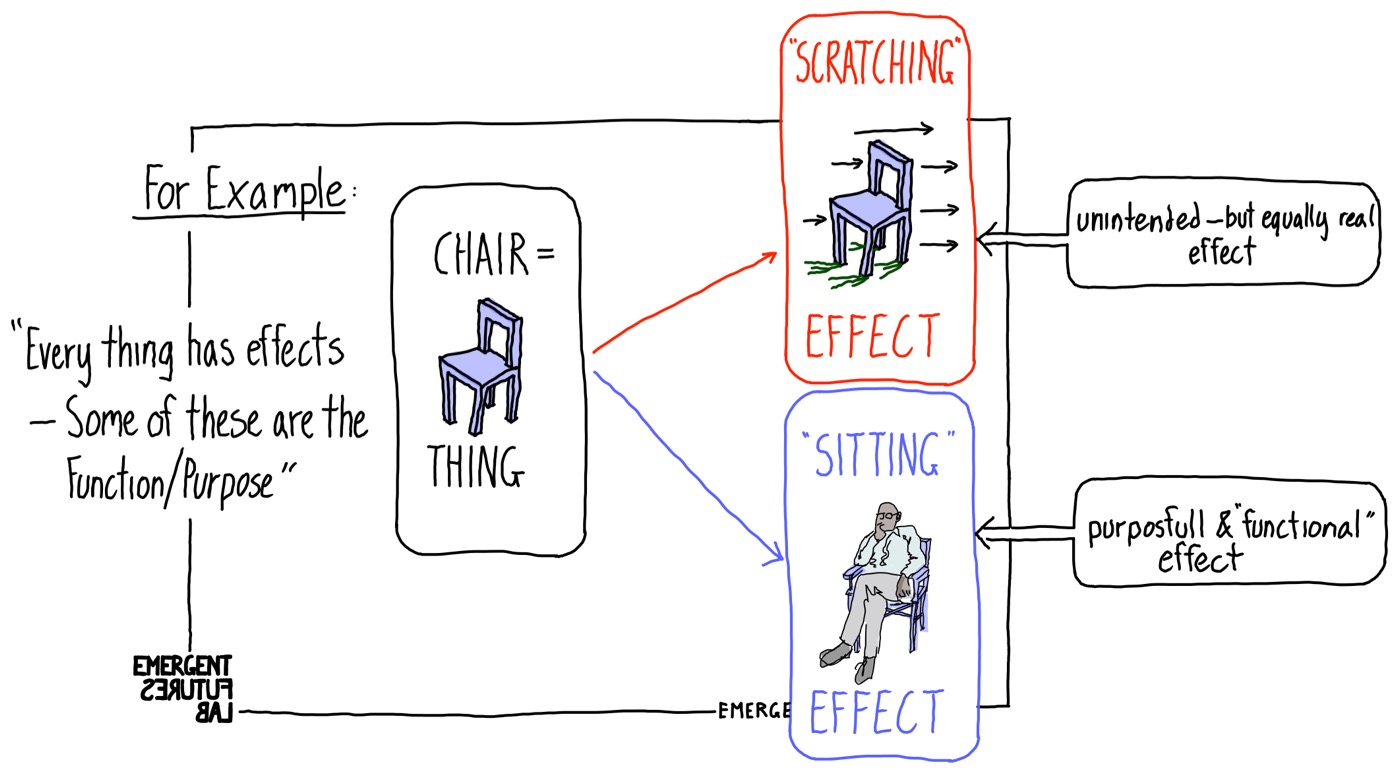
Why is one effect considered proper and the other improper and marginal? This is because we have confused certain effects with the thing itself. Alfred North Whitehead called this error “misplaced concreteness”:

The problem is in conflating certain effects with the chair itself; we can no longer sense the multiplicity of possible effects. We have, to use Deleuze and Guattari’s very useful term, “over-coded” the chair with an identity. And this is what they mean by “one”. The “one” they wish us to subtract is the oneness of a singular, encompassing, and imposed identity-purpose-function. Once this is subtracted, we open up to a virtual multiplicity.
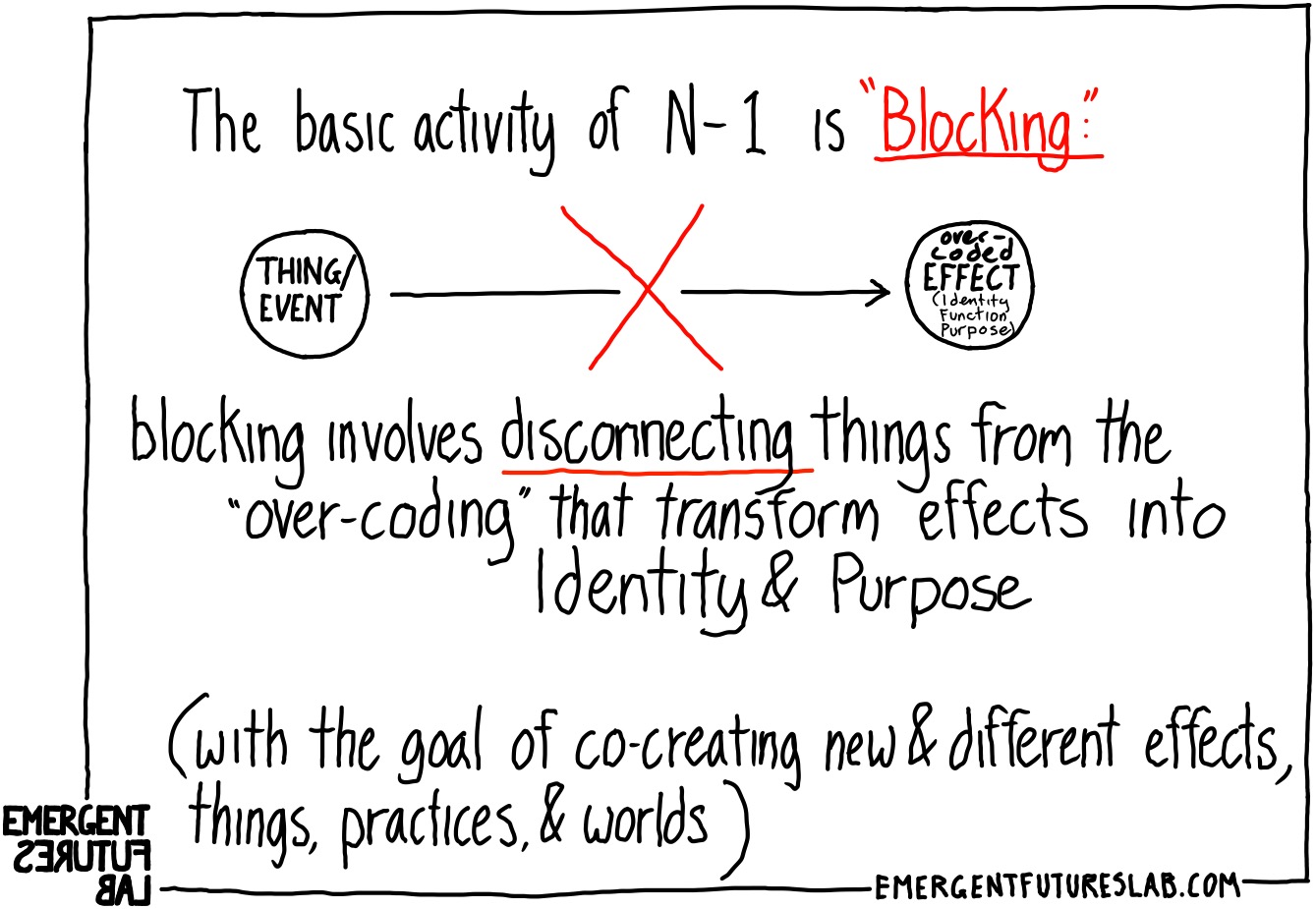
How do we get out of the overcoding imposition of identity? N-1. Or to put it really simply: ignore identity – BLOCK identity. Now we can sense that this chair can be far more than its sanctioned effects of sitting.
But is this alone enough to get us engaged in a creative process? No.
To go further, we first need to understand what an effect is. And more importantly, how an effect comes into being. Is the effect in the chair? Is the musical effect of scratching or the elegant sitting effect in this artistic chair?
That would be a serious mistake. The wondrous sonorous vibrations of scratching require a floor, gravity, air, a body that is moving it, and much besides in a very particular relationship:
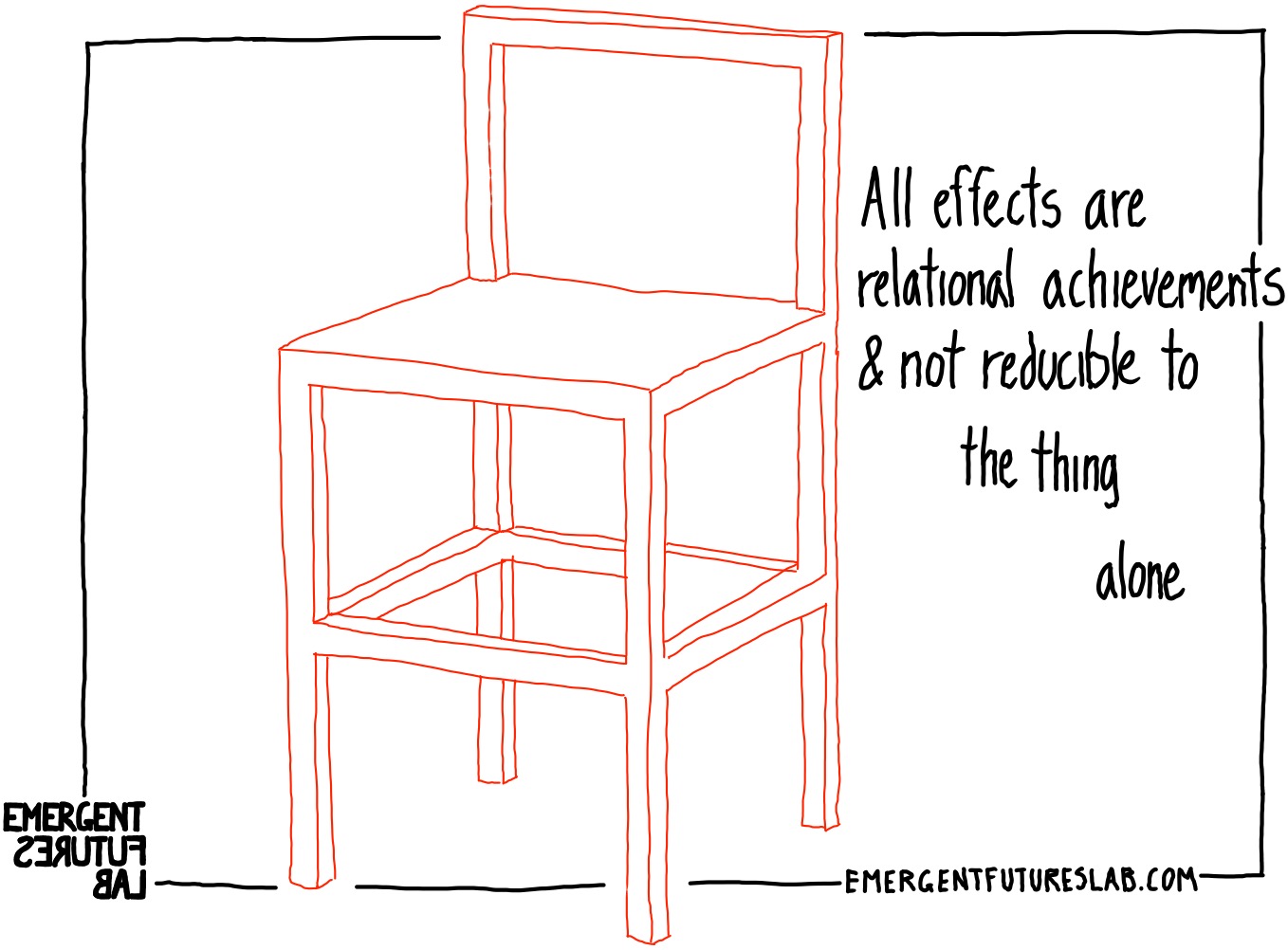
All effects – including the sanctioned “proper” effects – are relational achievements. The same very beautiful Donald Judd chair can have the effects necessary for a spider to dwell and hunt, or the effects necessary for a person to change a light bulb:
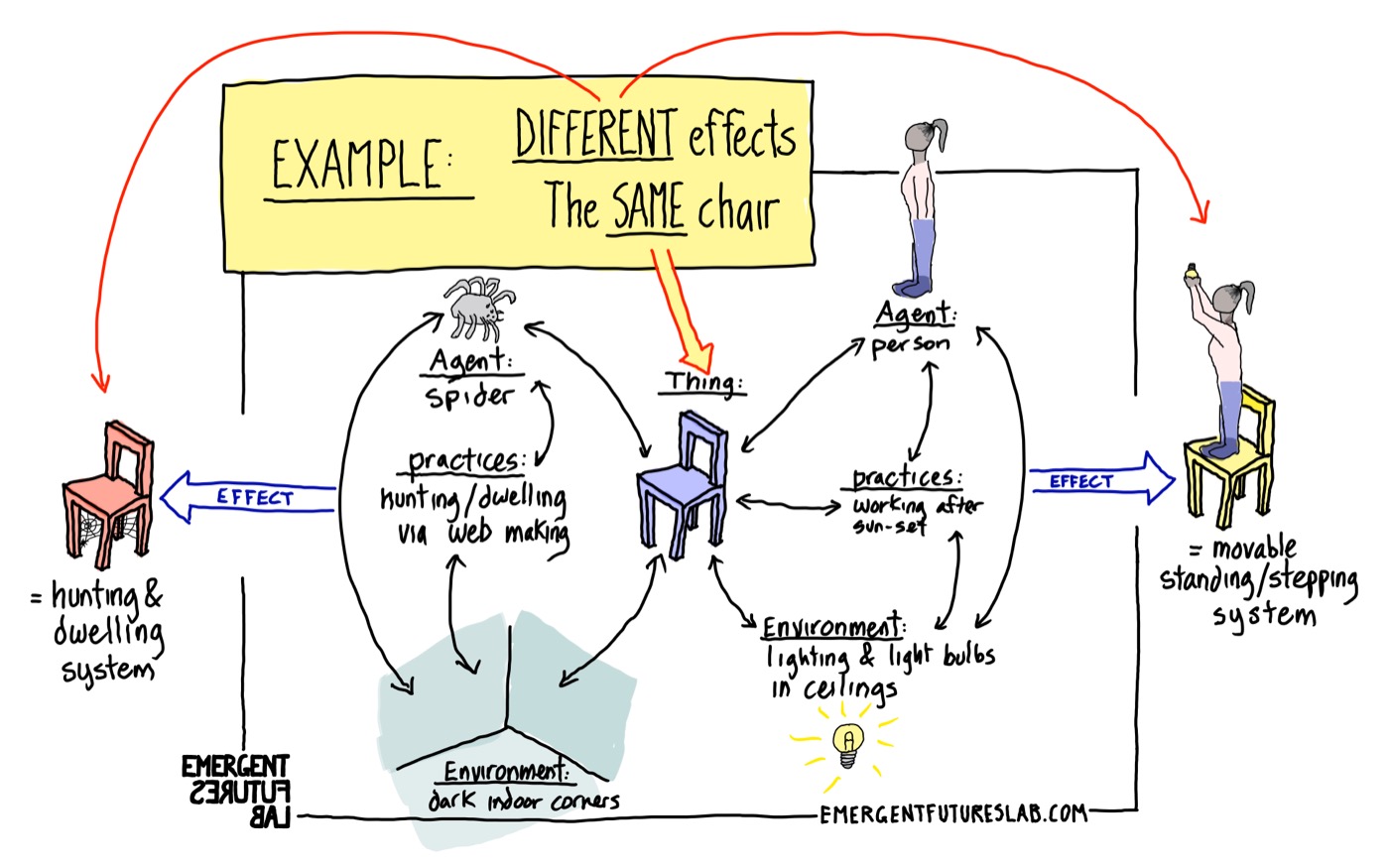
Effects emerge from a dynamic relational ecology of environment + meaningful practices + embodied agents + other things. And it is this virtual relational logic of possibility that is what Deleuze and Guattari are calling both a “multiplicity” and “a rhizome”. It is something that always must be made – we do not know what a chair can do.
So while the basic activity of N-1 is the blocking of the over-coded effects that chain the chair to an Identity, a Function, and a Purpose. This is only the beginning of an experimental practice.
Experimentation
Actual, physically engaged experimentation is what defines this process. We need to experimentally vary what we bring to the relational assemblage: differing embodiments (the spiders), differing practices, differing environments, differing additional tools – now what novel effects can we co-create?
And lest we think N-1 is simply something unique to Deleuze and Guattari’s eccentric philosophy – this is what in evolutionary theory is termed “exaptation” – the co-opting of purposeful things for novel and unintended effects:
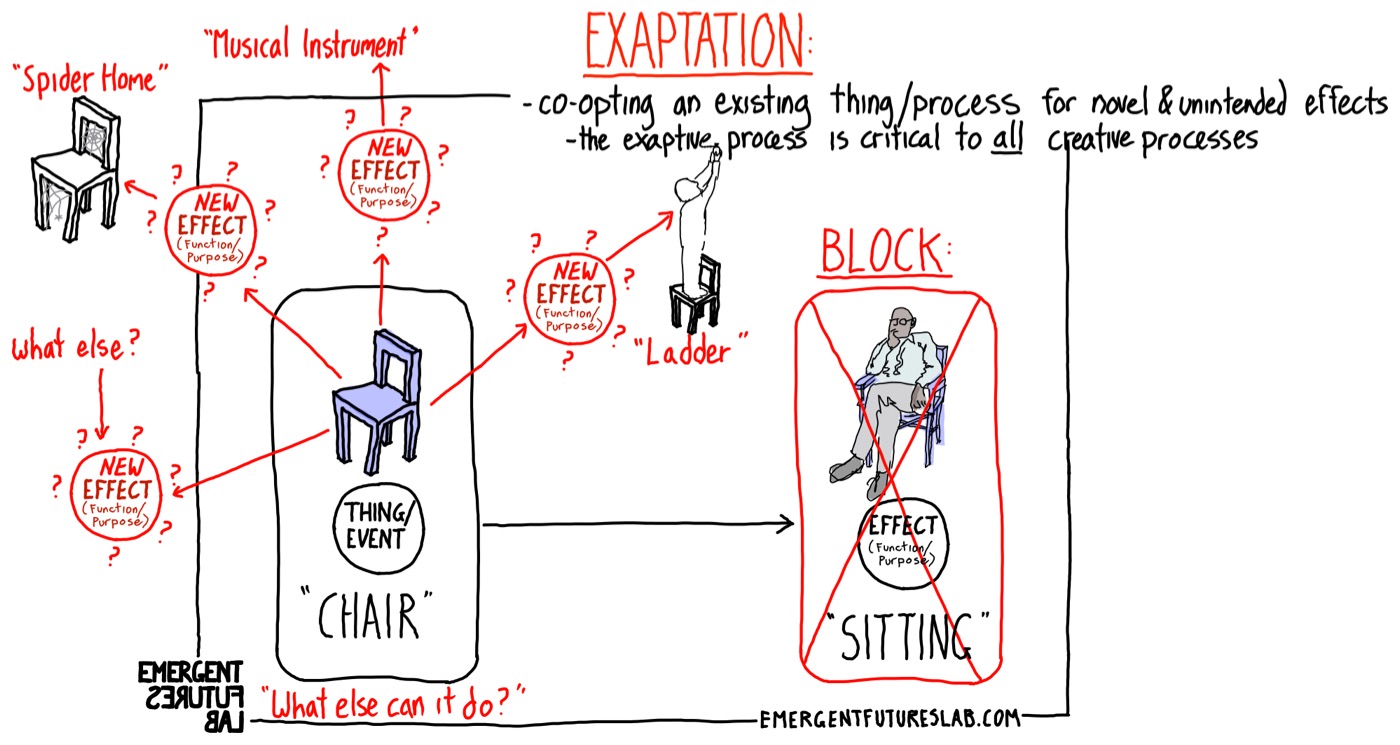
BUT – how does one get from blocking – from N-1 – to something exaptive and novel? Is it enough to just block and then latch onto some other effect?
What is the experimental process that comes after this?
We need to set up experiments that begin with blocking and then ask in the context of an actual experiment what else can it do?
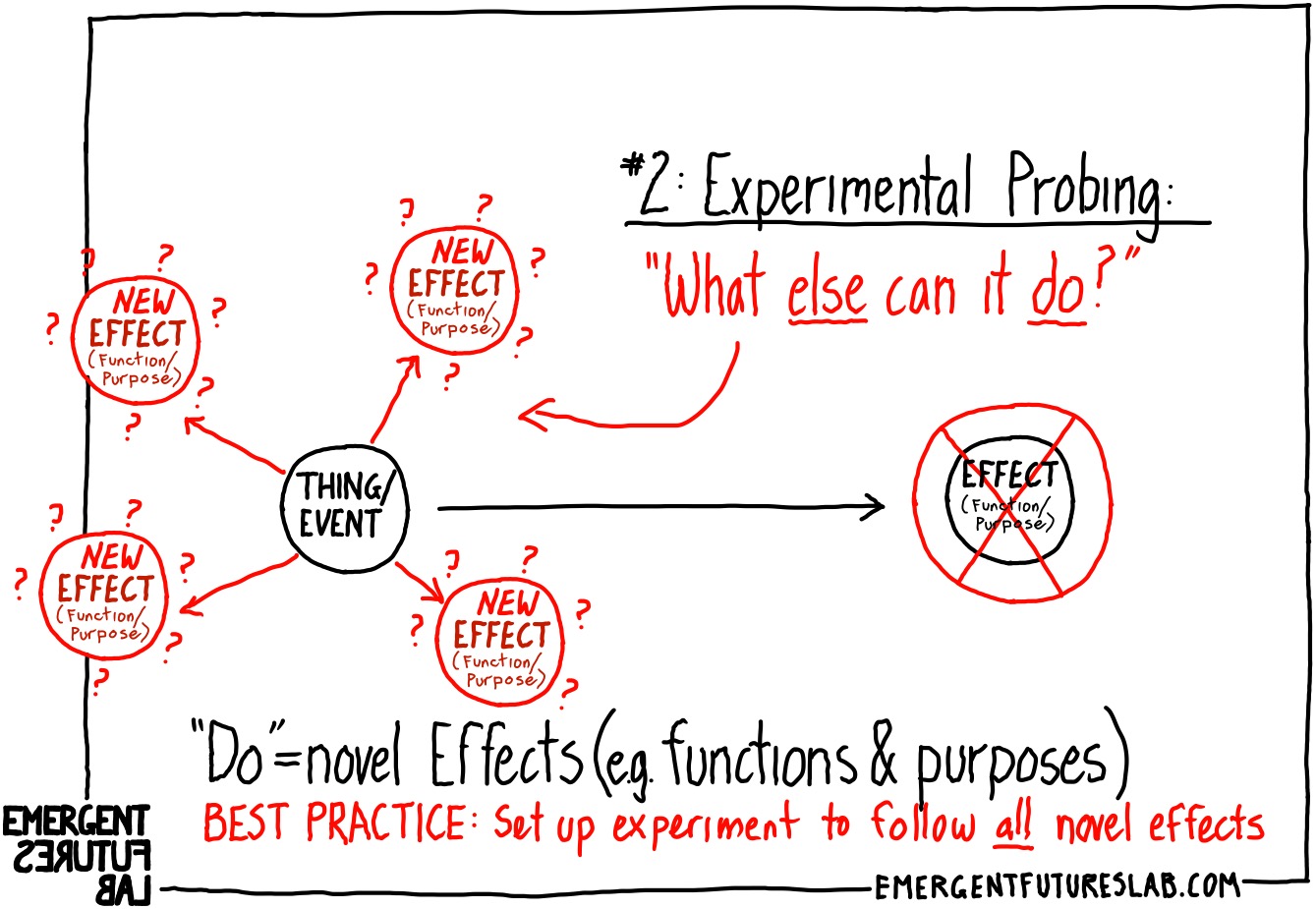
This is hard to execute without some area of interest or a general “matter of concern”. This will ground us and give us a place to start. Now we can experimentally probe via the development of novel assemblages (relations) that give rise to novel effects.
These new effects are not ends in themselves, and usually they are just known functions done in novel ways. For example, using a shoe to open a bottle of wine. The function of opening bottles of wine is not new – it is just the process that is novel (using the shoe).
So, stopping at this point does not get us far. We have to really use the novel process we have developed (the shoe wine bottle opener) many, many times – all the while being on the lookout for new novel unintended effects in this process: what else can this “shoe wine opener do that is unexpected during the process of opening wine bottles?:
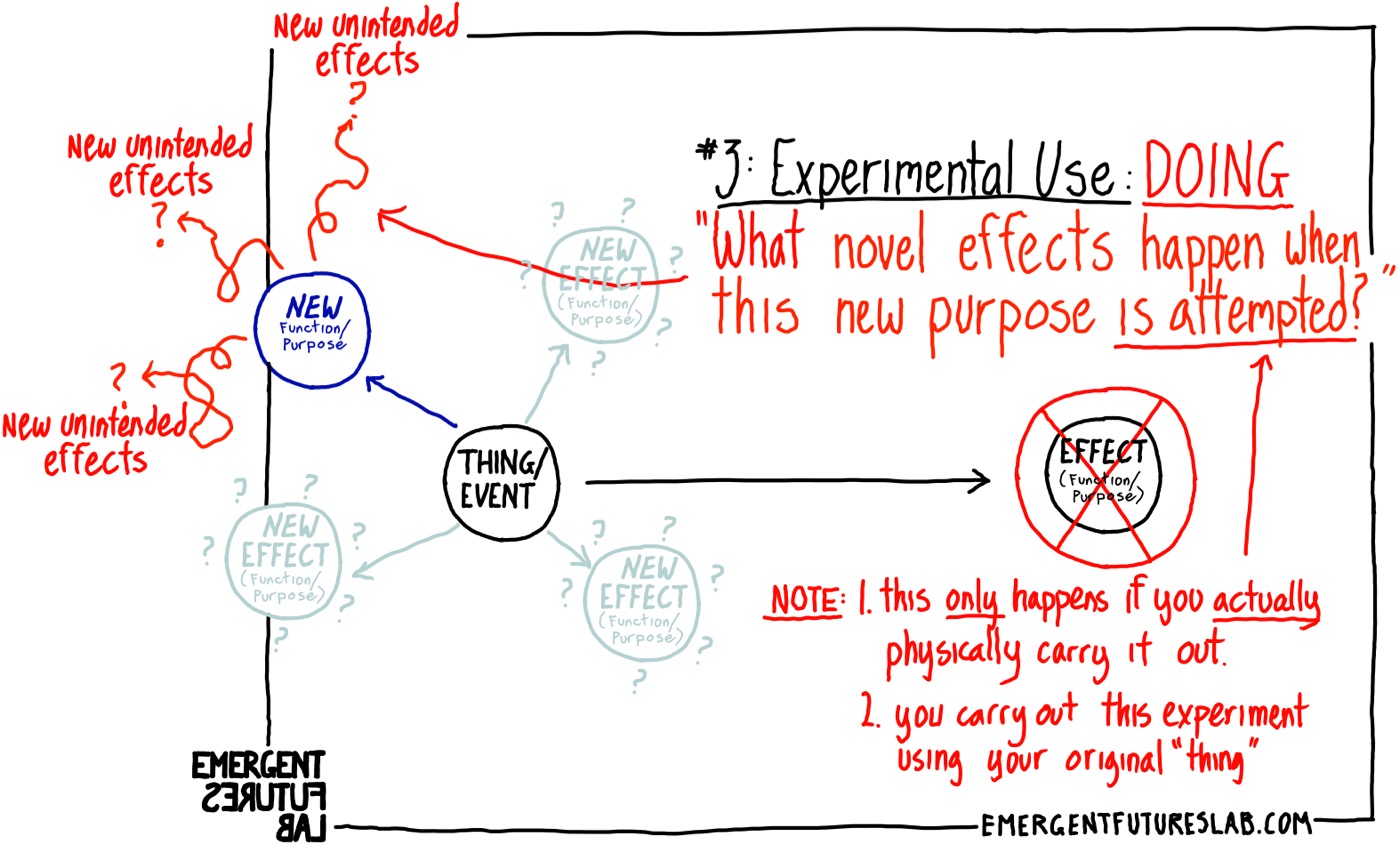
Then, where things get interesting in this process is when we go further iteratively. And this involves a second counterintuitive process: We need to overcode and transform the new effect assemblage into something more stable. Yes, you did read that right – we are overcoding and stabilizing this novel thing.
First, what this means practically is that we have been using the shoe as a new type of wine bottle opener and paying attention to what else that is unintended that this does. It will have some new, peculiar, surprising unintended effects. And this is what you want to name, and stabilize by remaking the shoe into a “product” that does this new effect:
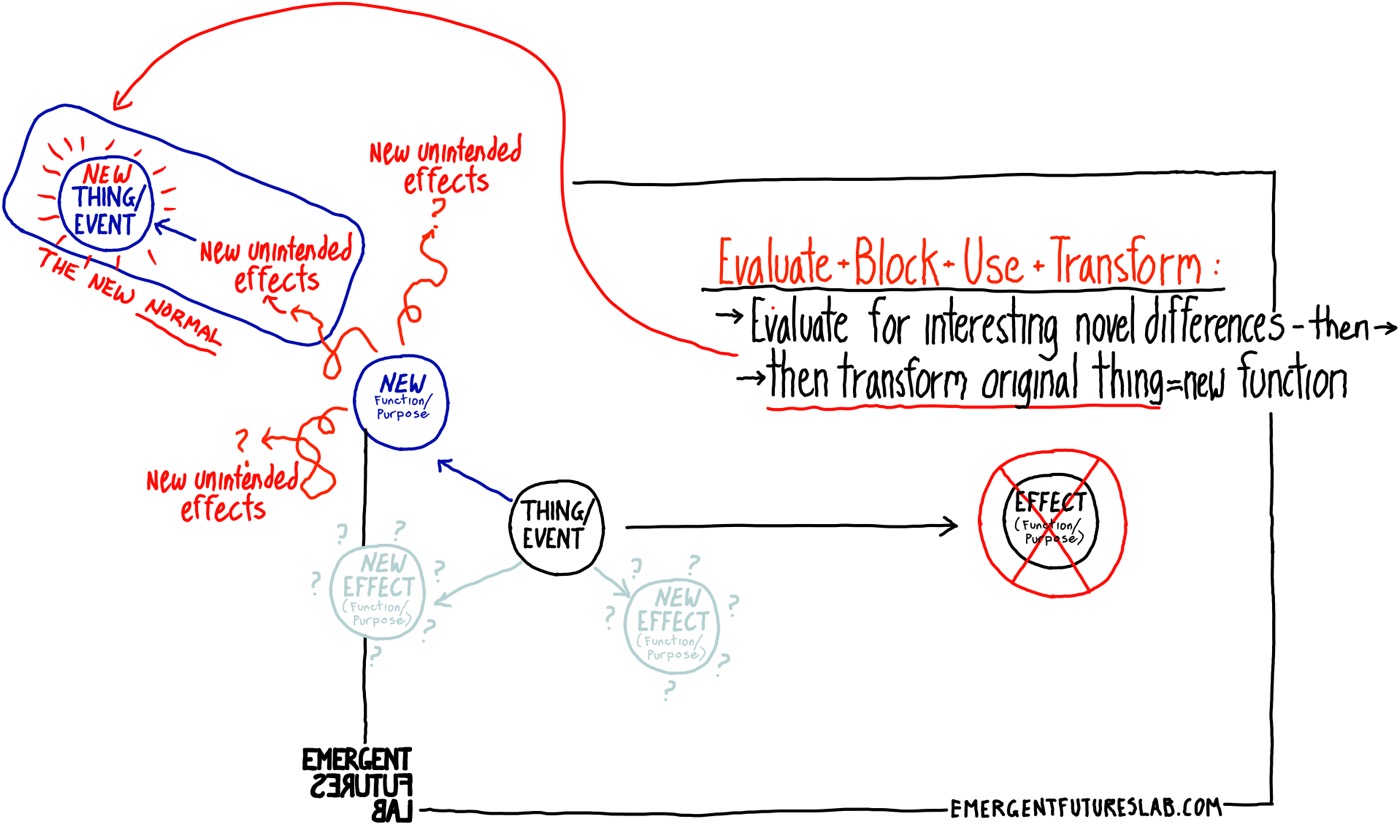
Then we can carry out this process again – and again – all the while probing further and further from given logics towards emergent thresholds of qualitative change.
Over the next few weeks, we want to do a really comprehensive deep dive into this process of blocking and following the unintended because we feel that it is critical to effectively engage with creative processes.
But we don’t want to go too fast – if we did that, it would be too theoretical for our liking. To really understand this process is to engage with it.
So we would like to invite you to experiment with this simple seven step iterative process :
Start simple, trust the process, and have fun!
Next week, we will build upon this in all directions.
And, please, share with us your journey - we are always curious!
Keep Your Difference Alive!
Jason, Andrew, and Iain
Emergent Futures Lab
+++
P.S.: Loving this content? Desiring more? Apply to become a member of our online community → WorldMakers.


