Newsletter
Resources
Courses
Books

Welcome to Emerging Futures -- Volume 215! On Creativity’s Strange Journeys...
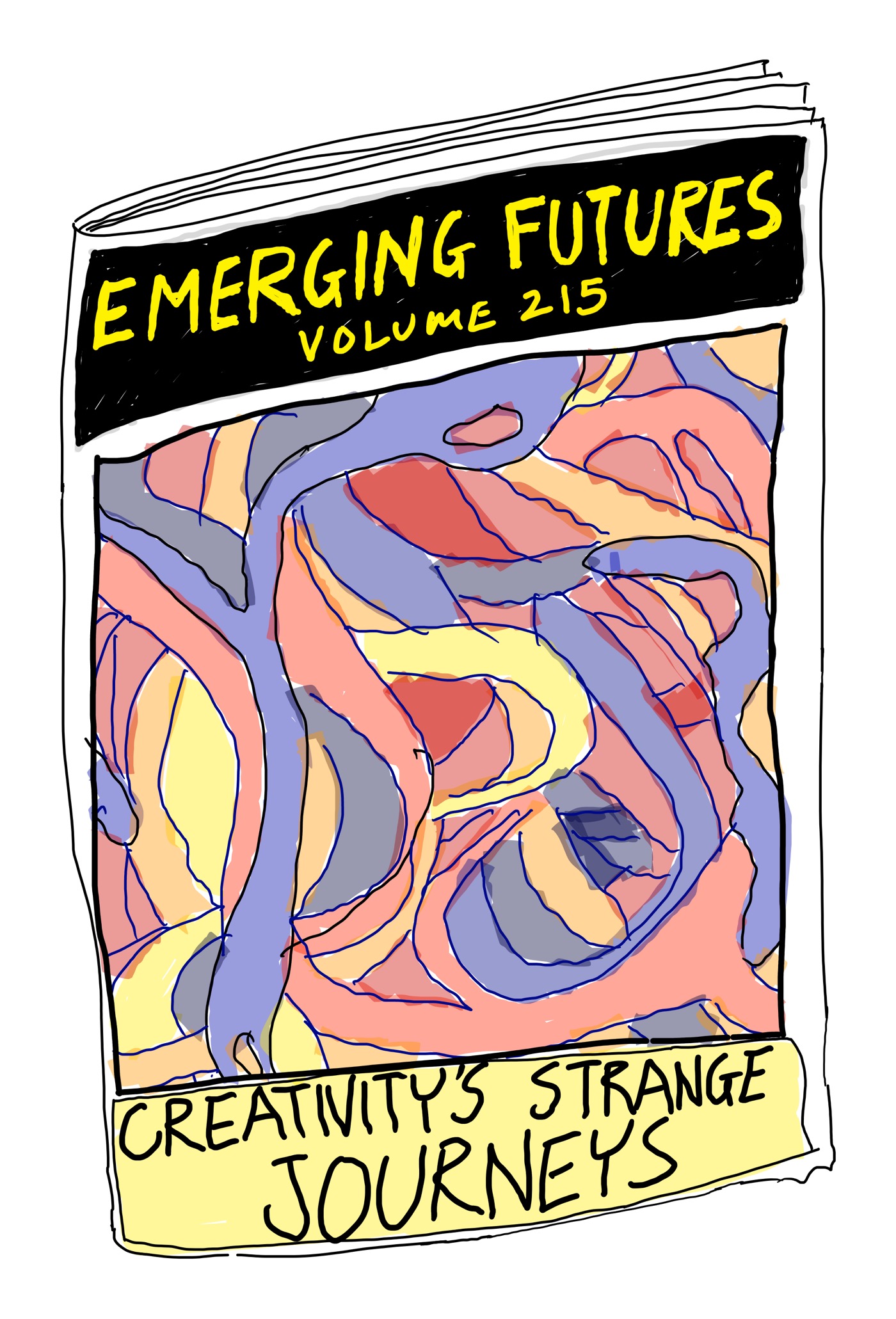
Good Morning night travellers who
will
over the course of the night,
become
collectively other – and
will come to eventually welcome
a far
different sun,
This week, we end this newsletter series testing and experimenting with the practices of Blocking.
Blocking is not one practice. Nor does it show up in one specific place when we engage with creative processes. It is both many specific practices (we will review some of these before we conclude this newsletter) and part of an attitude—a disposition that is critical to these engagements with creative processes.
And it is this aspect that we wish to experiment with this week. What is the feeling and attitude of blocking in creative practices?
Where to start?
Perhaps we can suggest that: Blocking is a significant aspect of an attitude of considered and careful refusal.
We are refusing to take for granted, and putting into question – deliberately problematizing who we are, what we do, and how we live – as well as who we think we are, what we think we do, and how we believe we live.
This critical attitude of creative refusal participates in an inventive activity that, rather than taking problems as objective givens in need of solving, strives to invent novel problems worth having.
The French philosopher Michel Foucault (1926-1984) – who offers us some of the most powerful critical tools for developing engaged creative practices, knowing he was dying of AIDS, writes this by way of introducing the final works of his that were to be published in his lifetime:
“What is philosophy today – philosophical activity, I mean—if it is not the critical work that thought brings to bear on itself? In what does it consist, if not in the endeavor to know how and to what extent it might be possible to think differently, instead of legitimating what is already known? …The object was to learn to what extent the effort to think one's own history can free thought from what it silently thinks, and so enable it to think differently…” (Michel Foucault)
This week, we are on a journey to explore the creative importance of this refusal – this blocking and work of problematization, that is necessary to our way of joining creative processes, as a general attitude, as a way of feeling and sensing towards the new.
Creativity is a journey – that much we can say with confidence.
Creativity is a journey.
But beyond this, things get difficult – obscure…
This is the risk of engaging with something new, creative, and surprising – that we are always dealing with that which is obscure. Different and distinct, yes – but also inherently and unavoidably obscure.
We are not confused – nor are the circumstances confusing – that is a quite different state that has to do with questions of identity and judgment (see Volume 214). When things are considered such that they are removed from their processes of creative becoming, they can be clear or confused. For example, we can be clear: this is a chair – and we can be confused: is this really a chair if we use it exclusively as a musical instrument? But this is the work of defining outcomes of creative processes – not the work done within these creative processes. That is something else.
When we wish to understand our reality from the perspective of its ongoing creative becoming (the processes by which a configuration comes into being, such that a chair affords sitting, for example), we are, as Deleuze notes in Difference and Repetition, dealing with something quite different, and these are processes which can be both distinct and obscure. Different. Obscure.
Why this matters: We can’t recognize the qualitatively different and new. We can only recognize what we (already) know. While we cannot recognize the qualitatively new, we can sense a difference – we can feel that things are pulling us elsewhere than the known, but where that is always obscure. Why? Because the where does not yet exist.
The obscure, when articulated in language, always runs the risk of being taken as an empty platitude – a banal flattening. But today in this newsletter, we are, as we come to the end of this series on blocking, going to risk a few platitudes (a few plateaus)...
To say that “Creativity is a Journey” is much like saying “Everything is Connected.”
“Yes, everything is indeed connected…”, the wise might rebut,
“...but what matters is precisely how they are connected!”
Fair enough…
But to say simply without addition or clarification that “everything is connected”, and that “creativity is a journey” is important and worth the risk of slipping towards the obscurity of a language working with creative becomings.
Why? Because it helps reorient a way of feeling and sensing towards the relational dynamics of an ever processual reality on one hand and additionally towards a universe that is filled with the potential for the total surprise of a contingent self-creating newness.
This general feeling is as important as being able to dot the i’s and cross all the t’s of an explicit understanding of the complexity sciences or whatever fields you consider of importance to engaging with creative processes.
For a new approach to creativity, we need to reorient how we feel, how we are pulled, and how we sense/act in the flow of our lives – we need to come to sense new joys, loves, and pains – new pulls and pushes such that we enjoy the dynamic distinctions of difference experimentally and relationally in their inherent obscurity.
Before getting into new sensibilities, let us ask: from what are we being re-oriented? From what are we turning away from in an embodied and embedded manner?
Creativity requires many ongoing exercises in re-orientation (enactive unlearning and novel ecosystem building – e.g., blocking). Many of these are from the particulars of our histories – and from the forgetting that we have histories.
We say, “creativity is a journey,” so as not to forget history.
Risking more generalities: we forget that we have histories with the naturalism of an anti-historical universalization of common sense.
Which is to say: We have confused what we take for granted with this being outside of history, with it being "natural," with it being “universal.” We need to orient away from believing in a common sense – in believing in that “which is so clear that no one could disagree” is outside of history – outside of an eccentric and contingent journey.
“This is how everything has always been”:
“creatives have always…”
“Artists have always…”
The false and comforting familiarity of creating concepts outside of history is, in practice, an attempt to evade the full scope of creation and creativity.
Everything emerges out of a past and will eventually become radically other in the future.
This gives us a first sense of what it could mean to say that “creativity is a journey.”
In silencing the journey – in silencing the creative contingencies of time, we are allowing the present to colonize both the past and the future.
Following our art example, not everyone who ever painted with pigments in a way we might today understand as art was an artist. The quick and false familiarity with everywhere and all times both erases the achievements of creative difference and undermines the possibility of real future creative differences
It is not a criticism to see things as being “provincial” – things are of a place and time – things are of a unique historical journey – concrescence. There is a relatively narrow time and place where the term “art” does make sense. Art in all its diversity bubbles up in a time and place, then…?
Of course, nothing is reducible to a place and time – but how it wanders – journeys – is by non-pre-identifiable aspects participating in new transformative relational and configurational effects.
The challenge of creativity is first to gain a feel for journeys whatsoever – to genuinely sense time as intrinsically connected to the emergence of qualitative difference as a creative agent.
What else are we being re-oriented away from as we sense creativity as a journey? What are our other unthought thoughts, habits, practices, and ecologies regarding creativity that we need to bring to visibility and experimentally question?
Let’s continue to dwell on the journey.
And let’s consider another aspect of how a journey is of time: We sense the critical importance of time in journeys when we realize that it is more often than not astonishingly difficult to say when the journey really began and when it will end.
“Everything must be put to an actual test and evaluated not for what it “is” – but what effects it has." (A. N. Whitehead)
When, for example, did the journey of heavier-than-air human flight begin? It depends on what the present invents/configures. With every invention, one reaches back in time to pull unintended effects out of one established history and put it into novel resonances with other pasts and other relational effects towards a novel configuration. Pasts are as much created as any future.
In a creative journey, the past is created.
the past must be Invented
the future Must be
revIsed
doing boTh
mAkes
whaT
the present Is
discOvery
Never stops (John Cage)
When we tell our family stories – where do these journeys begin or end? If your child (or you!) converts to a new religion or falls in love – now the configuration of pasts and futures recombines with radical new saliences. What was far becomes close. What was non-existent joins. What was one thing becomes an other.
And if colonizers arrive one day on the way to China or any other promised land…
This reveals more of the critical obscurity of the creative journey – who exactly is on it? Is there a protagonist to such a journey?
Perhaps we can venture another statement with some confidence: it is a journey on which everything adventures collectively – even if we cannot know in what way we might come to matter to each other.
Last week we concluded the newsletter saying that in the acts of creative becoming – which we cannot avoid – we are producing “a commons where there is nothing – and everything, in common…”
A journey often speaks to something we choose. We choose to go – to depart often to known places but sometimes to unknown ones. But in either case – the departing is something we consciously do.
With creativity, that choice is never so certain or so central. Even when we feel set, and firmly attached to a place – at home, so to speak – we might be well underway on a creative journey.
And oppositely, when we feel we have departed on a great creative adventure, who is to say that we have actually embarked on anything more grand than a day in the park? (For example: Are LLM’s going to become part of something transformative or a once important meander of a river now cut off and turned back into a rolling landscape?)
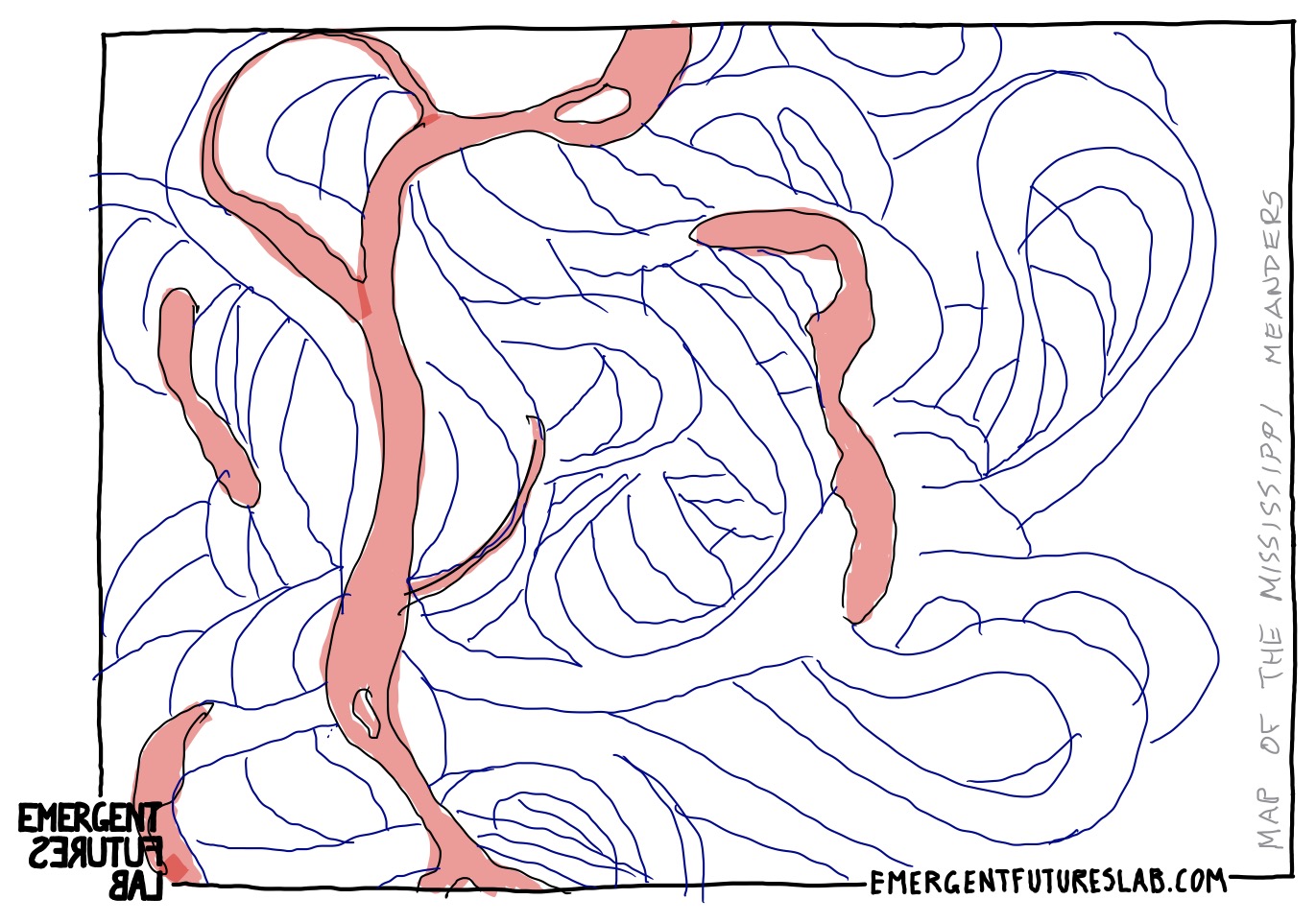
NOTE: We can add here to what we are coming to sense as what we can experimentally block:
What then marks a creative journey?
While it is quite hard to say in advance, what we can say, and this is not a platitude: such a journey begins by not venturing into the unknown or to foreign lands and distant shores – but into the non-existent.
Creativity: To journey towards what does not exist…
(This is a strange journey indeed that we need to get a feel for!)
Such a journey begins in a practice not of travel or venturing to differing lands. But with the leaving of such travel, with the experimental blocking of all such paths.
With creativity, there is no where to go.
The new is not an existing place that we – or any one else is yet to “discover” – it is not unknown or unknowable – it is non-existent.
As embodied, embedded, and extended being,s this is hard to get a feel for:
After all, we live in an extended world that in every direction curves away from us into a temporary invisibility – a “just over the horizon”. As we move, this horizon moves. Invisibility and a coming-into-visibility travel with us. And we are very much familiar with this way of moving – It is the unthought of journeying.
But with the new something else is happening: As we walk, we must make. And as we walk, we are made.
This is where all visions, sensibilities, and understanding of a journey begin to break down. With creative journeys, we are not walking to the edge of the known and then journeying farther.
We are not journeying into an unknown land at the edge of the world. We are not venturing to where the mapmakers of old would write “here be dragons.” No, this journey is not towards a land beyond known lands called “the new”.
The creative journey is wholly unlike this.
In this unique journey of creativity, walking is making. Walking is creating. And the act (re)makes us. The foot that made the previous step will not be the same foot that makes the next. The ground that the first step met will not necessarily be there to meet the next step.
But this is only the beginning: Each act of a creative making equally involves an identity ignoring unmaking. An unmaking so odd that we say of these moments: “we cannot even pre-identify what will come to matter in things. The underlying emergent and contingent functional contribution always varies based on which aspect is co-opted by the configuration”. (Volume 214).
To gain a feel for creativity's journey is to feel that, as William James says, “what really exists is not things made, but in the making.”
Our embodied habits sit close to the known, the given, to the “things made” and to the clear (and the confused). It is much harder for us to feel that every thing is always also in-the-making: To live in the astonishing obscurity of creative becomings.
To sense this fully is to bring activity back into everything. Activity is not something added to the world – it is the world. Activity here is always a synonym for creation. There is only journeying. There is only activity. And what of stasis?
Stasis is what we will also experimentally block…
But that too is not quite right… We need to express this in a more distinct manner: we are gaining a feel for the complex and challenging, equally creative activity of stasis.
In this journey, there is only activity – even when we pause and rest (stasis) – this too is a complex creative activity…
To risk yet another platitude/plateau: everything everywhere at all times involves creation. It is not just the novel and creative that requires creation.
A question: Is there an existing practice that is close to this approach to creative journeys?
When asking this question, we have heard: Perhaps the practice of “re-wilding”?
In a creative journey, we are transforming an ecosystem step by step – both away from one ecosystem and towards something else (even if it is as yet non-existent).
Re-wilding suggests something similar: to transform an ecosystem from one state to another…
But, from the perspective of creativity, the term re-wilding carries an invisible danger – for most re-wilding practitioners, this term means a practice of returning an ecosystem to something close to a previous state. And this state is understood as a “wild” or “natural” state prior to a set of negative human interventions. While the specific merits of such practices are best judged in relation to their concrete actualities, the danger regarding creative practices is in the desire to return to a known state. A known landscape.
But this desire is an illusion. Return is an illusion. History does not repeat; the joys of the present are not echoes of the past, nor are the present horrors of proto-fascism repetitions of the past: “let me repeat what history teaches: history teaches” (Gertrude Stein).
In an always active and creative reality, the only path is one of experimental action (without any certainties).
What is this creative journey if it is a “wilding”? It is not a return – that is not possible – but rather, we are faced with the hard work of experimental co-creation. As any mother, or gardener, or any of those who wish to resist the present know: the journey is one where the new does not exist and must be co-created as a collective path made in the walking into and with a radical non-existent otherness.
That is an ethos of a joyous wilding.
The skillful and experimental practices of joining with creative processes is both joyous and fraught: we always only meet an already active and creative reality. We are never the only creative ones. Everything comes to the table/plateau of the present creatively.
So what, from the perspective of this approach to creativity, are we blocking and refusing?
Blocking is never going to be encompassed in an instrumental list, nor will it be anything that can be claimed by the pure champions of a positive creativity.
Let's experimentally return at the end of this newsletter series on Blocking to the Michel Foucault quote that begins this newsletter.
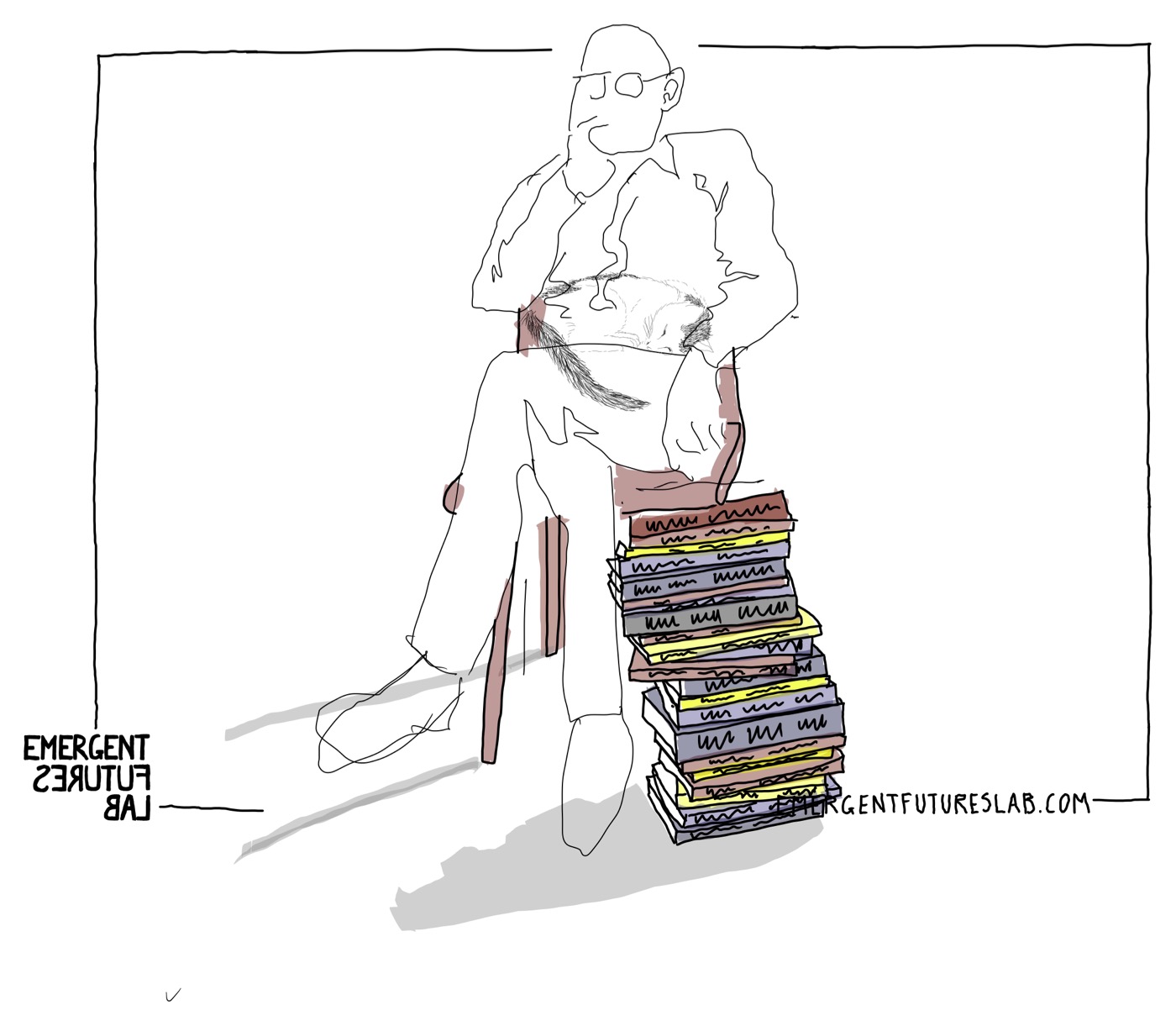
But let’s play with his words in the light of our experiments to sense a novel approach to engaging with creative journeys (and let's pay equal attention to the refusals as to creative becomings – for the two always dance together):
“What is creativity today – creative activity, I mean—if it is not the critical work that action brings to bear on itself? In what does it consist, if not in the endeavor to experimentally know how and to what extent it might be possible to create differently, instead of legitimating what is already being actively created? …The object is to learn to what extent the effort to create one's own history can be free to create from what it silently enacts, and so enable it to co-emerge differently…” (not Micheal Foucault…)
As this is our last newsletter in this particular series on blocking, it is worth taking a moment to point towards some of the plateaus we co-created over the last seven newsletters:
Next week, we will begin a new experimental series on the critical creative task of Engage.
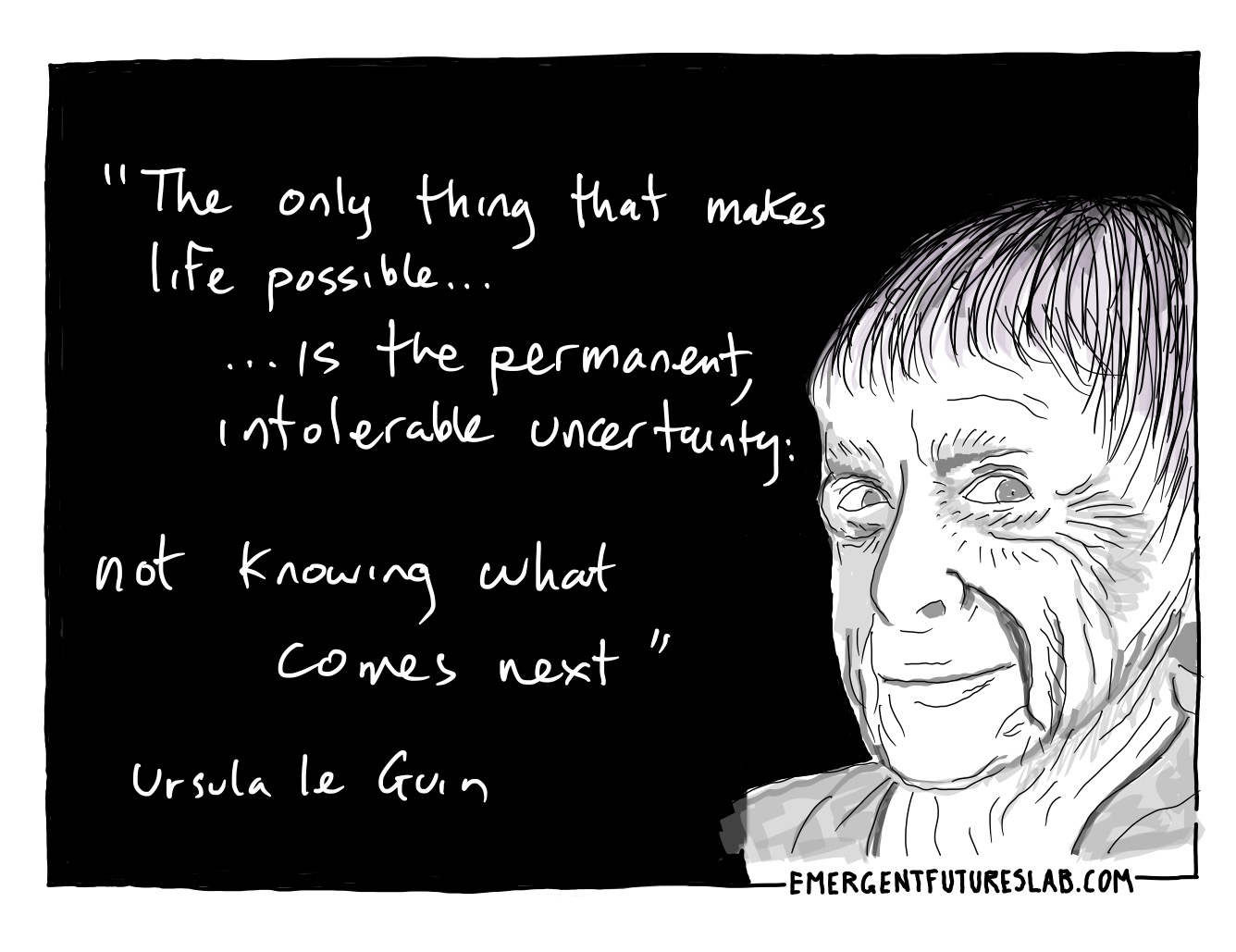
And as we leave you this week, we, in the spirit of speculative journeys of co-creation and strong refusals of the given, offer you the winner of the Ursula Le Guin Prize for Fiction: Vajra Chandrasekera (for Rakesfall). You can see the details and Vajra’s acceptance speech here, and find the book here.
Have a great and experimental week, feeling the full creative and joyous pull of refusal and blocking – and a very happy Dwalli – Shubh Deepawali!
Keep Your Difference Alive!
Jason, Andrew, and Iain
Emergent Futures Lab
+++
P.S.: Loving this content? Desiring more? Apply to become a member of our online community → WorldMakers.


